
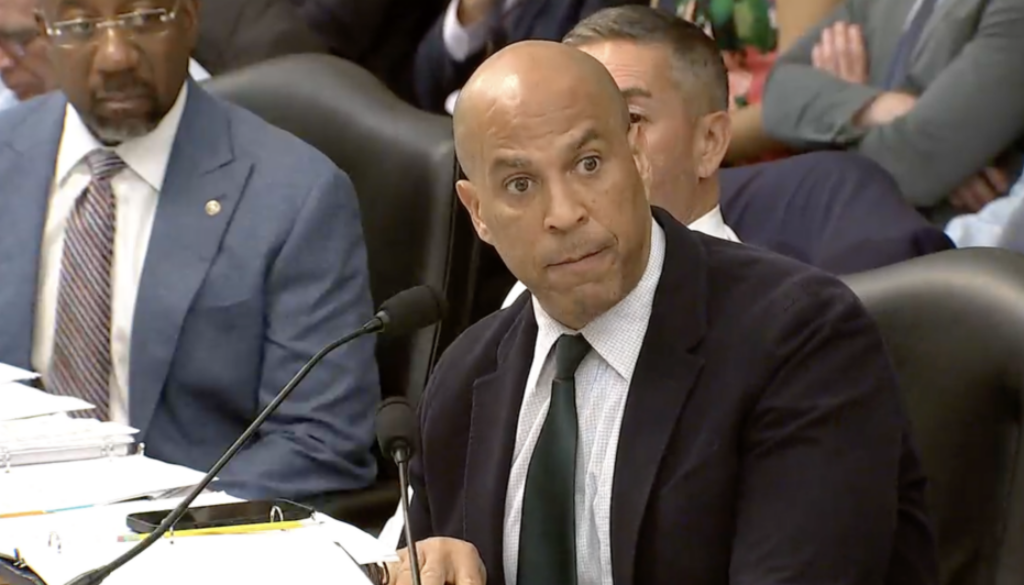
Senate Republicans vote down Farm Bill amendment on pesticide liability
Listen to the audio version of this article (generated by AI).
Republicans on Thursday voted down a proposed amendment to the Farm Bill that would have protected consumer rights to sue pesticide manufacturers over alleged harm after the US Supreme Court recently narrowed those rights.
The amendment was brought forth by Sen. Cory Booker, a Democrat from New Jersey, during a Senate Committee on Agriculture, Nutrition & Forestry hearing on the Farm Bill that highlighted several partisan disagreements.
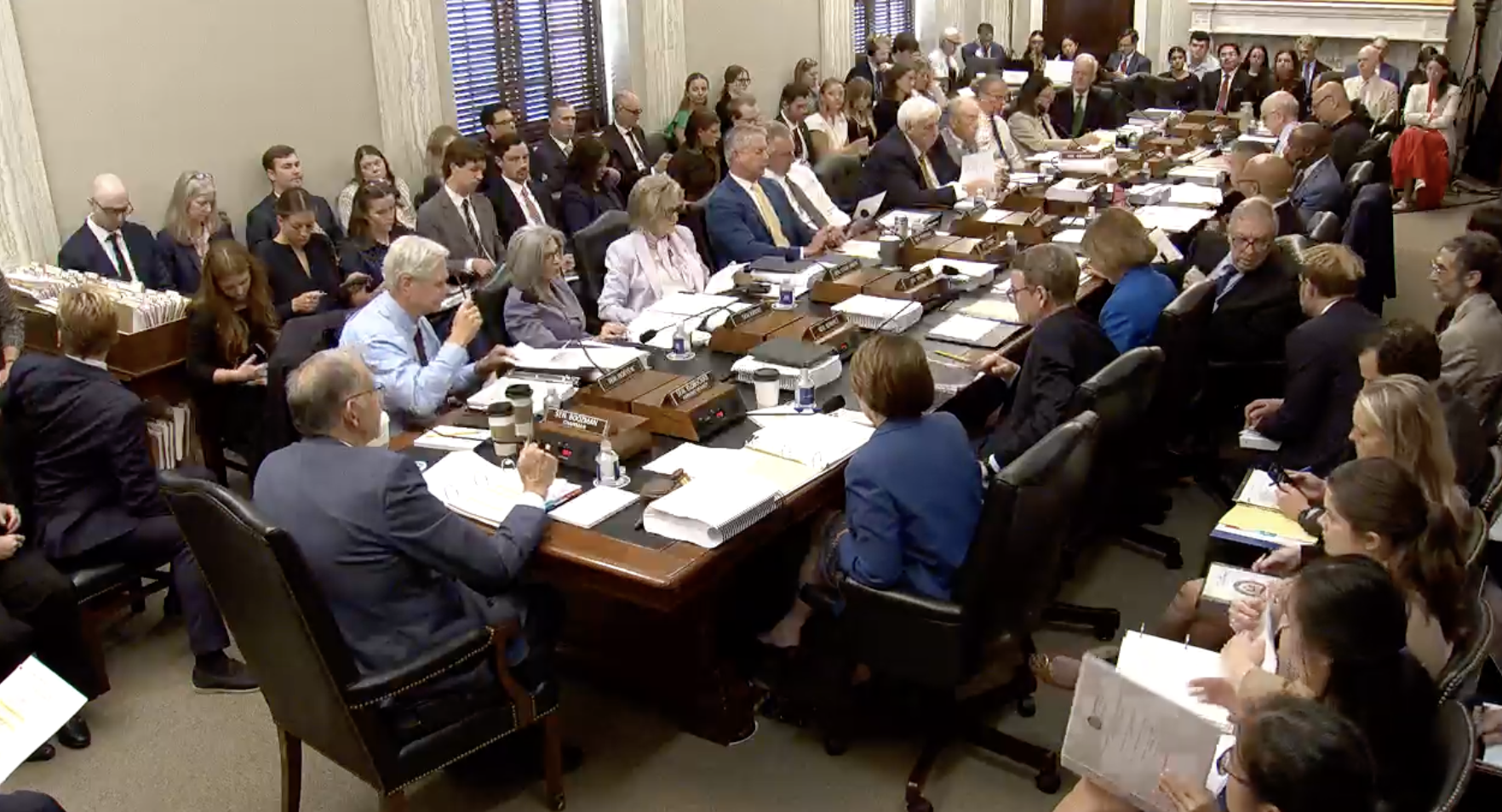
The hearing concluded with Democrats rejecting the current Farm Bill, a massive piece of legislation renewed roughly every five years that guides the federal government’s food and farm policy.
Booker’s amendment addressed the Supreme Court’s June decision that provided a new interpretation of language within the Federal Insecticide, Fungicide, and Rodenticide Act (FIFRA) — the nation’s key law regulating pesticides. That interpretation prevents people from bringing failure-to-warn claims over harms alleged to be linked to pesticides if the US Environmental Protection Agency (EPA) does not require warnings.
Booker’s amendment would have prevented that federal preemptive power, declaring that pesticide companies can add warnings about cancer and other health risks to their pesticide labels without an EPA requirement to do so.
The amendment would restore “the fundamental right of cancer victims to have their day in court,” Booker said while putting forth the amendment.
The amendment was voted down on party lines, with Republicans all voting no.
The markup hearing was an attempt to keep the Farm Bill moving forward after the Senate put forth its draft in June. The hearing featured several proposed amendments, but most prominently highlighted the partisan stalemate on the Supplemental Nutrition Assistance Program, SNAP. Democrats have said they will not vote for a Farm Bill unless it has at least a two-year delay to Republicans’ current requirement that states bear some of the cost of SNAP.
Senate Agriculture Committee Chairman John Boozman recessed the committee indefinitely but can call back members anytime for another vote.
“We’re holding hostage our farm community,” Boozman said of the impasse as he concluded the meeting. “We’re charged to help them and right now we’re not able to do that.”
Response to Monsanto case
Booker brought the amendment in response to the June Supreme Court decision in Monsanto v. Durnell. The decision came in an appeal brought by Bayer, the maker of glyphosate-based herbicides such as Roundup. More than 100,000 people have sued Monsanto alleging the weed killers cause cancer, and Bayer has paid more than $11 billion in settlements and jury verdict awards since buying Monsanto in 2018.
Booker said the Supreme Court ruling gave giant chemical corporations a “free pass when their toxic products make people sick.”
“The Supreme Court gave Bayer their liability shield … [and] permanent immunity from lawsuits about their failure to warn people about the known health risks of their products,” he said. “The single ruling wiped out tens of thousands of active court cases.”
“The single ruling wiped out tens of thousands of active court cases.” – Sen. Cory Booker
Booker’s amendment follows a proposed amendment to FIFRA introduced in June by US Rep. Chellie Pingree, a Democrat from Maine, and Rep. Thomas Massie, a Republican from Kentucky. Their proposed amendment would allow people who are exposed to pesticides they blame for causing health problems to be able to sue companies for failing to warn them of health risks.
Booker said his amendment gave Republican colleagues who align with the “Make America Healthy Again,” or MAHA, movement an opportunity to stand up for health protections. MAHA leaders were outraged over the Supreme Court ruling.
“You cannot claim to want to make America healthy again by voting to protect corporate profits over cancer victims,” Booker said.
Featured image: Sen. Cory Booker, a Democrat from New Jersey. (Credit: Senate.gov)