Senate Farm Bill draft leaves out industry-backed provision to undo state animal welfare standards
Listen to the audio version of this article (generated by AI).
The Senate Agriculture Committee on Tuesday released its draft Farm Bill, omitting a controversial provision that would have prevented states from having stricter animal welfare laws than other states, which is a priority of powerful industry groups and their allies in Congress.
The provision has been a key fight in the Farm Bill drafting. Critics praised its omission, while industry groups pushed for its eventual inclusion as the bill gets marked up.
The draft comes two months after the House passed its version of the bill — a massive piece of legislation renewed roughly every five years that guides the federal government’s food and farm policy.
The Senate draft has similar provisions around issues such as agricultural and forest conservation, rural development and trade, but scrapped a provision preventing states from having stricter animal welfare laws. The Senate’s version also left out other industry priorities such as year-round sales of E15 fuel and blocking state pesticide labeling laws — both of which were also left out of the House version and supported by many Republicans.
Despite these bipartisan olive branches, the Senate draft did not delay a requirement from last year’s One Big Beautiful Bill Act that will force some states to pay for some Supplemental Nutrition Assistance Program (SNAP) benefits.
Senate Democrats called for a two-year delay in this cost-shift and have signaled they will not vote for a Farm Bill that doesn’t address this. Senator Amy Klobuchar, a Democrat from Minnesota, and ranking member on the Senate Agriculture Committee, did not respond to a request for comment on the draft bill.
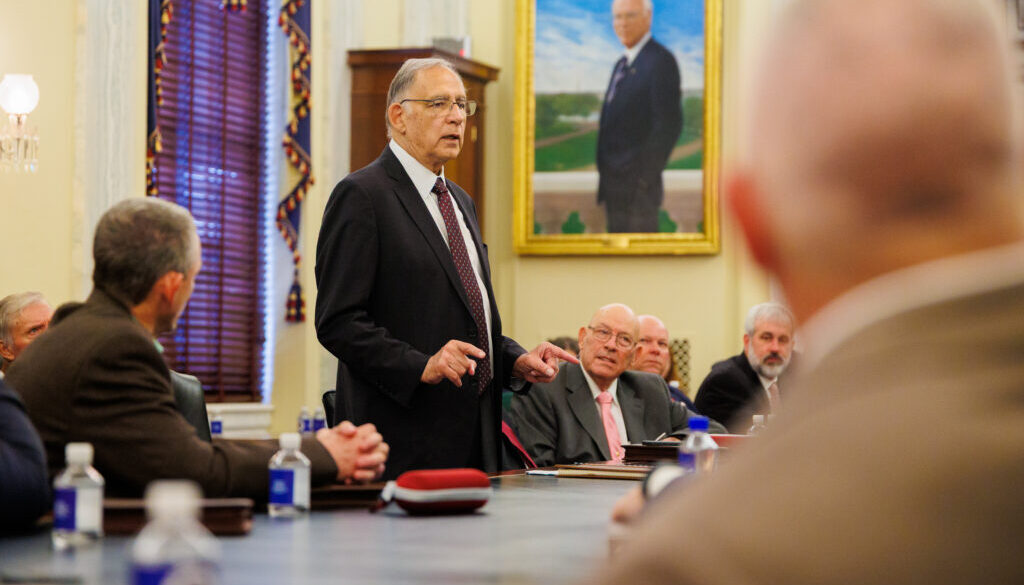
Industry groups reacted with cautious optimism to the draft, reiterating the need for the final bill to prevent state-level animal welfare laws that impact other states. Senate Agriculture Committee Chairman John Boozman, a Republican from Arkansas, said in a statement that the draft “reflects the input and priorities of Republicans, Democrats, and most importantly, rural America,” adding that he looks “forward to continuing conversations with my colleagues about how we can best serve them and the communities they call home.”
Save Our Bacon Act scrapped
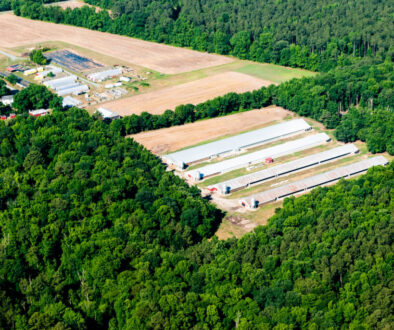
The provision targeting state animal welfare laws that was omitted in the Senate draft is commonly referred to as the “Save Our Bacon Act.” It would bar state or local governments from requiring certain protections for animals at farms – including at concentrated animal feeding operations, or CAFOs.
The measure specifically targets two state laws — California’s Proposition 12 and Massachusetts Question 3. Both require that hogs, calves and chickens that are on confined farms or sold in the states are raised with adequate room to turn around, lie down and extend their limbs. The omission in the Senate version comes despite multiple outreach campaigns from industry-linked groups pushing for the Save Our Bacon Act.
The House provision that preempted those state laws has garnered broad support from meat industry associations that argue such state laws increase consumer costs and hurt farmers. “Producers of covered livestock have a federal right to raise and market their covered livestock in interstate commerce,” the House Farm Bill draft reads.
Industry groups expressed support for some aspects of the Senate draft, but pushed the Senate to include some form of the Save Our Bacon Act in the final bill.
The National Pork Producers Council (NPPC) — which has led opposition to California’s Proposition 12, including spearheading a legal challenge that landed at the Supreme Court that ended up upholding the legality of Proposition 12 — said in a statement that such state laws create “a patchwork of state animal housing laws that hurts small farmers the hardest, takes away veterinarians’ choices, increases the cost of food, and undermines states’ rights.”
“We appreciate the Chairman putting forward a discussion draft to guide a path forward,” said NPPC president Rob Brenneman in a statement. “America’s pork producers will continue to advocate for a Prop. 12 fix in the formal farm bill like our livelihood depends on it — because it does.”
“America’s pork producers will continue to advocate for a Prop. 12 fix in the formal farm bill like our livelihood depends on it — because it does.” – Rob Brenneman, National Pork Producers Council
American Farm Bureau president Zippy Duvall said he “appreciates Sen. Boozman’s work” and noted what he considers the draft’s benefits including “improved access to credit, expanded investments in specialty crops, increased transparency in fertilizer markets, and enhanced research and conservation programs.” However, Duvall acknowledged the omission of three key priorities for the Bureau, “economic aid, … protecting interstate commerce from a patchwork of state laws, and approving the sale of E15 blended fuel year-round.”
Public health, animal rights and environmental groups that have campaigned against the Save Our Bacon Act provision said the omission was a bright spot in the draft.
Sara Amundson, president of the animal protection nonprofit Humane World Action Fund, said in a statement that she commends Senate leaders for “choosing not to reopen a food fight around basic protections for animals and states’ rights.”
“At a time when farmers face real pressures from multiple directions, the Senate Farm Bill wisely omits this poison pill proposal that has repeatedly failed in Congress, failed in the courts and failed to gain public support,” she said.
“At a time when farmers face real pressures from multiple directions, the Senate Farm Bill wisely omits this poison pill proposal that has repeatedly failed in Congress, failed in the courts and failed to gain public support.” -Sara Amundson, Humane World Action Fund
Senator minority leader Chuck Schumer, a Democrat from New York tweeted his opposition to the Save Our Bacon Act and vowed he “will fight to keep it out.”
I OPPOSE the Save Our Bacon Act and any attempt to jam it into the Farm Bill.
This bill would gut state food safety and animal welfare laws, wipe out voter-approved protections, and strip states like NY of the right to set basic standards.
It’s a giveaway to Big Ag and meat…
— Chuck Schumer (@SenSchumer) June 23, 2026
“Misses the mark”
Angela Huffman, president of the government accountability organization Farm Action, said in a statement the Senate draft “avoids some of the most harmful provisions included in the House version” but that it still “misses the mark for American farmers.”
It “strips out some of the strongest features of the administration’s regenerative agriculture pilot by restricting the requirement of whole-farm assessments and soil testing in certain conservation programs,” she said.
The draft also calls for a budget reduction for the US Department of Agriculture’s Environmental Quality Incentive Program, which helps farmers and ranchers incorporate conservation practices.
“Congress should use the Farm Bill to build a resilient food system – not double-down on the same corporate model that created these problems in the first place,” Food & Water Watch Food policy director Rebecca Wolf said in a statement.
The Senate bill will need to clear 60-votes, which means the Republican majority — with 53 seats — needs some support from Democrats, which hold 45 seats, and the two Independents. The Senate is expected to mark up the bill prior to its August recess.
Featured image: Senate Agriculture Committee Chairman John Boozman, a Republican from Arkansas. (Credit: Arkansas Farm Bureau Federation/flickr)