
The needless poisoning of Western wildlands
Over 60 years ago, conservationist Rachel Carson wrote in her book “Silent Spring”: “As crude a weapon as the cave man’s club, the chemical barrage has been hurled against the fabric of life”. Her words are even more relevant today.
This barrage has increased over the years. In 2010, federal agencies alone sprayed 440,000 pounds of the weedkiller glyphosate across 1.2 million acres of public wildland; these applications have since much increased. In our vast national forests, glyphosate and other herbicides are now being sprayed in quantities rivaling the farm belt. Our national parks, wildlife refuges, roadless areas, and recreation areas are all exposed to this unprecedented assault.
We along Colorado’s Front Range have been wrestling with our own onslaught, including from the skies, as Colorado officials look to drones to spray the chemicals on public lands.
In efforts to preserve and protect natural environments from invasive weeds, synthetic poisons are the contemporary tool of choice. These substances were created in the lab and then patented and marketed by the chemical companies. They are often made from petrochemicals, in energy-intensive processes that create greenhouse gas emissions. They can be very effective poisons. Yet there is much evidence of the unintended harm they can cause. For wildlands, this harm is almost always unnecessary.
We along Colorado’s Front Range have been wrestling with our own onslaught, including from the skies, as Colorado officials look to drones to spray the chemicals on public lands.
The weed control work is often motivated by powerful monetary incentives. As was the case in recent years with the addictive opioid oxycodone, manufacturers pursue their profits even at the expense of the public good. For wildlands, the companies are now using the same familiar methods (industry-funded studies, meeting and research sponsorships, free samples) to push their chemical treatments onto a new generation of land managers. Like many doctors during the opioid epidemic, our wildlands managers often are naïve about the risks and the harm their spraying campaigns can cause.
Safety at stake
In 2025 alone, Boulder County, Colorado sprayed 14 different synthetic pesticides in its open space holdings. In 2022-2023, 17 were sprayed, including: 2,4-D, chlorsulfuron, quinclorac, aminopyralid, glyphosate, dicamba and indaziflam. All were approved by the Environmental Protection Agency as safe for use according to product labels. The county land managers say they are operating within the law: the public need have no concern.
Yet, each of the approved pesticides include proprietary “non-active” surfactants and other chemicals designed to assist the uptake of the chemicals into plant cell tissue.
Multiple studies have shown that some of these chemicals are more poisonous than the active ingredients. Yet these ingredients are not disclosed at all on product labels. Nor are the per- and polyfluoroalkyl substances (PFAS) present as contaminants in many glyphosate– and indaziflam-based products. This contamination was only recently discovered through independent testing.
Human safety and ecological safety are at stake.
Both glyphosate and its metabolic product AMPA are now demonstrated to have toxic effects on test fish species (increased embryonic mortality, physical malformations, and altered motor behavior). This is not an expected result for a “safe” plant poison that is supposed to dissipate rapidly in the environment. Similarly, the broad spectrum pre-emergent (and persistent) herbicide indaziflam is highly toxic to fish, amphibians and aqueous invertebrate fauna. When we aerially spray these chemicals across large acreages in the West we poison other life as well.
Glyphosate is of particular concern. Despite many applicators believing that the chemical dissipates rapidly, it persists in the dead plant tissue in wildlands, including in the root systems, for at least several months after application. Biota that ingest such dead plant tissue are affected, such as rodents, microbes, fungi, hexapods and more. The chemical can contaminate the pollen and nectar of target and non-target flowering species. Glyphosate has also been demonstrated to disrupt the gut microbiota of bees even at low environmental doses and to increase bee mortality.
Glyphosate is often described as relatively harmless to humans: because animals lack the shikimate metabolic pathway targeted by this chemical. Yet new research shows that some common bacteria inside the human digestive tract do include this pathway. Glyphosate is now known to cross the blood-brain barrier, allowing the chemical to infiltrate central nervous system tissue. There are traces of its degradation product AMPA in human brain tissue. Its presence is linked to chronic neurological disorders such as Parkinson’s disease. There are reported positive associations between glyphosate biomarkers and metabolic disease risk factors. Also, new studies show that exposure to this herbicide (glyphosate and AMPA) during the middle months of human pregnancy increases risk of premature birth (before 37 weeks). It is not harmless to humans.
No escape
Visitors to our wildlands may be alarmed to find that, even in these natural areas, they cannot escape chemicals that the medical profession tells them can be detrimental to their health. It is fair to ask: is this exposure necessary?
The short answer is “no”. In many cases, control efforts are not necessary and pesticide use can be entirely avoided. From a detailed listing provided by Boulder County for 2025, nearly all of the target species for weed control applications in that year were plants so widespread that eradication is considered impossible. The pesticide treatments only suppress these species, temporarily. This situation is typical throughout the West.
By taking on the never-ending task of temporary suppression of weeds that come back each year, Boulder County becomes a continuing cash cow for the chemical companies. For Boulder County’s 115,000 acres of county open space, let alone for the West, eradication goals are not feasible.
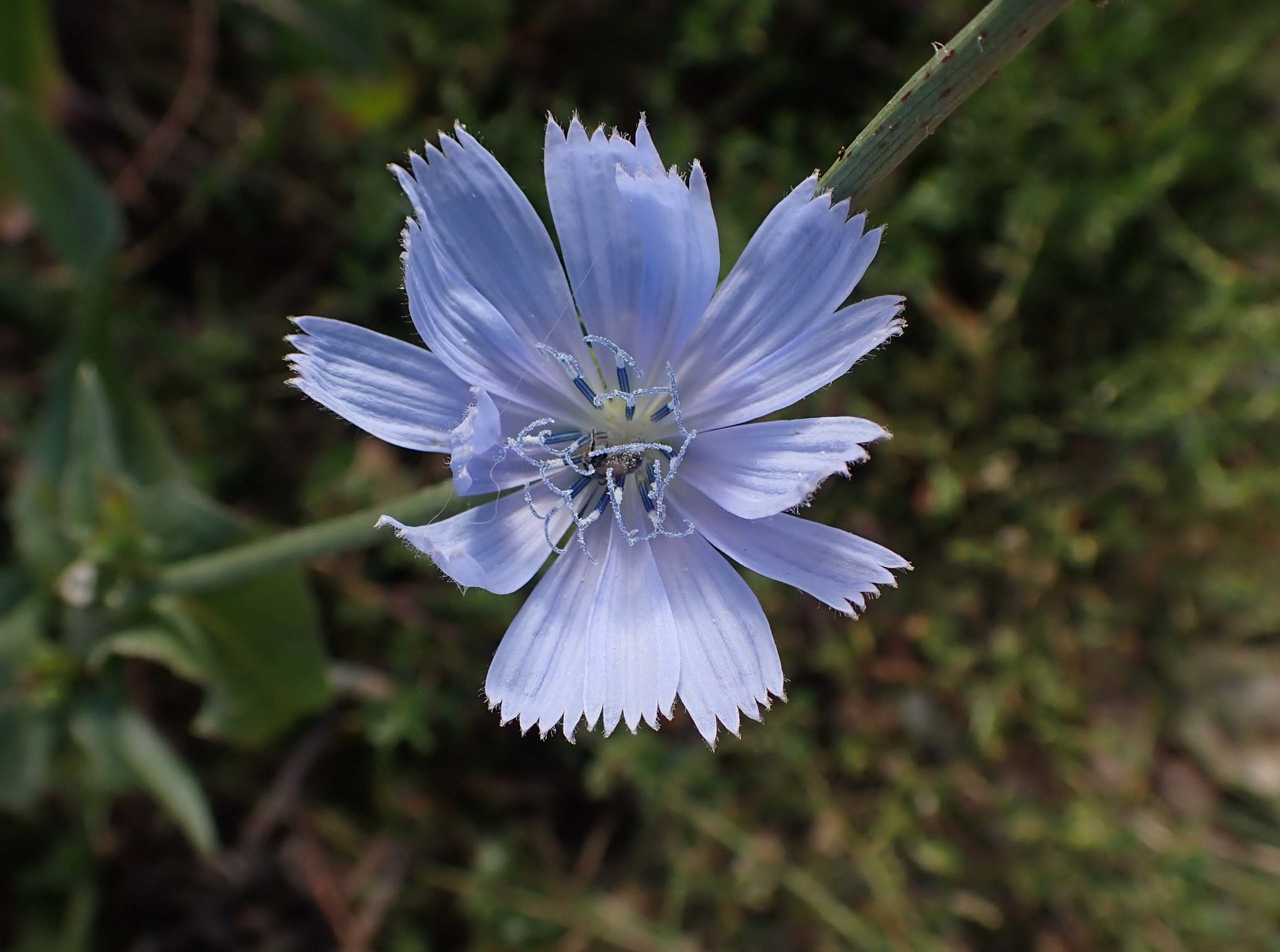
The western states include roughly 50 non-native noxious weeds each on their various lists for control. Surprisingly, many pose no threat at all to biodiversity or to the integrity of their host ecosystems. Consider chicory (Cichorium intybus). It is identified for control statewide in Colorado, New Mexico, Arizona, and many local jurisdictions. When land is stripped of its vegetation for a new development, or when it is otherwise abused by humans, chicory is among the first plants to establish, and bare ground then becomes “weed-infested”.
Yet, if our goal is to foster recovery from whatever has disturbed the soil, the chicory could instead be welcomed as the first stage in vegetational recovery. The plant does not degrade wildlife habitat and water quality; it protects the soil from erosion; and there is no evidence that it has contributed to the decline of endangered or threatened native plant species. It also provides needed shelter and food for birds and insects (including native bees).
Unfortunately, unless a major shift occurs in the assumptions guiding invasive species management in our wildlands, this listed plant and dozens of others that are not harmful will continue to be targeted by expensive and ecologically unjustified pesticide spraying campaigns.
What about the bad actors?
For some other non-native plants, research has demonstrated that chemical control is not always needed and can do more harm than good.
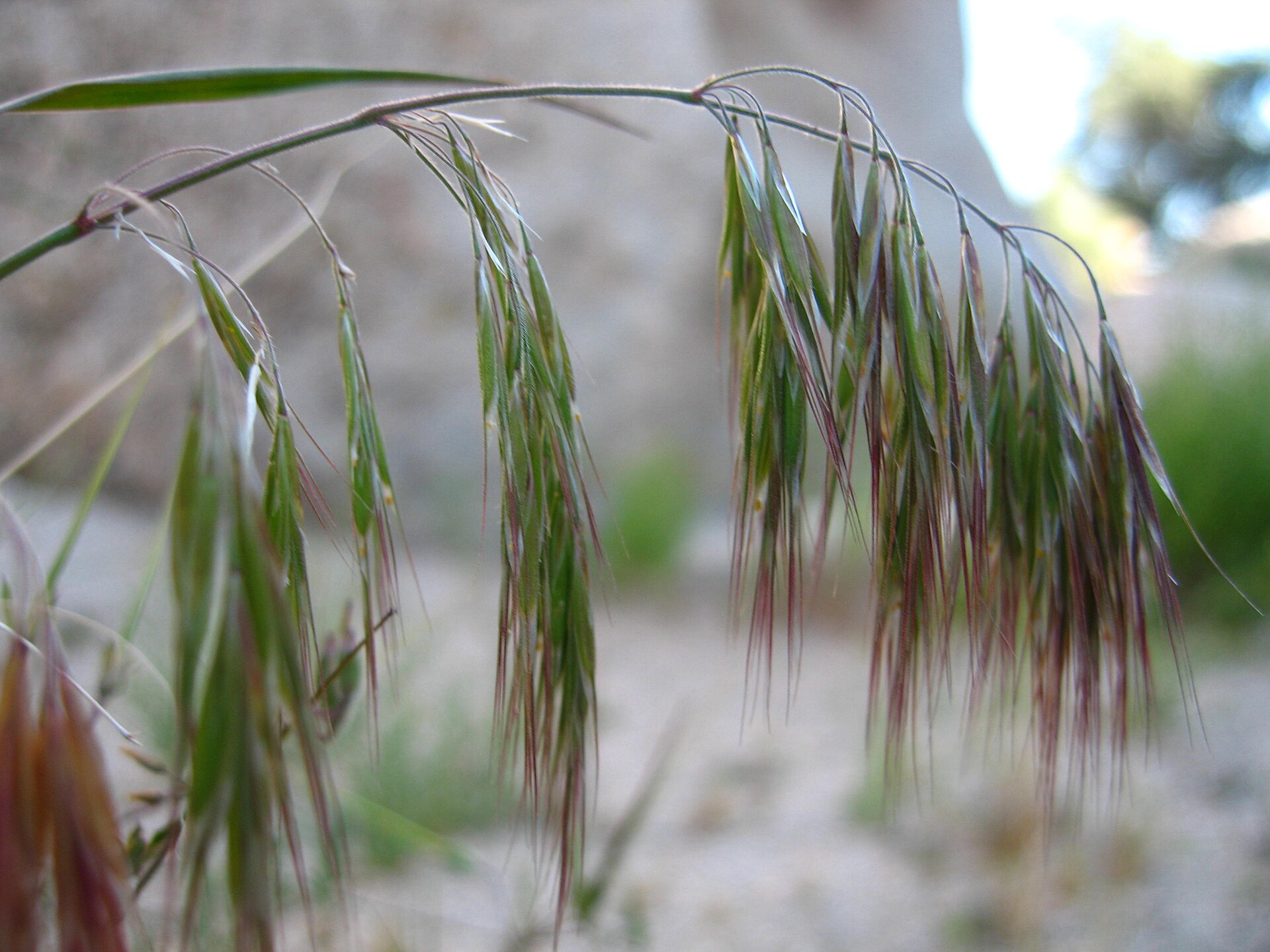
Take cheatgrass (Bromus tectorum) for instance. Cheatgrass is a disturbance specialist, capable of exploiting resource opportunities and bare ground that is created by intensive grazing of cattle, by fire, or by the pesticide applications themselves. For decades, cheatgrass has been seen as invading and excluding native plant species, increasing fire hazard, and reducing biodiversity and wildlife forage by replacing perennial grasses. And major chemical-based suppression efforts have been mounted along Colorado’s Front Range.
Field data from the Front Range indicates that cheatgrass does not invade native plant communities unless there has been disturbance. Absent any control measures, or further disturbance, cheatgrass cover is now declining at locations where this process is being studied. Thus, spraying to control the plant can be counter-productive; it creates bare ground, turns the clock back, and thereby sets the stage for re-invasion by cheatgrass and other weed species.
The justifications do not stand up to scientific scrutiny as we discuss in detail in a recently published paper in Restoration Ecology.
Some of the spraying now underway across the West uses the proprietary product Rejuvra, with indaziflam as the active ingredient. This chemical persists for 3-4 years as a pre-emergent poison bound to the surface soil and longer as a trace contaminant. It is lethal to fish at environmentally relevant doses and toxic to the most common soil fungus (Trichoderma). Indaziflam can poison aquatic invertebrates, including amoeba: organisms with large effects on soil food webs. It was recently shown to be genotoxic to human cells.
Spraying to control the plant can be counter-productive; it creates bare ground, turns the clock back, and thereby sets the stage for re-invasion by cheatgrass and other weed species.
Studies investigating indaziflam’s impacts up the food chain are mainly lacking, but when sprayed from the air, drift to non-target areas including local wetlands is possible; when sprayed on a floodplain, floods can disperse the contaminated topsoil and move sediment downstream. Indaziflam may attach to dust particles during aerial spraying and then be transported off site. In the case of one of its close chemical relatives, atrazine, dispersal long distances from the spraying location is well-documented.
Reform needed
Western wildlands comprise millions of acres and are a growth market for the chemical manufacturers. No crop is being produced, yet weed management on conserved natural land has recently become as dependent on chemical company products as in agribusiness. However, in this case, the company profits are being extracted from government agencies, nonprofit organizations, and the taxpayer. The work effectively becomes a major subsidy for the chemical companies; a boondoggle that keeps on giving year after year.
Ending wasteful government management efforts on wildlands is not a partisan issue. Reform is clearly needed. At present, unsupported generalizations about the harm caused by non-native weeds are used to justify aerial spraying campaigns.
A way must be found to greatly reduce pesticide use and move our wildlands towards more sustainable and ecologically healthy management. Many land agencies across the West are feeling renewed pressure from the public and from conservation organizations to reduce or ban synthetic pesticide use. We believe this heightened concern is well-justified and must be responded to.
Some specific changes within both federal and local management agencies that could help address this goal include:
- Measurement and publication of the annual quantity of pesticide product use.
- Repurposing the aerial technology now used to broadcast poisons to other more useful goals (early detection of exotic species; aerial applications of biocontrol organisms; seeding of desirable species).
- Requiring full disclosure of conflicts of interest in any scientific publication used to guide management policy involving pesticides.
Lastly, much has been written about the injustice of not adequately protecting farmworkers and farming towns from exposure to pesticides. Wildlands, managed for nature, may be misperceived as largely escaping such harm. This is simply not the case.
We should recall the words of the farmer, writer, and National Humanities Medal recipient Wendell Berry, who said “To abuse the land is to abuse the people”.
Invasive plant species may pose challenges to ecological land management, but they do not themselves constitute abuse of the land. Spraying powerful synthetic poisons and unlisted substances on living natural ecosystems does. It is urgent that we begin implementing plans to verifiably reduce the quantity of pesticides applied to western wildlands.
Featured image: Getty Images/Unsplash +
(Opinion columns published in The New Lede represent the views of the individual(s) authoring the columns and not necessarily the perspectives of TNL editors.)