Iowa’s hog dominance shown in federal data amid environmental concerns
Listen to the audio version of this article (generated by AI).
Iowa continues to dominate the US hog farming market — slaughtering more than 39 million hogs last year, roughly 30% of the nationwide market, according to the US Department of Agriculture’s (USDA) annual livestock slaughter report released this week.
The report comes as researchers and health advocates say massive farms in the state are contributing to widespread water pollution and illness. Iowa’s 2025 totals were a slight dip from the more than 40 million hogs it slaughtered in 2024 but were still more than three times higher than any other state.
Illinois and Minnesota ranked second and third, respectively, in hog slaughter totals with more than 11 million each. The USDA withheld data for six states — including major hog-producing state North Carolina — “to avoid disclosing data for individual operations,” the report said. Overall, the US slaughtered more than 128 million hogs in 2025 — roughly the same amount as the previous five years.
Pork production ripples across Iowa — adding an estimated $15.4 billion annually to the state’s economy, including $5.4 billion from hog slaughtering and processing alone, according to a report last year from the Iowa Pork Producers Association.
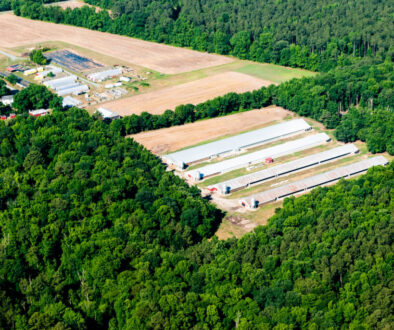
The new federal data reinforces the scale and intensity of the industry in Iowa. Hogs are largely raised in concentrated animal feeding operations (CAFOs) and generate an estimated 110 billion gallons of manure each year.
The state has faced increased scrutiny over links between its cancer rates and the pollution coming from CAFOs — including those used for the massive hog production — and corn and soybean fields. Iowa has the second-highest rate of cancer in the nation and is only one of three states where cancer is rising, according to the National Institutes of Health.
Earlier this month, a years-long report in Iowa found nitrates from the state’s CAFO manure and fertilizer runoff were, in part, behind its rising cancer rate. And weeks later, a Yale study found people living near CAFOs in California, Texas and Iowa suffer from higher rates of cancer, suggesting that nitrates from the massive farms may be playing a role.
“Iowa’s increasing hog production is a public health concern, both from a production and a slaughterhouse perspective,” said Michael Schmidt, general counsel for the Iowa Environmental Council. “The manure that results from our state’s intensive animal production is overwhelming our waterways with nitrates and other pollutants that are associated with several types of cancer that are increasing in Iowa.”
“Iowa’s increasing hog production is a public health concern, both from a production and a slaughterhouse perspective.” – Michael Schmidt, Iowa Environmental Council
The cancer and pollution concerns are impacting state politics as well — a February poll of 600 registered voters in Iowa commissioned by Food & Water Action found that 79% supported mandatory requirements for large-scale agriculture to reduce pollution.
Pork production across the nation is expected to slightly increase this year, said Wendy Brannen, vice president of communications and marketing for the National Pork Producers Council. She did not comment on Iowa’s hog production dominance or consolidation but said that federal forecasts show a 1.4% pork production increase expected this year.
“The US breeding herd is currently the smallest since 2014, meaning production growth is being driven by continued improvements in the number of pigs saved per litter and heavier market weights,” she added.
Featured image: Getty Images/Unsplash +