University launches research project into Iowa health crisis
Listen to the audio version of this article (generated by AI).
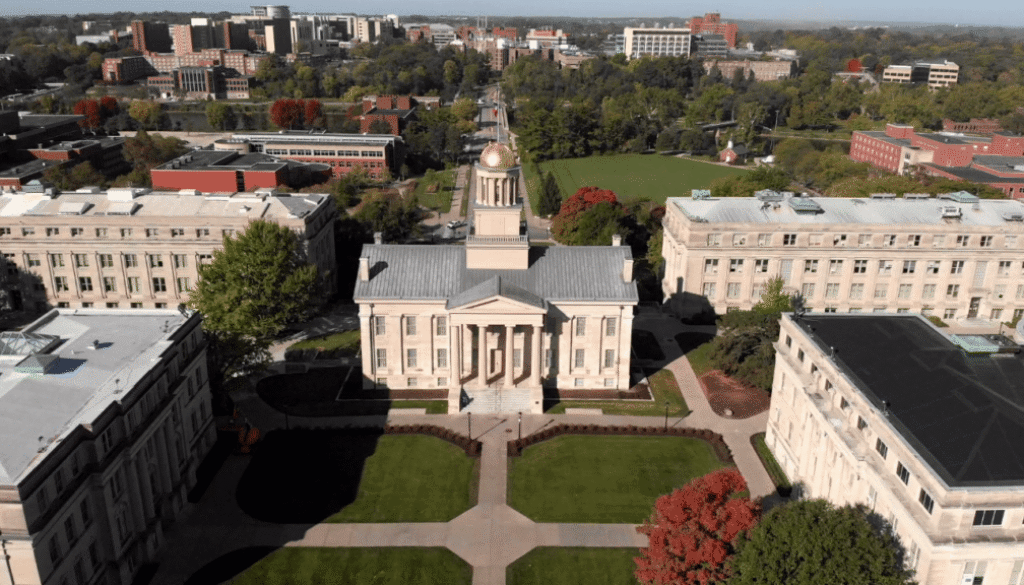
The University of Iowa on Wednesday announced the launch of a statewide research initiative aimed at understanding how environmental exposures may be causing a range of dire health problems experienced by people around the state.
With initial funding of $6 million and a goal for $10 million, the university said it will gather and analyze data to identify factors driving rising cancer rates in Iowa as well as issues with maternal and newborn health, neurodevelopment, and autism-related outcomes.
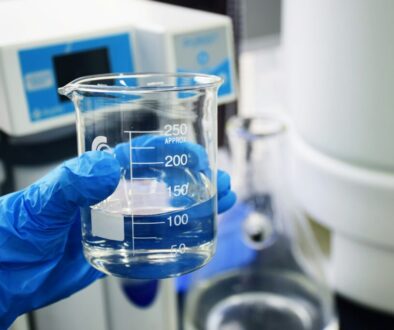
The research will include monitoring and gathering data on air and water contaminants, setting up an infrastructure for measuring contaminants in human tissues or bodily fluids, and studies that tap into existing repositories of blood, urine, and breast milk gathered from people around the state, according to David Cwiertny, director of the university’s Center for Health Effects of Environmental Contamination (CHEEC), who is leading the initiative.
“It is a lot of work that needs to be done,” Cwiertny said. “I’m optimistic that we’ll be able to get valuable information. We’re in such a data limited environment.”
The initiative, dubbed the Iowa Integrated Network for Science, Information, and Geospatial Health Tracking (INSIGHT), will be supported by an advisory committee of nationally recognized experts, Cwiertny said.
A “human health crisis”
The move comes at a time of heightened concerns over rising rates of cancer in the state, and fear that the state’s reliance on large-scale agriculture may be at the root of the health crisis.
Iowa has the second-highest rate of cancer in the nation and is only one of three states where cancer is rising, according to the National Institutes of Health. For many types of cancer, the state’s numbers dwarf national averages. The state’s overall cancer rate is 498 people per 100,000 — 10% higher than the national rate.
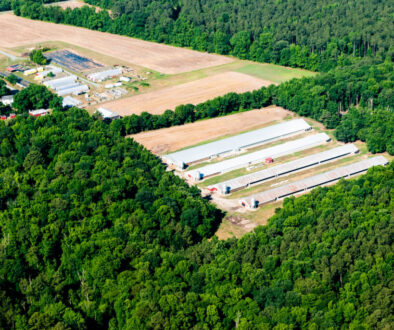
Many residents and health and environmental advocates have pointed to heavy use of farm chemicals and large-scale animal operations as drivers of the disease rates while farm industry groups and their political allies have pushed back on the connections. With nearly 87,000 farms, the state ranks first not only for corn production but also for pork and egg production, and is within the top five states for growing soybeans and raising cattle.
Nitrate contamination from these farms has posed significant contamination concerns in key waterways around the state, including rivers that supply drinking water for the state capital of Des Moines. Last week, the city’s water utility again asked residents to cut back on water use because nitrates levels are so high in the drinking water supplies that the utility is having a hard time treating and clearing the contaminants to meet demand.
Initial funding of $5 million is coming from Iowa residents Sharon and Kyle Krause with another $1 million from the Roy J. Carver Charitable Trust.
“Right now we’re really at an inflection point in Iowa,” said Sharon Krause, a lifelong Iowan who owns several farms and serve as an advisor to a family enterprise of 6,000 acres of farmland in the state. “We have a human health crisis. Our water quality is so compromised. There is a trajectory here that we need to reverse.”
“Right now we’re really at an inflection point in Iowa. We have a human health crisis.” – Sharon Krause, research funder and Iowa farmer
“No agenda”
The university is hiring some new scientists and researchers and the work is slated to get underway July 1. The team plans to develop a website where data can be shared with the public as it is developed, particularly data on water sampling, said Cwiertny.
“There is a lot of emphasis on trying to make sure that as we generate data, every piece of data we get we’re putting out on a website or a dashboard so Iowans can see what actually we’re finding,” he said. “The next step will be then making sure we’re having really reasonable discussions as to what the implications of these findings are. But we’re going to start by making sure we understand these vulnerabilities and these environmental risks and identifying those parts of the state that have them more acutely.”
Cwiertny said there is “no agenda” behind the research project.
“It is about getting the science and knowledge and information and the evidence,” he said. “We should want to have that so we can make informed decisions.”
The INSIGHT project will add to other recent research reports and studies. In March, the Iowa Environmental Council (IEC) and The Harkin Institute, a public policy research institute located at Iowa’s Drake University, published a report pointing to exposures to four environmental risk factors – pesticides, per- and polyfluoroalkyl substances (PFAS), nitrates and radon as key likely factors contributing to cancers in the state.
And last year, a group of more than a dozen scientists released a 227-page water assessment report commissioned by Polk County, Iowa, that found agricultural operations to be a leading cause of the state’s water pollution problems. The report determined that much, though not all, of the contamination is tied to agricultural practices, such as pesticide use and waste runoff from large livestock operations.
Colin Anderson, co-director of the Institute for Agroecology at the University of Vermont, said research efforts such as those in Iowa are “vital in order to phase out pesticides and petro-chemicals from agriculture and work toward a more sustainable and equitable food system.”
He said such research needs to come with policy changes.
“We need to not only do the science, but also engage in the political work to hold polluters to account and limit the further use of these chemicals,” said Anderson. “More science and data, such as what will likely be gleaned from a project like this in Iowa, will be useful in that push.”
Michaelyn Mankel, a senior organizer with the Food & Water Watch advocacy group, said that while more research is needed, action by policymakers and others should not wait.
“Iowa’s public health crisis is a harbinger of what is to come, should lawmakers continue to allow factory farms and industrial agriculture to pollute our water and environment with impunity,” Mankel said. “Across the country and the upper Midwest Corn Belt in particular, communities are demanding policies that put public health over Big Ag. With more factory farms and pesticides than any other state and the fastest rising cancer rates in the nation, Iowa offers a case study of this nationwide crisis — and an opportunity for change.”
Featured image from the University of Iowa.