Monsanto’s big moment – All eyes on Supreme Court hearing over pesticide law
Listen to the audio version of this article (generated by AI).
The US Supreme Court is set to hear arguments in a key pesticide regulation case on Monday, setting the stage for a ruling that could weaken the ability of consumers to sue companies for failing to warn of product risks.
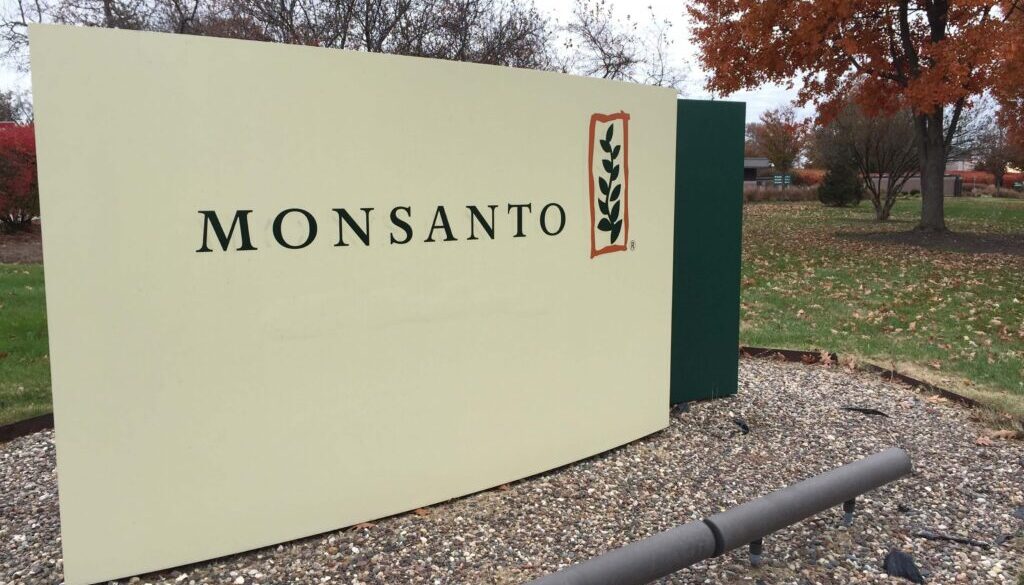
The case, titled Monsanto v Durnell, centers on glyphosate – a weed-killing chemical used in the popular Roundup brand and numerous other herbicide products. The chemical has been scientifically linked to cancer in multiple studies, and was classified as a probable human carcinogen by an arm of the World Health Organization in 2015.
Monsanto, the company that introduced glyphosate to the world in the 1970s and which is now a part of the German conglomerate Bayer, has spent the last decade fighting more than 100,000 lawsuits claiming it failed to warn customers of cancer risks associated with exposure to its glyphosate products.
After losing multiple jury trials, the company has paid billions of dollars to resolve the bulk of the lawsuits and is proposing to spend another $7.25 billion toward a class action settlement aimed at resolving up to 60,000 cases still pending.
Monsanto, which maintains its products don’t cause cancer, hopes a favorable Supreme Court ruling will effectively put an end to the litigation.
Backing Monsanto’s case is Syngenta, a Chinese-owned company that is similarly being sued by thousands of people around the US who allege the company failed to warn them of research linking Syngenta’s paraquat herbicide products to Parkinson’s disease.
In addition to Monsanto and Syngenta, future cases against other agrochemical companies could similarly be limited, according to legal experts.
Monsanto specifically is asking the Supreme Court to rule that under the Federal Insecticide, Fungicide, and Rodenticide Act (FIFRA), it cannot be held liable for failing to warn of a cancer risk if the Environmental Protection Agency (EPA) has not found such a risk exists and not required such a warning. FIFRA preempts any state requirements for such a cancer warning, the company argues.
The EPA’s position is that glyphosate is “unlikely” to be carcinogenic.
Lawrence Ebner, general counsel for the Atlantic Legal Foundation, which is backing Monsanto, said in a briefing ahead of the court hearing that consumers could be misled by unneeded warnings.
“If you have a pesticide label with a zillion different warnings,” he said, “how is the user supposed to know the ones that really matter, the ones that EPA really has … determined are necessary?”
The Atlantic Legal Foundation is among more than 100 individuals and organizations represented in briefs filed with the Supreme Court that support Monsanto’s position. Many cite what they say is a robust record of glyphosate safety, and say juries cannot penalize companies for failing to put warnings on their labels when the EPA doesn’t require them. Others say they fear a loss at the Supreme Court could end up forcing glyphosate from the market. They argue that without glyphosate, the nation’s food production would be in jeopardy.
Separately, more than 100 parties have also filed briefs with the court arguing against Monsanto’s position. They say FIFRA clearly carves out space for separate state labeling requirements, including for warnings of product risks.
They point to lower court rulings and a 2005 Supreme Court ruling on the issue setting precedent for such warnings. Establishing a new interpretation of FIFRA preemption would effectively immunize manufacturers of dangerous products from accountability, they say.
Danielle Fugere, president of As You Sow, a nonprofit shareholder advocacy group promoting corporate responsibility, said in an interview that states need to be able to step in when regulatory agencies are not protecting public health due to undue influence from lobbyists or other factors. She said eroding state-based warning requirements could leave consumers without needed protections from harmful products.
“If there is no potential for liability, corporations can do whatever they want, sell whatever they want and create harms that they don’t have to pay for. That’s really what we’re talking about,” she said.
MAHA rally
The high-profile case is exposing a growing divide between the Trump administration and grass roots members of the Make America Healthy Again (MAHA) movement.
MAHA members have been seeking stricter regulations on glyphosate but have been repeatedly rebuffed by the Trump administration. Anger was heightened when Solicitor General D. John Sauer, appointed by the Trump administration last year, encouraged the Supreme Court to hear Monsanto’s case.
The outrage grew when President Trump issued an executive order in February seeking to protect production of glyphosate herbicides.
Sauer then filed an amicus brief favoring Monsanto, citing “EPA’s considered judgments about what warnings are actually necessary to protect public health …” and a need for “uniformity” across the country with pesticide labels. Sauer then asked for, and received permission to, make oral arguments to the court supporting Monsanto’s position in Monday’s hearing.
It’s all too much for MAHA, which is organizing a People v. Poison rally to take place outside the courthouse.
“The Trump administration should know that siding with Bayer over American families is a losing position,” said Vani Hari, a leading health advocate and organizer of the rally. “People expect leadership that puts their health first—not policies that protect corporations from being held responsible. How can you tell Americans to eat more real food, but then protect the companies that are spraying poisons on it? That’s a contradiction we cannot accept,” she said.
“The Trump administration should know that siding with Bayer over American families is a losing position.” – Vani Hari
The rally is expected to feature more than 30 speakers from across the country, including several former and current federal lawmakers, lawyers, farmers, scientists and health influencers.
JW Glass, senior EPA policy specialist at the Center for Biological Diversity, said in a statement that if the Supreme Court finds in favor of Monsanto and its German owner Bayer, it will be a “gross miscarriage of justice” that denies “Americans their right to hold the poison makers accountable for the cancers, neurological disorders, and other diseases linked to their pesticides.”
Glass said the EPA has “failed catastrophically” in assessing health risks of pesticides, pointing to a recent analysis that found the EPA routinely has not required cancer warning labels on pesticides even when the agency itself has determined that the ingredients are likely to cause cancer.
“The pesticide industry and the Trump Justice Department want to fool the justices into believing the EPA’s pesticide regulatory system is so robust there’s no need for more protections,” Glass said. “But any honest assessment of the pesticide office’s track record can only conclude that it has failed catastrophically at assessing the health risks of dangerous pesticides.”
Investors on edge
Tom Claps, managing director of legal and regulatory analysis at the Gordon Haskett advisory firm, said investors are keeping a close eye on the hearing, given the outcome could be what he describes as an “extremely significant catalyst” for ending the 10-year-long Roundup litigation.
In a research note to Bayer shareholders, Claps said investors should be “locked in” on the Supreme Court hearing on Monday because signals from the justices as to how they might rule could impact whether or not plaintiffs in the nationwide Roundup litigation decide to opt in or out of the $7.25 billion settlement Bayer proposed in February.
Plaintiffs must decide by June 4 if they will be part of the settlement, before the Supreme Court ruling is expected, meaning plaintiffs will be rolling the dice as they make their decisions to opt in or out. If the court rules that failure-to-warn claims are barred, they could face the possibility that their lawsuits could be thrown out or substantially weakened. If the court rules against the company, the litigation could get a boost.
“If Bayer ends up losing its SCOTUS appeal, the Settlement would be in jeopardy as Plaintiffs may not want to agree to the prior terms now that SCOTUS has ruled in their favor (and their claims would arguably be worth more),” Claps wrote to investors in his research note.


April 24, 2026 @ 6:02 pm
I guess my biggest question is what happens when the EPA has never issued a warning bc the company or industry never disclosed the toxicology testing that was performed and led them to require workers wear hazmat suits when working with the stuff? This is exactly what happened with PFAS! Dow knew in 1970 the dangers of PFAS, but it was never disclosed to the EPA until the late 1990s. If such withholding of information is ever found to have occurred by Monsanto, will it change the future if SCOTUS rules in their favor? We already know that Clarence Thomas is a vote for Monsanto bc he previously worked for them!!!