
WATCH: “The feeling here is … I’m helpless” — Iowa braces for lead blast
TNL managing editor Brian Bienkowski spoke with Karin Stein, the Iowa Field Organizer with Moms Clean Air Force, to discuss the US Army’s plan to blow up dangerous explosives containing lead azide Wednesday morning in southeastern Iowa.
US officials say the detonation, scheduled for 9 AM Central Time on November 25, is necessary to avoid a spontaneous detonation. The 68 drums of lead azide have been storied at the Iowa Army Ammunition Plant in Middletown, Iowa, for decades. The Army notified the public last week that it planned to detonate the material after exhausting other options.
“How can you spring this on us with such short notice … this is Thanksgiving week and we’re being told close your windows, leave your car outside, don’t let your children or your pets out,” Stein said. “How irresponsible to spring this on people.”
In a press conference Tuesday morning, federal officials said that a controlled detonation of lead azide was far preferable to the risk of spontaneous detonation. They said several steps have been taken to minimize the spread of toxic dust after detonation, including foam and earthen barriers, and misting systems to keep particles from traveling. The US Environmental Protection Agency (EPA) will be monitoring air, water and soil near the site for contamination. There is no safe level of lead, which is linked to brain and nervous system damage and is especially harmful to babies and young children.
The press conference came a day after a federal court rejected a stay request from environmental groups.
“We are mindful of the very real risks presented by the Army’s planned detonation of the stores of degraded lead azide,” the judges wrote in their decision. “However, we must acknowledge the realities of the situation: the degraded explosives present a risk of an uncontrolled and unplanned explosion, which would occur without the benefit of the safety measures that the Permit puts in place.”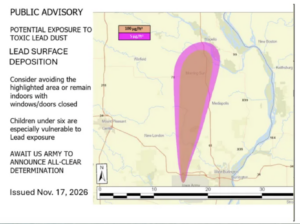
Stein encouraged people in the path to check out resources from state health agencies, such as the Iowa Department of Health and Human Services, as well as national health groups such as the American Lung Association for guidance on protecting themselves. Such groups are recommending people in the path of a potential plume to stay indoors, close windows, prevent tracking dust indoors, wash cars, and other measures.
Stein said residents need to continue questioning and holding federal officials accountable before and after the detonation.
“We, the parents, are the experts of what we want for our children,” she said.
Editor’s note: The views expressed by guests are their own.