
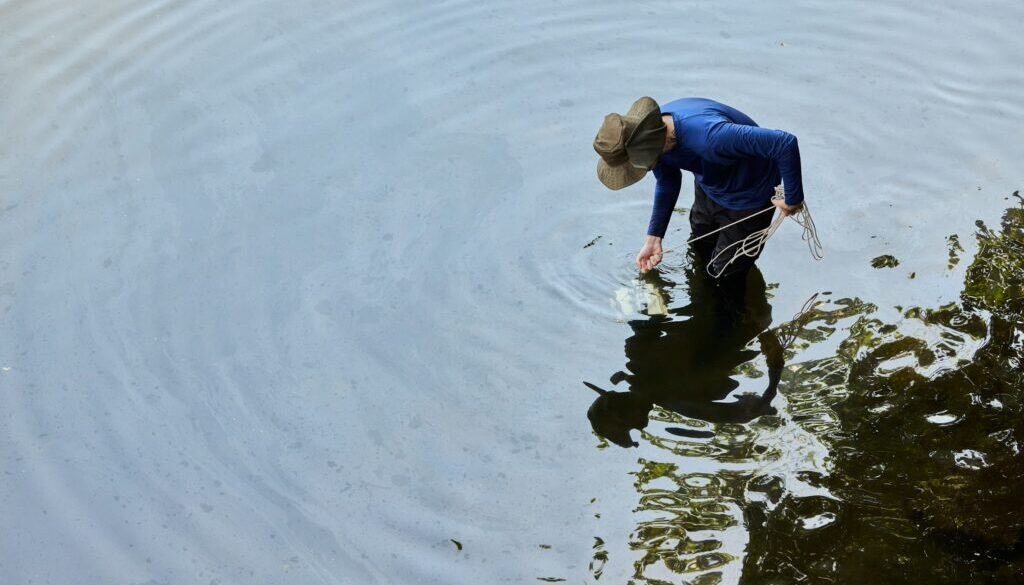
“Forever chemicals” pollute more than 80% of tested US waterways
If you swam, fished or paddled a lake or river in the US over the past couple of years, there’s a more than 80% chance the water contained toxic “forever chemicals,” according to a new report.
The report, published today by Environment America Research & Policy Center, found hotspots for the toxics, including the Mississippi River and Lake Ontario, and warns that this widespread pollution is likely “just the tip of the iceberg,” as it represents only a sampling of US waterways tested for per- and polyfluoroalkyl substances (PFAS).
“The report underscores what is really a much bigger problem than what most people realize,” said Tony Spaniola, co-chair of the Great Lakes PFAS Action Network. “If anything, the report dramatically understates the problem.”
“The report underscores what is really a much bigger problem than what most people realize.” – Tony Spaniola, Great Lakes PFAS Action Network
The findings come as the Trump administration rolls back policies aimed at reducing PFAS in drinking water. Critics say such moves will only worsen people’s exposure to the chemicals, which are linked to some cancers, high cholesterol, decreased immune response to vaccines, liver damage, thyroid problems, reproductive issues and other health issues.
In the new report, researchers analyzed federal, state and non-profit data collected between 2022 and 2024 and found that PFAS were detected at 83% of the 1,602 US lakes, rivers and streams that were tested. There were over 114 different types of PFAS found across the waterways.
Surface water monitoring varies across the country, said John Rumpler, report co-author and the clean water director and senior attorney at the Environment America Research & Policy Center. PFAS pollution was ubiquitous in lakes and rivers that had a lot of monitoring. For example, PFAS was detected at all 39 monitoring locations on the Mississippi River in Minnesota and Wisconsin, and at all monitoring locations on and around Lake Ontario.
There were also huge PFAS spikes in some locations, with the highest levels recorded in Brunswick, Maine, near an executive airport that suffered a PFAS firefighting foam spill in 2024. State testing found a nearby surface water retention pond had PFOS — a particularly toxic type of PFAS — at 1,040,000 parts per trillion. The US Environmental Protection Agency’s (EPA) current maximum level allowed in drinking water is just 4 parts per trillion.
The report builds on several previous reports that have looked at PFAS in drinking water. For example, an Environmental Working Group (EWG) analysis from March found that roughly 176 million people in the US drink PFAS-polluted tap water.
However, it is important to also look at surface water alone, Rumpler said.
“For one, many communities draw their drinking water from surface waters,” he said, adding that even if state or federal policies reduced PFAS in drinking water this report shows “we are still stuck with these highly toxic chemicals in our rivers, lakes and streams.”
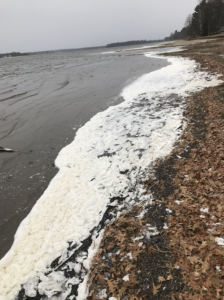
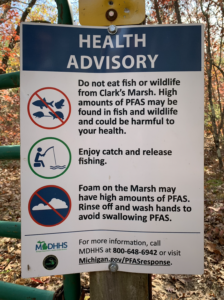
“And it’s there that they contaminate the fish that we eat and other wildlife,” he said.
Spaniola echoed the concerns of PFAS buildup in fish. He became involved in PFAS advocacy after learning his family’s home in Oscoda, Michigan, was in the epicenter of one of the country’s first major PFAS contamination sites due to military use of PFAS-firefighting foam for decades at the nearby Wurtsmith Air Force Base. In 2012, Oscoda put in place the first fish consumption advisory in the nation for PFAS contamination.
“The fish take in the water and PFAS, the PFAS biomagnifies within their bodies,” Spaniola said, adding that the community is “defined by water.”
“In 2016 I received notice of the contamination. I thought: if my water is not safe to drink today, it hasn’t been safe to drink for a long time,” he said. “You realize how much of a role water plays in your life every day.”
PFAS rollbacks
The report comes as the Trump administration has weakened or rolled back several protections meant to prevent PFAS water pollution.
The Biden administration previously set limits six types of PFAS — PFOA, PFOS, GenX, PFBS, PFNA and PFHxS — which have been linked to a variety of health harms, including cancer, heart problems and birth defects. The drinking water limits were considered landmark regulations after years of research and testing found PFAS chemicals are widespread in Americans’ drinking water.
But in May, The Trump administration proposed to rescind the limits for GenX, PFBS, PFNA and PFHxS, alleging that the Biden administration failed to follow the requirements of the Safe Drinking Water Act by not allowing for proper public comment. The EPA will leave in place the limits for PFOA and PFOS, chemicals known to be particularly harmful.
The administration has also approved three pesticides that health advocates say fit the definition of a PFAS, and scrapped a scientific review of PFAS-contaminated sewage sludge that is often spread on farm fields as fertilizer.
Rumpler said “federal drinking water standards are, of course, essential, but they are not enough.”
“We need to turn off the toxic tap,” he said. “We need to stop using these forever chemicals.”
In the meantime, he said, he hopes the reports prompts policymakers to take concrete steps such as bolstering Clean Water Act permits to require filtering out PFAS chemicals before they are discharged to a waterway, and banning the application of sewage sludge that contains PFAS.
“All of these things can dramatically reduce the flow of these chemicals into our environment,” he said.
Featured image credit: Molly the Cat/Unsplash +