
Manure digesters worsen ammonia air emissions from hog farms, study finds
Listen to the audio version of this article (generated by AI).
Ammonia emissions, which can harm a person’s ability to breathe, are more than three times higher when emitted from manure that has been through a digester compared to manure that is directed into storage lagoons or sprayed on fields, according to a new study.
The pre-print study, published in the Biogeochemistry journal, comes as farms increasingly turn to anaerobic digestion to deal with massive amounts of manure produced by hogs, dairy cows and other livestock. Such digesters are touted as a win-win solution — reducing the amount of manure that is stored or sprayed on fields along with methane emissions, while also extracting a marketable fuel.
The findings, however, add to increasing evidence that digesters can also concentrate and worsen certain pollutants, and come amid an ongoing federal civil rights lawsuit alleging that ammonia emissions from eastern North Carolina manure digesters are disproportionately harming Black, Latino and Native American communities.
Anaerobic digesters use bacteria to break down large amounts of manure — often from concentrated animal feeding operations (CAFOs) — and turn it into “biogas,” which is a mix of mostly methane and carbon dioxide and can be refined into RNG and used in some vehicles and as a natural gas substitute. There are an estimated 394 manure-based digesters operating in the US, with more than 70 under construction, representing a 55% increase over the past decade.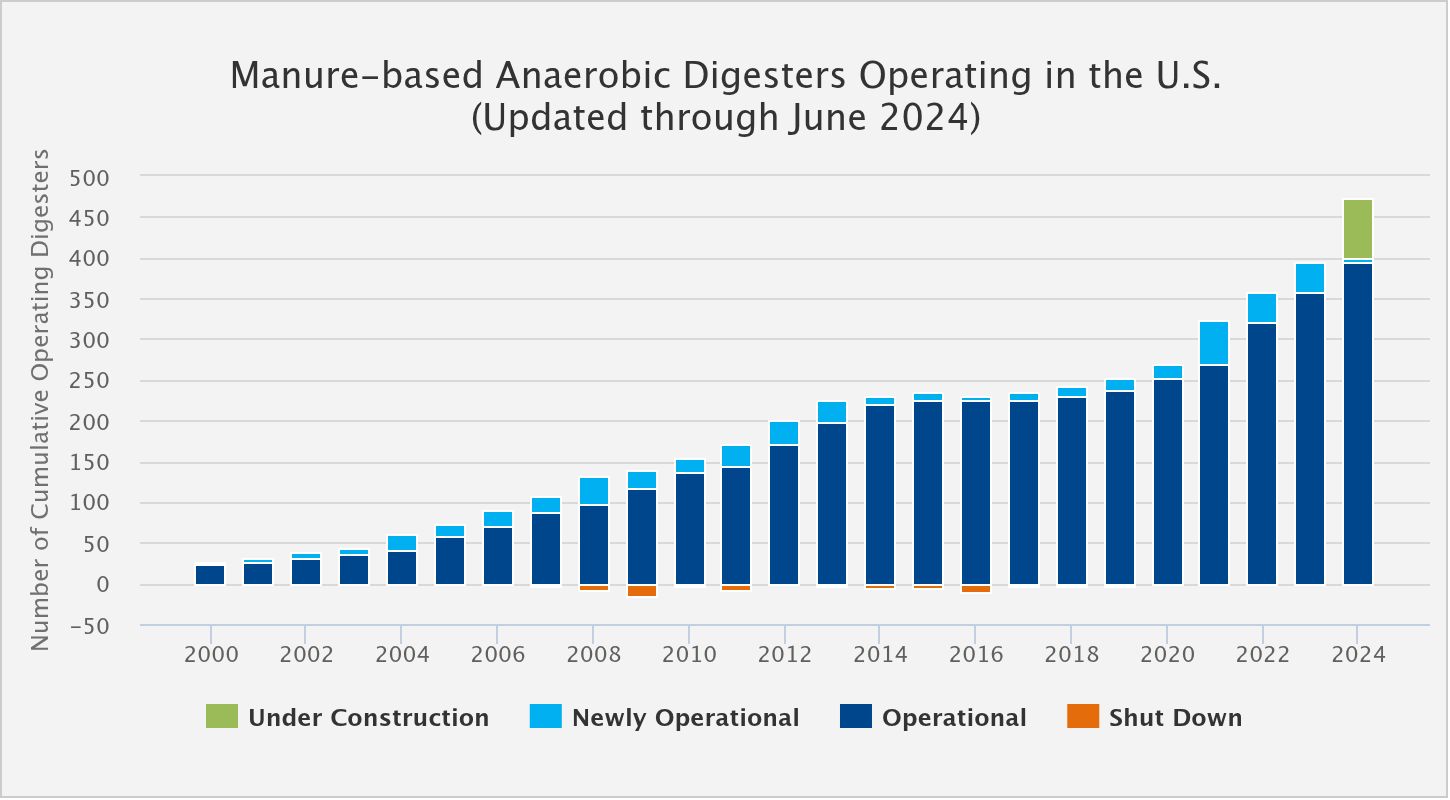
When the digesters break down manure, there is leftover “digestate” that is often rich in nitrogen, phosphorus and other nutrients. This digestate is either stored in a lagoon, similar to raw manure, or sprayed on fields as a fertilizer.
However, by extracting biogas “you have changed the pH by trapping more ammonia within the digestate,” said Viney Aneja, lead author of the new study and a professor of air quality, climate change and agricultural emissions at North Carolina State University.
Aneja and colleagues compiled and examined previous field studies of hog farm emissions in the US — including a large amount of data from eastern North Carolina hog farms — and found that ammonia emissions from lagoons containing digestate are roughly 3.5 to 5.5 times higher than from lagoons with raw manure. This leads to “considerably more ammonia released into the atmosphere while it sits in the secondary open lagoon or when it is applied to the land for its nutrient value,” he said.
“We are arguing that, without any further treatment of this digestate, you have made the situation a lot worse than if you didn’t have the covered anaerobic digester,” Aneja said.
He added that, while this study focused on hog manure, the results are likely to happen for other digested livestock manure. “The biochemical reactions are the same,” he said.
While Aneja and colleagues found increased ammonia, there is ample evidence that digesters can remove other harmful emissions. Manure digesters alone reduced greenhouse gases by more than 13 million metric tons in 2023, according to the most recent data available from the Environmental Protection Agency (EPA).
However, leaks can wipe out some of these reductions. In a March study, University of California, Riverside researchers reported some leaks at 98 manure digesters in the state were emitting methane at 10 times higher rates than open manure lagoons.
Civil rights complaint
Ammonia can irritate people’s eyes and respiratory systems and also react with other airborne pollutants to form particulate matter pollution (PM2.5). PM2.5 particles are tiny air pollutants 30 times smaller than the width of a human hair and inhalation of them has been linked to asthma, heart and lung problems and preterm births. Ammonia contributes to 30% of US PM2.5 pollution, according to estimates.
“We are arguing that, without any further treatment of this digestate, you have made the situation a lot worse than if you didn’t have the covered anaerobic digester.” – Viney Aneja, North Carolina State University
Manure digesters have already proven controversial in heavy hog farming states, such as North Carolina, over ammonia pollution. In 2021, the Southern Environmental Law Center, or SELC, filed a complaint with the EPA under Title VI of the Civil Rights Act of 1964 on behalf of North Carolina community groups, arguing that the NC Department of Environmental Quality’s permitting of manure digesters “will put more harmful ammonia into the air nearby residents breathe, increasing fine particulate pollution associated with premature death and serious health problems.”
The EPA has the case listed as in “informal resolution agreement negotiation.”
Blakely Hildebrand, a senior attorney at SELC, said the new study “absolutely confirms a lot of what we have known about the air quality impact from these digesters.”
She added that the community groups and residents she’s worked with in North Carolina don’t necessarily want hog farms and digesters shut down — just less pollution.
“They’ve [community groups] been direct in their policy ask — make these facilities be better neighbors and better stewards of the environment,” she said.
Smithfield Foods, the major pork producer in eastern North Carolina, and Align RNG, a massive biogas operation in North Carolina, were both mentioned in the lawsuit — neither responded to requests for comment on the lawsuit or the new study.
Josh Kastrinsky, a spokesman for the North Carolina Department of Environmental Quality (DEQ), said a state law caps ammonia air emissions for new or expanding hog farms but “there are currently no other laws or regulations regarding the atmospheric emissions of ammonia” for manure digesters or existing farms.
Federal biogas moves
The Trump administration has sent mixed signals on manure digester biogas since taking office. Last year’s One Big Beautiful Bill Act preserved clean energy status for manure-derived biogas, while stripping away subsidies for solar and wind. And earlier this month the Internal Revenue Service (IRS) released guidance confirming that gas extracted from livestock manure qualifies for a federal clean fuel tax credit, paving the way for increased investment in biogas projects.
However, the US Department of Agriculture currently has a moratorium on loan guarantees for anaerobic digesters — many of which are issued for manure digesters — through the end of 2026 due to “persistent and escalating concerns” about performance and financial solvency.
Aneja said that mitigation technology could reduce the ammonia emissions they found in the study but that industry has been resistant to adopt any of these technologies on a large scale, citing economic concerns.
Kastrinsky said “currently there are no mitigation technologies employed at permitted manure digesters in the state that could or would reduce ammonia emissions.”
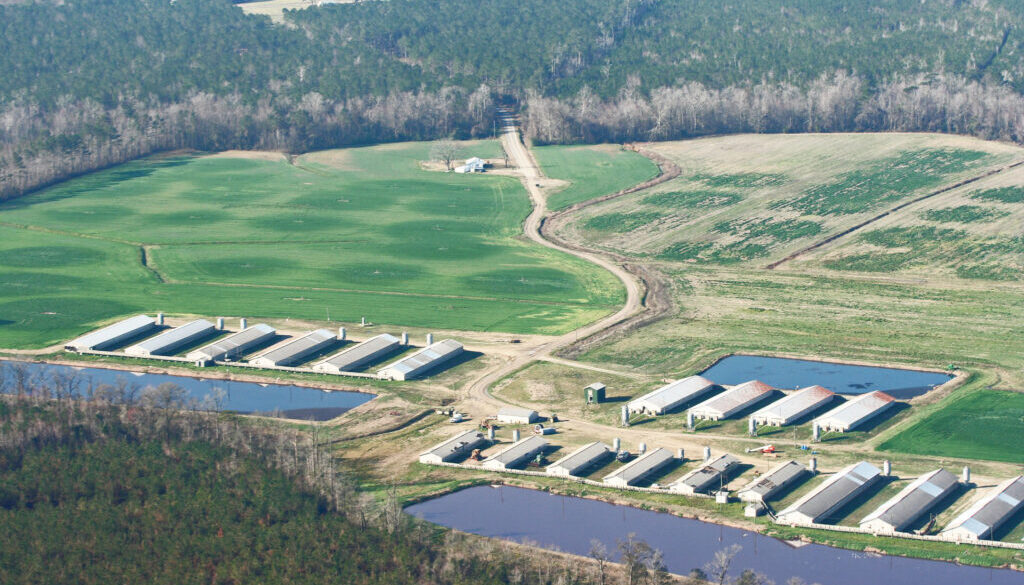
Featured image: Hog operations and lagoons in North Carolina. (Credit: Waterkeeper Alliance/flickr)



October 4, 2026 @ 5:29 am
What environmental challenges can manure digesters and hog CAFOs create for surrounding communities? Thank you