
EPA withdraws guidance preventing PFAS from entering drinking water
Listen to the audio version of this article (generated by AI).
In the latest regulatory rollback on toxic chemicals, the US Environmental Protection Agency (EPA) has withdrawn Biden-era guidance on how to prevent PFAS pollution in drinking water.
In a memo dated August 11, 2026, the agency’s Office of Water identified several documents it deems “appropriate for rescission,” including a 2022 memo that encouraged states to use existing Clean Water Act authorities to prevent toxic per- and polyfluoroalkyl substances (PFAS) from entering drinking water.
The memo also said that, while not legally binding, the agency has a responsibility to ensure that its guidance “reflects existing law, regulations, Executive Orders, and current policies, and that such guidance is informed by stakeholder engagement and public comment, as appropriate.”
Under that premise, documents related to National Pollutant Discharge Elimination System (NPDES) permits were deemed appropriate for rescission. Under the Clean Water Act, NPDES permits regulate wastewater discharges by limiting pollutant levels and establishing mandatory monitoring and reporting requirements.
The 2022 guidance instructed regulators to require facilities, such as chemical manufacturers, to sample their wastewater for specific types of PFAS. It also directed states to use best management practices and technology-based effluent limits (which set pollution limits based on what existing cleanup technology can remove) when issuing permits to PFAS polluters.
However, Trump’s EPA said in its August memo that “rescission is appropriate as this memorandum has caused confusion for states and permittees and resulted in inconsistent application across the country.”
Jean Zhuang, senior attorney at the Southern Environmental Law Center, said “inconsistent application,” is not a valid reason to scrap the guidance altogether.
“It doesn’t matter that there has been inconsistent application in the country, because that’s the nature of our system. States will approach things in slightly different ways. They might have some degree of discretion in how they permit, and so there will always be some inconsistent application,” Zhuang said.
Other PFAS experts said the move is indicative of the influence the chemical lobby has with the current administration, and is contradictory to how the federal government claims to view states’ rights.
“On one hand, this administration wants to empower states,” said Tracey Woodruff, professor of epidemiology and population health at Stanford. “But on the other hand, industry will then come back and complain because they want to have consistency across expectations for how they address regulatory requirements.”
An estimated 176 million people in the US drink PFAS-contaminated tap water, according to EPA data from US drinking water supply tests. Some PFAS chemicals, which are prevalent in the environment and are present in the blood of almost the entire US population, have been linked to certain cancers, high cholesterol, decreased vaccine effectiveness and other health issues.
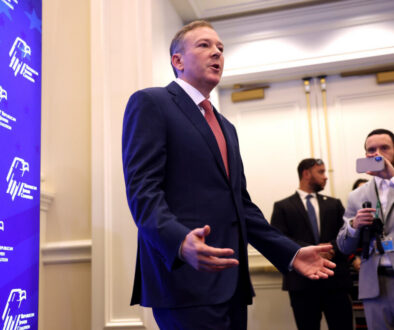
The August memo was signed by Jessica Kramer, the EPA’s assistant administrator for the Office of Water. In a May 18 press conference, Kramer spoke alongside EPA Administrator Lee Zeldin about a range of actions aimed at tackling PFAS across the “full life cycle” of the chemicals. Zeldin noted that PFAS are linked to serious health effects, and said that addressing PFAS contamination is “essential to making America healthy again.”
Another Biden-era regulation gone
This is not the first time the EPA has backed away from Biden-era PFAS regulations and guidance. In a separate memo put out in June, the EPA scrapped a scientific review of PFAS-contaminated sewage sludge.
The memo determined that currently, “data does not indicate that there are widespread impacts to the food supply from biosolids containing PFOA and PFOS [two common types of PFAS] at the national level, and the general public is not likely to be exposed to sewage sludge-impacted foods.”
However, the EPA said in a 2026 risk assessment that even at extremely low levels, PFOA and PFOS in sewage sludge applied to farmland could result in an elevated risk of cancer.
Limits for four cancer-linked “forever chemicals” in drinking water established during the Biden administration were also thrown out in May.
The Biden administration previously set limits on six types of PFAS: PFOA, PFOS, GenX, PFBS, PFNA and PFHxS — which have been linked to several health issues such as cancer, heart problems and birth defects.
Despite this, the Trump administration proposed to rescind the limits for GenX, PFBS, PFNA and PFHxS, accusing the Biden administration of not allowing for proper public comment.
Zhuang said that the EPA’s withdrawal of PFAS guidance doesn’t change the laws, and that states should not weaken permits for industrial polluters. “States still have full authority to use the drinking water standards when they are making permitting decisions,” she said.
However, Zhuang acknowledged the memo will create confusion and “weaken states’ ability to control industrial sources of PFAS pollution.”
Woodruff said that the administration’s goal “to empower states to make better decisions” will only fall short if “the states don’t have the technical resources to do so.”
Photo credit: Kristina Shvedenko For Unsplash+