

Farm runoff linked to elevated nitrate levels in drinking water serving more than 60 million Americans
More than 60 million Americans get their water from sources contaminated with elevated levels of nitrate pollution, which is most likely coming from agricultural manure or fertilizer runoff, according to a new analysis.
The report from the Environmental Working Group (EWG) used federal drinking water data and found that roughly 6,114 US water systems that serve roughly 62.1 million people had nitrate levels at or above 3 milligrams per liter (mg/L) in at least one test from 2021 to 2023.
While the US Environmental Protection Agency (EPA) has a threshold of 10 mg/L for nitrates — which can be naturally occurring — in drinking water, the agency says that levels above 3 mg/L are indicative of manure or fertilizer runoff from large-scale farms or, less frequently, wastewater plant discharge.
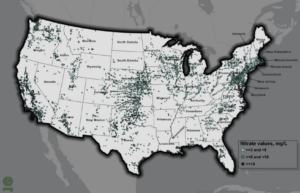
The report found that more than 3 million Americans receive water from systems that exceeded the EPA’s threshold during that time.
The analysis comes on the heels of other recent reports and studies linking nitrate pollution from farms to cancer in heavy agricultural states. The researchers of the new study and clean water advocates say federal standards are woefully inadequate to protect human health from nitrates, and that some state and federal policies are incentivizing the large-scale corn, soybean and animal agriculture driving nitrate pollution.
Nitrates are linked to various cancers and can cause dangerously low oxygen in babies’ blood, causing what’s known as “blue baby syndrome,” which is what prompted the EPA’s health threshold. EWG researchers argue, however, that the roughly 18% of Americans who get their water from systems that exceed the 3 mg/L are at risk for health problems as research shows impacts from nitrate exposure at far lower levels than the EPA’s limit, which was set in 1962.
“There have been decades of research since then showing that 10 mg/L is not protective enough because there are a lot of different cancers, like colorectal cancer and bladder cancer, tied to nitrate consumption in drinking water at levels far below 10 mg/L,” said Anne Schechinger, senior director for agriculture and climate research at EWG and lead author of the analysis.
Jake Murphy, an EPA spokesperson, said the agency is “committed to following gold standard science to ensure all Americans have access to clean and safe drinking water.” Murphy said the EPA looked at new studies and data in its most recent review of nitrate drinking water regulations in July 2024 and concluded the current regulations are “sufficient to keep water clean and safe for human consumption.”
Policies driving the problem
The water systems with the highest and most frequent nitrate levels were in heavy agricultural states. California, Pennsylvania, Washington, Kansas, North Carolina, New York, Nebraska, Texas, Arizona and Wisconsin accounted for 60% of all water systems with elevated nitrate.
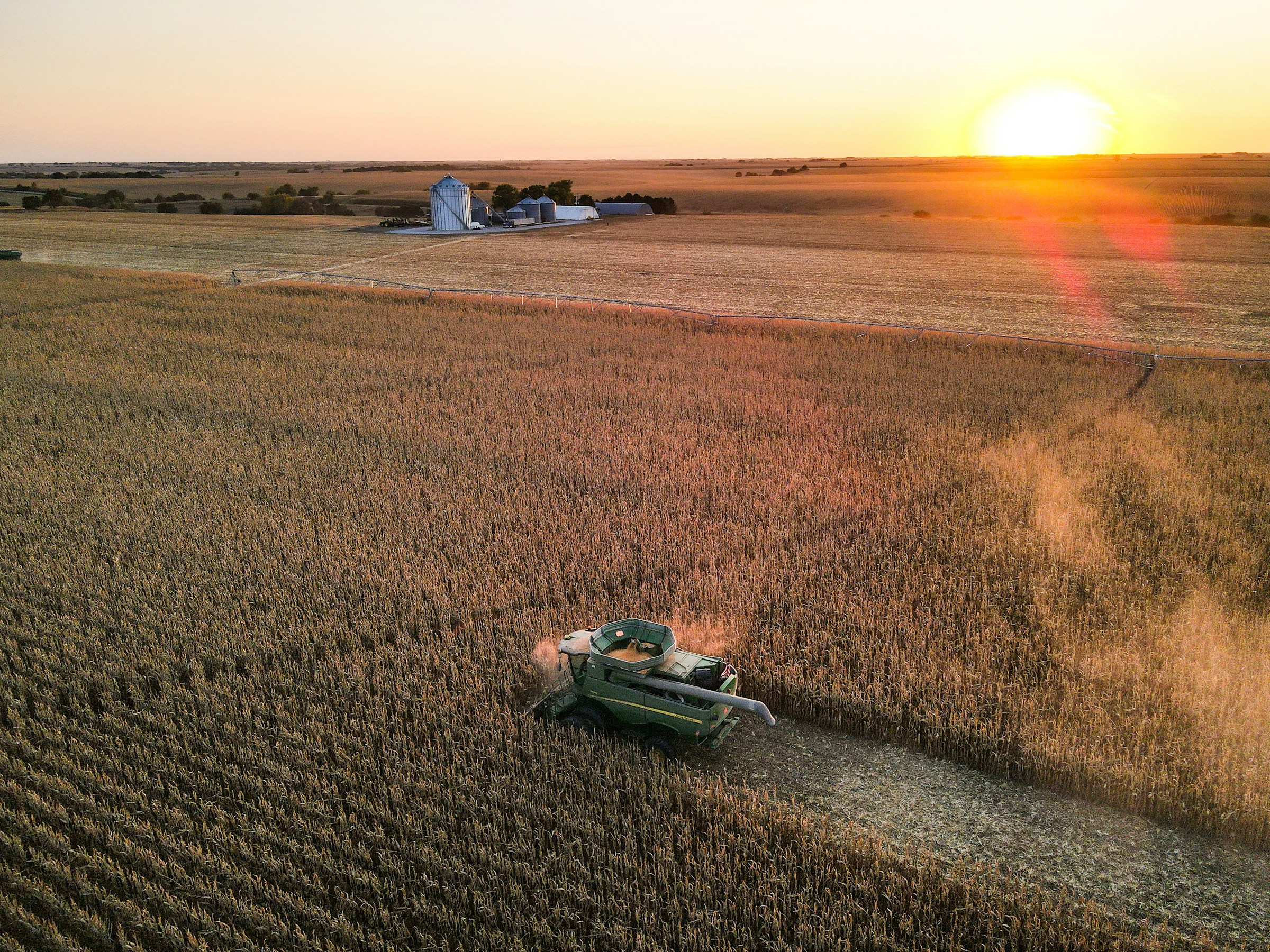
The analysis builds upon other recent studies and reports that have pointed to nitrates as a cancer concern in farm country. Earlier this month a years-long report in Iowa found nitrates from the state’s concentrated animal feeding operations (CAFOs) and fertilizer runoff were, in part, behind its rising cancer rate. And weeks later a Yale study found people living near CAFOs in California, Texas and Iowa suffer from higher rates of cancer, suggesting that nitrates from the massive farms may be playing a role.
“In Iowa we are having a sort of a reckoning with the dimensions of the problem, but I was surprised how many other states have huge problems, like California, Washington, Kansas,” said Silvia Secchi, a researcher and professor at the University of Iowa who studies the environmental impacts of agriculture. “I really don’t think this is on people’s radar and it should be.”
In addition to alleging an outdated nitrate drinking water standard, the new report points to federal farm policies that contribute to nitrate pollution in drinking water, including the Crop Insurance Program that encourages growing corn, which is the most fertilizer dependent crop in the US.
“We had 22 million acres of tall grass prairie [in Illinois], now we’ve got 22 million acres of corn and soybeans,” said Robert Hirschfeld, director of water policy at the Illinois-based Prairie Rivers Network. “This dramatic overhaul of the landscape includes the waterways … now we have a network of radically modified plumbing that operates as an agricultural sewer.”
“This dramatic overhaul of the landscape includes the waterways … now we have a network of radically modified plumbing that operates as an agricultural sewer.” – Robert Hirschfeld, Prairie Rivers Network
Secchi said the federal Renewable Fuel Standard Program, which requires refiners to add corn ethanol to fuel, also bolsters corn production and associated fertilizer runoff.
“And we have increased corn production in more marginal areas that require irrigation. So some of those states identified in their report — Kansas, Oklahoma, Texas — there’s definitely a relationship between the increasing corn production over there, the higher nitrates,” Secchi said.
“We pay farmers for not very effective practices to reduce the pollution that we have paid them to create,” she added.
Climate change and cost
The EWG analysis points to climate change as a key driver in nitrate drinking water pollution. Climate change is driving both extreme rain — which can push more nitrate off fields and lagoons into waterways — and more prolonged droughts that can concentrate nitrate in soil.
“Farmers are kind of in this cycle where their emissions contribute to climate change, and then climate change is making the nitrate drinking water problem worse,” Schechinger said, adding that agriculture causes an estimated 10% of US greenhouse gas emissions.
And, beyond the health impacts, Schechinger said it is an economic issue: a previous study by EWG estimated that treating nitrate-linked cancers in the US costs between $250 million and $1.5 billion annually.
“When people say farmers can’t implement conservation practices because they would go out of business … we’re still paying for this problem,” Schechinger said. “We pay for it through higher water treatment costs and health costs.”
Reducing runoff
The report found that nitrates can be curbed even if federal standards are tightened. It points to Minnesota as an example — the state has a Groundwater Protection Rule in which farmers work with state officials when nitrates are found in nearby waterways to stop or slow the contamination before it exceeds the drinking water standard. The rule requires grassy buffers between farms and waterways that can capture nitrates and restricts fertilizer applications when the ground is frozen.
The state has seen a decline in nitrate levels in some vulnerable areas since that rule was introduced. “It’s definitely a good example of what other states can and should do,” Schechinger said.
However, critics say many Minnesota farmers already do not use fertilizer in the fall or on frozen ground, and that the rule doesn’t meaningfully tackle nitrate pollution from CAFOs manure, which is also applied to fields and can spur nitrate contamination. Minnesota regulators are reviewing the Groundwater Protection Rule after soliciting public comments in March.
Tannie Eshenaur, the water policy manager at the Minnesota Department of Health, said another limit of the state’s groundwater protection rule is that it’s based on nitrate levels in public drinking water systems, leaving people on private wells without the same level of protections.
“Unfortunately for private wells there isn’t a comparable regulatory process like the groundwater protection rule,” she said. “The [Minnesota] Department of Agriculture has some local advisory teams that are working with farmers to introduce different methods that will protect the drinking water and reduce nitrate, but it’s all strictly voluntary so it doesn’t have the same power that the groundwater protection rule does.”
Eshenaur added that nitrates have entered drinking water aquifers sometimes over decades earlier, “so for that level of contamination to change, it will likely take decades of effort.”
Featured image: SHTTEFAN/Unsplash +


April 28, 2026 @ 3:28 pm
The report promises to tell us about policy, but doesn’t give us much, so yes, there’s a problem, but a lack of knowledge of the policy problem, or the policy solution. In large part this is because this gets the policy backwards. It’s false to claim that we’ve paid farmers to create pollution. What really happened is that we’ve penalized farmers to create this polluti0n. Missing is recognition of market management, bottom-side supply reductions and minimum price floors, such as for corn. These were reduced, more and more and more, then ended. Subsidies were added, but did not make up for the reductions. Corn and other crops were below full costs for a quarter century, then again 2014-2020, massively subsidizing CAFOs & biofuels, (paid by farmers). Most farmers in these states then lost all livestock and poultry to CAFOs, another income reduction. This led to huge losses of farms and acreages of sustainable livestock crops, especially pasture and hay, so needed on hills and near streams. https://www.dailykos.com/stories/2026/4/3/2376236/community/you-can-t-fix-sustainability-without-economic-farm-justice/