North Carolina poultry industry grows as manure oversight lags, report finds
Listen to the audio version of this article (generated by AI).
North Carolina’s poultry industry continues to add more birds to already highly concentrated barns, generating millions of tons of manure that is largely unregulated by the state, according to a new report.
The report, released Wednesday by the Environmental Working Group (EWG), mapped chicken and turkey operations across the state, which is the leading producer of chicken meat in the US, supplying roughly 13% of the nation’s total each year.
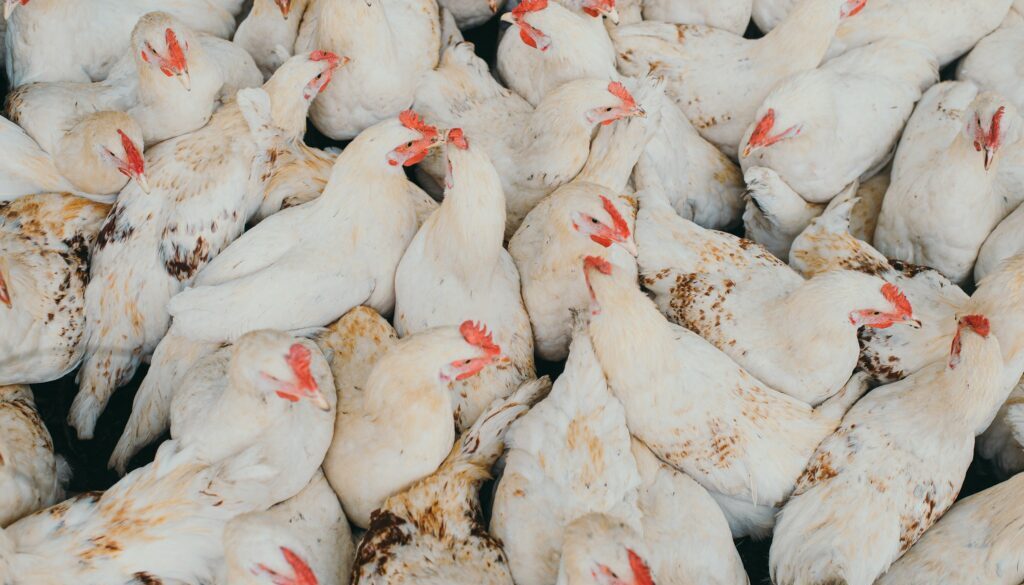
The report found the state raised more than 421 million chickens and turkeys in 2024 — a 3% increase since 2022, according to federal data analyzed by EWG. The birds are mostly raised in large, tightly packed barns, and the industry produces over 3.6 million tons of manure annually.
The state has previously recognized potential problems with the growth of concentrated animal feeding operations (CAFOs). In 2007, after years of scrutiny of pollution from hog CAFOs, state lawmakers finalized a moratorium for any new or expanded hog farms that gather manure in lagoons and spray it on fields as fertilizer.
But the reported increases in poultry are part of a decades-long trend of industry growth and, unlike hog farms, poultry farms that use dry litter — using wood shavings or rice hulls along with the manure — do not need water quality permits to spread the birds’ manure on fields, said report author Al Rabine, a senior geospatial analyst at EWG.
“The biggest issue is that [dry litter poultry farming] has nearly no regulatory oversight,” Rabine said. “Farmers put massive amounts on the fields … and, when they store it, they can keep it in uncovered piles for 15 days.”
“The biggest issue is that [dry litter poultry farming] has nearly no regulatory oversight.” – Al Rabine, EWG
When spread on fields or stacked in piles, poultry manure can wash off into water and can carry harmful bacteria, nutrients like nitrate and phosphorus, pharmaceuticals and other contaminants. North Carolina is one of the top states for cancer-causing nitrate contamination in drinking water systems.
A lack of state monitoring makes it difficult to track pollution associated with poultry farms, however, a 2025 study of Eastern North Carolina watersheds linked elevated nitrogen pollution to both hog and poultry CAFOs. In addition to water quality risks, living near poultry farms increases the risk of getting pneumonia due to air pollutants from the manure, according to a 2017 study.
While dry litter poultry operations are not required to apply for permits, those with more than 30,000 birds have additional requirements than smaller operations, said Josh Kastrinsky, a spokesman with the NC Department of Environmental Quality (DEQ). Those requirements include not allowing manure storage within 100 feet of streams, rivers and lakes, and mandating that any applications of the manure to fields as fertilizer are set back at least 25 feet from water.
“In addition, DEQ responds to and investigates water quality and air quality complaints involving agricultural operations and takes enforcement actions as appropriate,” Kastrinsky said.
However, the state does not publicly disclose the locations of all poultry farms, said Chris Lamont Brown, director of research and education at the North Carolina Environmental Justice Network.
“That basic information is not being shared, so it’s really clear that our state General Assembly is just not looking out for North Carolinians,” Brown said.
Democratic state lawmakers have put forth legislation over the years to mandate water quality permits for dry litter poultry farms, including a bill sponsored last year by Rep. Pricey Harrison, that would have increased oversight and outlawed CAFO waste storage or spreading in the state’s 100-year floodplain, in which the new EWG report found roughly 5 million birds were raised in 2024. Harrison’s bill stalled in committee.
“There should not be new operations or expansions on existing operations in the 100-year floodplains,” Rabine said.
“We’re calling on the state to protect the health of its residents, particularly in those places with the highest concentrations of poultry farms,” he said, adding that five counties account for over 35% of poultry raised in the state.
Health and environmental groups filed a civil rights complaint with the US Environmental Protection Agency (EPA) in 2023 alleging the NC DEQ was harming Native, Black and Latino communities in three of those counties by not adequately regulating dry poultry manure that polluted the communities. The EPA rejected the complaint last year.
“Communities of color are bearing the burden of the pollutants from poultry and swine CAFOs in North Carolina … and as that [poultry farm] expansion has been rampant and also there’s very little public process to have our voices heard, affect public health, or to really do anything about it,” Brown said.
The North Carolina Poultry Federation did not return requests for comment. The federation, however, has previously defended current state standards and says on its website that the North Carolina poultry industry contributes over $39.7 billion annually to the state’s economy.
Featured image: Egor Myznik/Unsplash +