Major fast food chains may still be sourcing beef raised with antibiotics, report asserts
Listen to the audio version of this article (generated by AI).
McDonald’s, Subway and Taco Bell are failing to keep up with pledges to reduce the use of antibiotics in their beef supply, according to a group of food safety advocates.
Despite promises to reduce or even eliminate the practice entirely, all three companies failed to meet their commitments on reducing antibiotic use over the past decade, according to a report released last week by the Food Animal Concerns Trust (FACT), the Keep Antibiotics Working Coalition and US PIRG Education Fund.
Food health advocates say the alleged failed commitments pose a serious threat to public health, putting Americans at risk of antibiotic-resistant infections.
“What we’re doing is abusing one of the foundations of modern medicine and making antibiotics ineffective,” said Andre Delattre, co-author of the report and chief operating officer of the Public Interest Network, the umbrella organization that PIRG operated under.
The report points to pledges that were made between 2016 to 2019, when McDonald’s, Subway and Taco Bell made major commitments to reduce their use of antibiotics in beef.
For example, Taco Bell pledged to reduce its antibiotic use in beef by 25% by 2025, while Subway promised that by 2025 it would only serve meat raised without routine antibiotics.
McDonald’s also pledged in 2018 to dramatically reduce its use of antibiotics, and report its progress on a regular basis to the public starting in 2022.
The report alleges the three companies failed to fulfill their pledges, citing a lack of sufficient evidence to prove compliance. “From an examination of their websites, public communications, and after direct requests for updates from corporate leadership, we can only conclude that all of these companies have failed to meet their commitments,” the report said.
Mcdonald’s, Subway, and Taco Bell did not respond to The New Lede when asked for comment on the accusations.
“We’ve met with folks from all these companies several times over many years. Recently, they’ve been unresponsive to our requests to update and to let us know the status of their progress,” said Delattre.
Though the groups accuse the fast food companies of failing to keep their pledges, it is not entirely clear that is the case.
A 2022 report from McDonald’s about its antibiotic policy for its beef supply chain states that the habitual use of medically important antibiotics for disease prevention is not permitted except in certain narrowly defined situations, and that if use is deemed necessary, the company encourages adoption of a tiered approach, being “least important to human medicine being the first choice, with HPCIAs reserved for last resort.”
Taco Bell’s website states that the company is “working to reduce antibiotics important to human health in our U.S. and Canada beef supply chain.”
Subway’s website says that their sandwiches, wraps, and salads are served only with chicken raised without antibiotics important to human health, but provides no details about other sources of meat like beef and pork.
While the report does not have proof the companies have retreated from their pledges, it does highlight the dangers of antibiotic overuse, pointing to 2019 Centers for Disease Control and Prevention (CDC) data, which found that more than 2.8 million antimicrobial-resistant infections occur in the US each year, resulting in more than 35,000 deaths.
Antibiotic use spikes
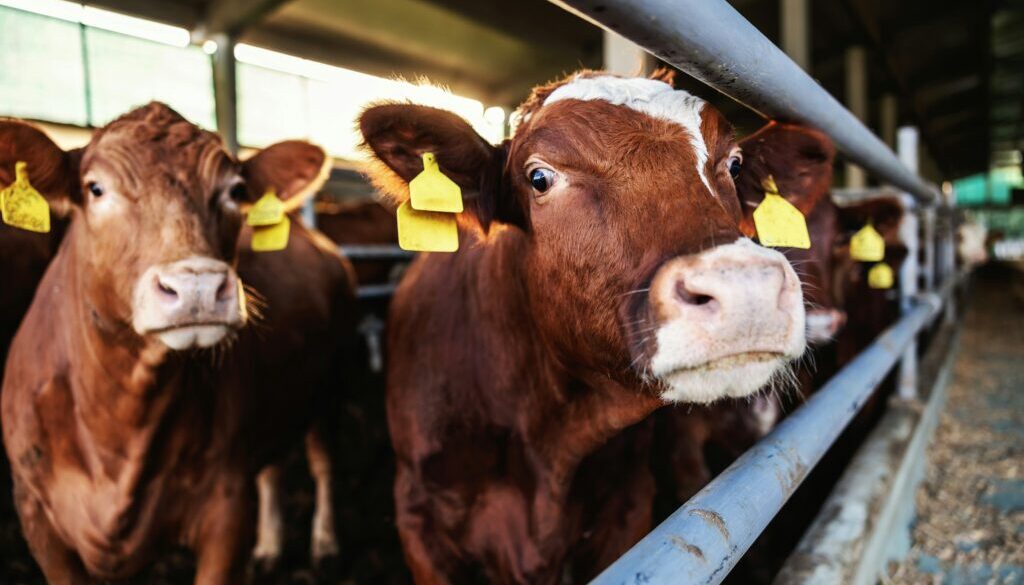
The use of antibiotics is common across US livestock production as livestock and poultry are increasingly raised in highly concentrated operations. In cattle farming, producers routinely administer antibiotics through medicated feed to treat and prevent disease.
A 2024 US Food and Drug Administration (FDA) report showed that the sales and distribution of antibiotics approved for use in food-producing animals increased by 16% percent between 2023 and 2024, the highest increase recorded yet.
However, the 2024 sales were 27% lower than the peak in 2025, the FDA reported. “The rules changed pretty substantially in 2017,” said Douglas Call, a professor at Washington State University who focuses on the molecular epidemiology of antibiotic resistance.
Call noted that FDA regulations have tightened since 2017. In 2013, the agency published guidance asking pharmaceutical companies to voluntarily remove claims related to growth promotion from labels of medically important antibiotics.
In 2017, the policy went into effect, making it illegal to use medically important antibiotics for growth promotion, a practice that involved giving routine, continuous low doses to make animals gain weight faster. Antibiotic use is now restricted to the prevention, control, or treatment of specific illnesses under a veterinarian’s care.
“Prevention, in theory, should be that you recognize a threat, you’ve already identified it on the farm or facility, and now are trying to prevent more animals from becoming sick, as opposed to, you know it’s there all the time, and so you just want to use it to make sure that no animals get sick,” said Meghan Davis, professor at the Johns Hopkins Bloomberg School of Public Health.
Still, Delattre said that “prevention” could be a term that allows routine low dose use of antibiotics, even where no sick animal has been identified.
While the FDA did not find a reason for the recent spike in sales, the report by PIRG and others said that rather than treating sick animals individually, the beef industry has made a routine use of antibiotics as a crutch to make up for unsanitary conditions for animals.
Further, the authors argue that the routine overuse of medically important antibiotics is a leading cause for the development of superbugs — bacteria that are resistant to one or more antibiotic treatment.
When bacteria are constantly exposed to low doses of antibiotics in animal feed, weak germs die off, but the strongest survive, and can multiply into drug-resistant strains.
“Low dose exposure makes it even more likely that some of the resistant bacteria will develop and will go on to become the dominant strain and resistant,” said Delattre. “Patients are increasingly getting to the point where they’re either having to use the sort of last resort antibiotics, or in some cases, are finding no antibiotics that can treat their infection, and that’s a really serious problem for public health.”
New guidance
Earlier this month, the FDA issued the final version of its guidance on antibiotic use in farm animals.
The guidance provides recommendations on how to add duration limits to medically important antibiotics used in food-producing animals for indications.
“FDA’s primary concern is the potential loss of effectiveness of antimicrobial drugs in humans as a result of human exposure to a hazardous agent in or on food derived from treated animals,” the guidance read.
However, Delattre believes the guidance doesn’t go far enough. “We believe the FDA has the authority to require that this abuse of antibiotics end,” he said. For now, he and others are hoping the restaurant industry will step up and “do the right thing.”
Davis believes in a “multimodal approach,” which doesn’t just include trying to reduce over-the-counter antibiotics sales for use in people or animals, but also having consumer-driven initiatives and the buy-in of different companies to commit to social responsibility pledges.
Featured image: Getty Images For Unsplash+