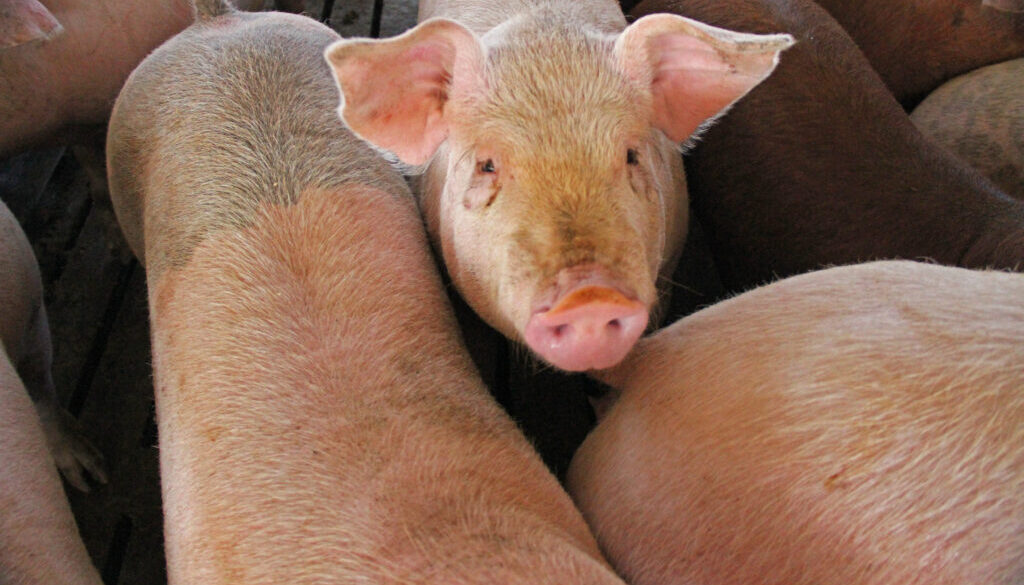
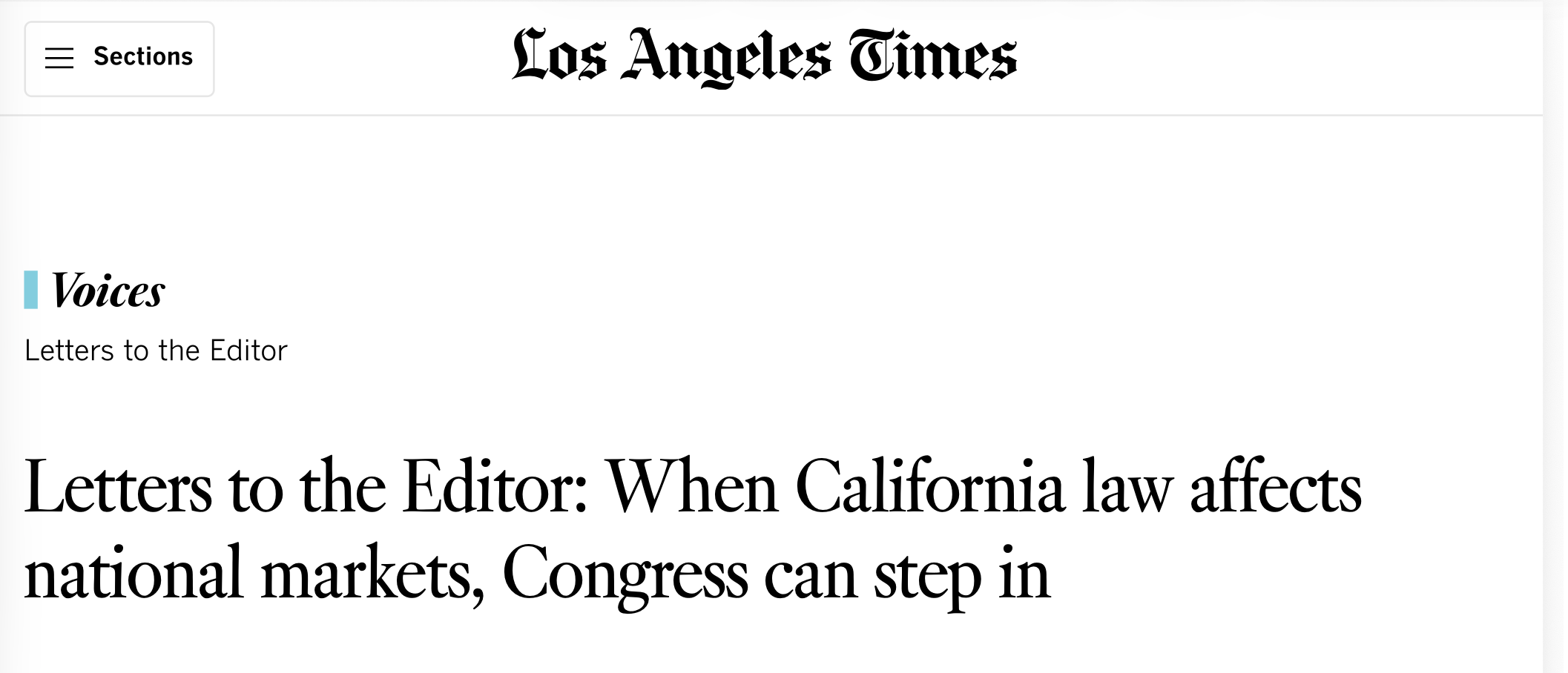
In March, a letter to the editor appeared in the Los Angeles Times imploring Congress to take action against a California law that requires farmers provide hogs, calves and chickens with enough room to turn around, lie down and stretch. A chief problem with the law, according to the letter, is that it applies to animals raised in other states if products from those animals are sold into California.
“In the United States, states’ rights end where national markets begin,” wrote the author, Andy Curliss, listed as chairman of the Carver Center for Agriculture & Nutrition, which bills itself as a “nonprofit, nonpartisan, research-driven initiative.”
A month later, a similar letter from Curliss was published in the Boston Herald taking aim at a similar law in Massachusetts and stating “American food production is a national enterprise.”
Other columns from Curliss over the past few months — on children’s health and an agriculture poll — appeared in the trade publications Agri-Pulse and Farm Journal. The op-eds have been circulating as Congress debates the latest iteration of the Farm Bill, including a provision to override the animal welfare law in California, known as Proposition 12, and the Massachusetts law, known as Question 3.
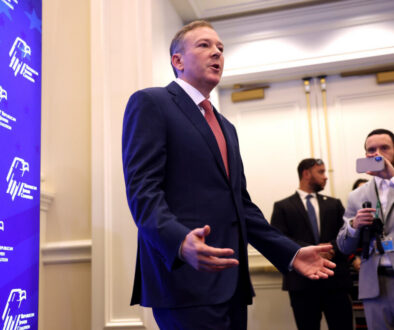
However, the Carver Center’s multiple op-eds and analyses papers fail to mention that Curliss is the vice president of strategic engagement for the National Pork Producers Council (NPPC), which has been leading the meat industry’s push against both state laws.
In the Carver Center’s first essay from Curliss he mentions his NPPC role, but all public-facing publications since, including analyses papers, essays and op-eds, have omitted this. The Carver Center — which was incorporated in January but does not show up the IRS list of tax exempt organizations — lists two other board members along with Curliss, both with ties to the meat industry.
The Carver Center describes Curliss as “a former investigative journalist and editor who has worked in the data and analytics field as well as in multiple roles in the agricultural sector.”
When asked why Curliss’ role as a pork industry lobbyist was not made more clear, both the Carver Center and the NPPC said Curliss’ affiliation with NPPC is widely known, and defended the nonprofit as an independent entity focused on food and nutrition.
“The Carver Center board is designed to include individuals with direct professional experience in the areas it studies,” said Robert Brown, a North Carolina-based public relations consultant who said he is the center’s strategic advisor.
“The Carver Center board is designed to include individuals with direct professional experience in the areas it studies.” – Robert Brown, Carver Center
Food and farming advocates, however, say it’s an example of the pork industry using the Big Tobacco playbook.
“Decades ago, the tobacco industry learned it did not need to win the argument. It only needed to manufacture enough doubt to delay action. So, it funded think tanks, planted op-eds, and attached credible-sounding names to industry talking points,” said Matthew Dominguez, US executive director for the farmed animal welfare organization Compassion in World Farming.
“Now the pork industry is running the same con,” he said.
A “disinformation campaign”
The Center’s op-eds have focused on defending Section 12006 of the Farm Bill, also referred to as the “Save Our Bacon Act,” which would undo the California and Massachusetts state measures to protect livestock and is one of NPPC’s top legislative priorities.
The op-eds from Curliss, whose role at NPPC is to lead “efforts focused on expanding the reach and influence of the US pork industry,” came as the US House was debating and finalizing its version of the Farm Bill. That version passed last month and kept in the controversial provision. The Senate is now working on its version of the bill.
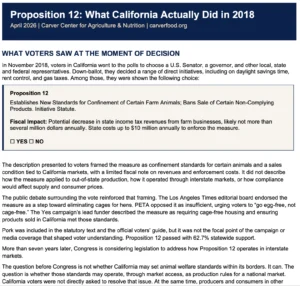
NPPC has long opposed California’s Proposition 12, spearheading a legal challenge that landed at the Supreme Court, which ended up upholding the legality of Proposition 12 in a ruling that leaned heavily on states’ rights to set their own laws. The NPPC praised the version of the Farm Bill passed by the House last month that included the provision, alleging Proposition 12 creates a “patchwork of state animal housing laws that hurts small farmers the hardest, takes away veterinarians’ choices, increases the cost of food, and undermines states’ rights,” in a statement.
In Curliss’ Los Angeles Times letter to the editor, without mentioning his role with the pork council, he wrote: “the Supreme Court’s decision in National Pork Producers Council vs. Ross did not resolve this issue in California’s favor. Instead, the court pointed to Congress as the institution with authority to address interstate market conflicts.”
“That omission is not incidental,” Dominguez said. “It is a disinformation campaign — designed to confuse the public, delay reform, and protect some of the cruelest practices in factory farming.”
A month after his letter to the editor, the NPPC put out a press release using similar framing that said “it is solely Congress’ authority and responsibility to provide a solution, as noted in the 2023 US Supreme Court decision.”
In the Boston Herald letter to the editor a month later Curliss again used similar NPPC language, saying Congress can and should intervene over state animal welfare laws using the commerce clause — which was the core of NPPC’s previous lawsuit.
Dominguez added that if readers knew the research was tied to an NPPC executive, they would see it as “industry messaging dressed up as neutral expertise.”
“It is a disinformation campaign — designed to confuse the public.” -Matthew Dominguez, Compassion in World Farming
The Carver Center also publishes “research and insights,” including a March white paper titled “States’ Rights End Where National Markets Begin” that outlines how Proposition 12 “turned states’ rights into national rule,” arguing, again, that Congress has the authority to override such state laws — the NPPC position.
The white paper relies heavily on information from the NPPC’s briefs during the Supreme Court trial, and, again, makes no mention that the NPPC’s vice president of strategic engagement is behind the Carver Center.
“The Carver Center is independently governed and responsible for its own research, publications, analysis, and positions,” Brown said.
The Carver Center has also published multiple reports on the new federal dietary guidelines, which is another recent focus of NPPC lobbying, as well as Monsanto’s Supreme Court trial, ultra-processed foods, and the benefits of protein, echoing and citing industry positions.
Nathan Leys, staff attorney at FarmSTAND, a legal advocacy organization focused on large-scale animal agriculture, said he was not familiar with the Carver Center, which took issue with FarmSTAND’s legal brief in the Monsanto SCOTUS case. However, he said he’s not surprised when groups that have industry personnel then “coincidentally take very pro-industry views.”
“You can look back at tobacco litigation … automobile safety,” he said. “This is a very well-worn corporate playbook.”
Brannen did not respond to questions about whether NPPC provides any funding to the Carver Center or coordinates on messaging but said NPPC staff members serve in a variety of “professional, civic, and community organizations,” and that “Curliss’ work [at the Carver Center] is separate from his role at NPPC.”
Professional roles
The Center website lists no staff, just board members including Curliss; Joe Weeden of Feeding America, a nonprofit network of food banks; and Lindsay Yarabek Datlow, a dietitian and senior vice president at Caprock Strategies, a food and nutrition policy consulting firm that has championed the “Make America Healthy Again,” or MAHA, movement. Datlow also previously worked for the National Dairy Council and as a policy advisor for the US Department of Agriculture (USDA).
Jennifer Warren, senior director of policy communications at Caprock Strategies, said the company “encourages employees to contribute to their communities through volunteer service and provides leave for nonprofit engagement.”
“In that capacity, she contributes her expertise to relevant articles and research independently from her work with Caprock Strategies,” she added.
Weeden is the senior director of commodity foods at Feeding America. He spearheads the organization’s acceptance of “protein” donations, including from the country’s largest meat companies like Tyson Foods, and Smithfield Foods, where Curliss used to work.
A Feeding America spokesperson said the organization “does not comment on internal personnel matters” but that it “remains deeply committed to upholding the highest ethical and conflict-of-interest standards in support of our mission to ensure everyone has access to food.”
The spokesperson added Feeding America does not hold a policy position on California’s Proposition 12.
Featured image: Green Fire Productions/flickr