Controversial Farm Bill measure targeting state animal laws heads to Senate showdown
Listen to the audio version of this article (generated by AI).
Animal welfare advocates are preparing for a fight in the US Senate where the new Farm Bill will be taken up in the next couple months, bringing with it a contentious provision that would undo state measures to protect livestock.
Last week the House passed its version of the bill, which contained a provision commonly referred to as the “Save Our Bacon Act” that bars state or local governments from having protections for animals at farms – including at concentrated animal feeding operations, or CAFOs – or those sold within the state that differ from other states’ rules.
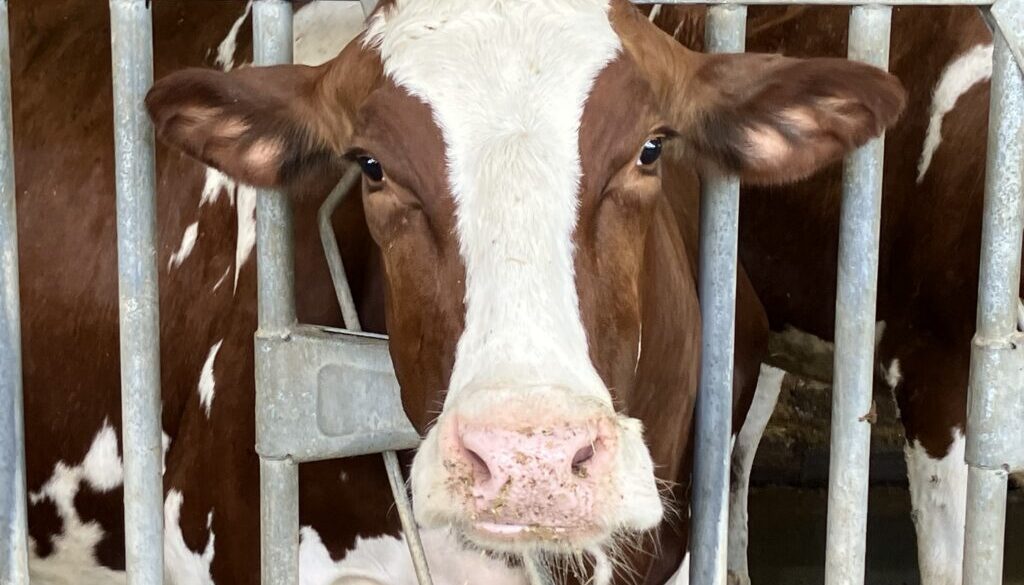
The measure specifically targets two state laws — California’s Proposition 12 and Massachusetts Question 3. Both require that hogs, calves and chickens that are on confined farms or sold in the states are raised with adequate room to turn around, lie down and extend their limbs.
The provision preempting those state laws has garnered broad support from meat industry associations that argue such state laws increase consumer costs and hurt farmers. However, public health, animal rights and environmental groups say the provision restricts states from offering basic protections for farm animals, and that this is a states’ rights issue.
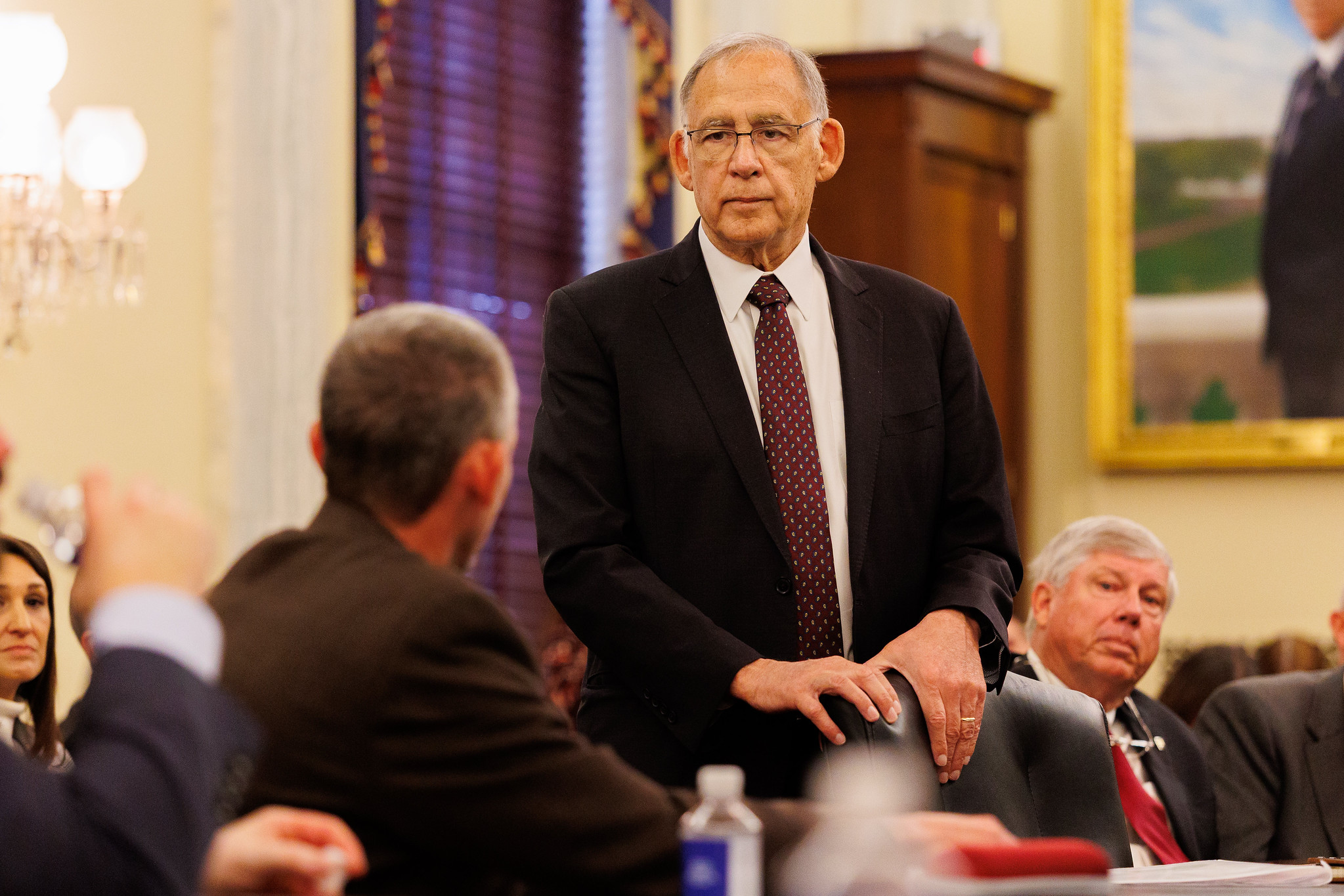
As the measure moves to the Senate, it is not clear if the Senate will incorporate all, part of, or any of the House version. Senate Agriculture Committee Chairman John Boozman, a Republican from Arkansas, said in a statement that the House version was “an important step toward updating long-overdue policies that support our farm families and strengthen rural communities,” and that he planned to release legislation in the coming weeks.
Last month, speaking at a National Association of Farm Broadcasting event, Boozman said while he supports doing something to counter California’s Prop. 12, he doesn’t expect the provision to survive the Senate since he doesn’t think “there’s a single Democrat that would vote for it.” The Senate requires a 60-vote threshold so bills cannot be passed along party lines.
Indeed, dozens of Democratic senators last year expressed concerns over efforts to overturn California’s Prop. 12 and Massachusetts’ Question 3 and signaled their unwillingness to vote for any such measures in a Farm Bill.
The House Farm Bill was “an important step toward updating long-overdue policies that support our farm families and strengthen rural communities.” – Senate Agriculture Committee Chairman John Boozman
In a letter to Sen. Boozman and the committee’s ranking Democratic member Senator Amy Klobuchar from Minnesota, the senators wrote that they would not support the “Food Security and Farm Protection Act” (which sought to similarly override Prop. 12 and similar laws) or “any similar legislation in the next Farm Bill.”
The letter pointed out that Prop. 12 and Massachusetts’s Question 3 have been in effect for years and “countless farmers who wanted to take advantage of this market opportunity invested resources and made necessary modifications to be compliant.”
“Federal preemption of these laws would be picking the winners and losers, and would seriously harm farmers who made important investments,” wrote the senators. The signees included several senators currently on the Ag Committee including Sen. Cory Booker, Sen. Ben Ray Luján, Sen. Peter Welch, Sen. John Fetterman and Sen. Adam Schiff.
Bipartisan opposition
The version of the Farm Bill – a massive piece of legislation renewed roughly every five years that guides the federal government’s food and farm policy – that passed last week in the House described the Save Our Bacon provision as needed to “protect the free movement in interstate commerce of products derived from covered livestock” and to “encourage a national market of such product.”
“Producers of covered livestock have a federal right to raise and market their covered livestock in interstate commerce,” the bill reads.

It isn’t just democrats opposing the Save Our Bacon provision. A group of lawmakers, led by Rep. Anna Paulina Luna, a Republican from Florida, Rep. Andrew Garbarino, a Republican from New York, Brian Fitzpatrick, a Republican from Pennsylvania, and Jim Costa, a Democrat from California, put forth an amendment to strike the provision in the House, citing concerns over both animal welfare and states’ rights, but it was rejected by Republican leaders in the House.
The provision is “incredibly damaging,” said Julia Johnson, head of farmer advocacy and policy at the farmed animal welfare organization Compassion in World Farming. “It’s not only just Prop. 12, but it impacts over 600 agricultural laws across the country. So it really will be putting food safety, animal welfare, and farmer well-being at risk.”
Johnson said Compassion in World Farming and other groups have lobbied successfully to remove similar language from previous Farm Bills and she is optimistic that can happen again.
Nancy Blaney, director of government affairs at the Animal Welfare Institute, said it was unclear to her how the Senate might handle this provision but that it is important to get this issue in front of both senators who have traditionally voiced support for animal rights as well as those who have been vocal about states’ rights.
“You have so much concern about states’ rights and then when the states actually try to assert their rights and respond to their constituents’ demands for better treatment of animals, you get [this provision],” she said.
“You have so much concern about states’ rights and then when the states actually try to assert their rights and respond to their constituents’ demands for better treatment of animals, you get [this provision].” – Nancy Blaney, Animal Welfare Institute
Andrew deCoriolis, executive director of Farm Forward, said Prop. 12 is designed to protect consumers in their states and “we think that’s both an appropriate use of states’ rights.”
“It is extremely disappointing to see this get past the Republican House given the major implications for states’ rights … I think this shows the power of the pork lobby,” deCoriolis said.
Blaney pointed out a Supreme Court ruling in 2023 upholding Prop. 12 that leaned heavily on states’ rights to set their own laws.
Pork producers lead the charge
The National Pork Producers Council has been leading the charge against Prop. 12 and was behind the challenge that landed at the Supreme Court. The Council praised the inclusion of the provision in the House Farm Bill, alleging Prop. 12 creates a “patchwork of state animal housing laws that hurts small farmers the hardest, takes away veterinarians’ choices, increases the cost of food, and undermines states’ rights,” in a statement.
“Today’s House Farm Bill passage is a testament to the power of rural America when we stand up for our farms and future generations with a unified voice,” said Rob Brenneman, Council president and a pork producer from Washington County, Iowa. “We wholeheartedly thank our champions … for not backing down from the fight for what is right for rural America.”
Senate Democrats on the Committee on Agriculture, Nutrition, and Forestry did not respond to requests for comment on the future of the provision, but forwarded a statement from the committee’s ranking member Senator Amy Klobuchar, a Democrat from Minnesota.
“We look forward to working with Senate Republicans on a bipartisan Farm Bill that can be successful on the Senate floor.”
Featured image credit: Brian Bienkowski/The New Lede