
Health advocates clash with chemical industry as Congress proposes TSCA changes
Scientists and health advocates say proposed changes to a key US chemicals safety law would upend protections for children and other vulnerable populations suffering from toxic exposures, while industry leaders argue the changes would help them get new chemicals to market without sacrificing safety.
The debate comes as the US Senate on Thursday released a draft discussion bill that critics say would gut the Toxic Substances Control Act (TSCA), allowing more dangerous chemicals onto the market with less oversight from the US Environmental Protection Agency (EPA). The Senate Environment and Public Works Committee will hold a hearing on March 4 to examine the discussion draft.
The move comes on the heels of a similar House proposal released last month, which was followed by a contentious hearing that showed the rift between Democrat and Republican lawmakers.
“Children’s health must come first, yet the chemical industry is now lobbying to weaken the chemical law that protects our families,” the Alliance for Health and Safe Chemicals, a coalition of public health groups, said in a statement. “Rolling back chemical safety protections will make it harder to keep toxic chemicals linked to cancer, learning disabilities, and infertility out of our lives.”
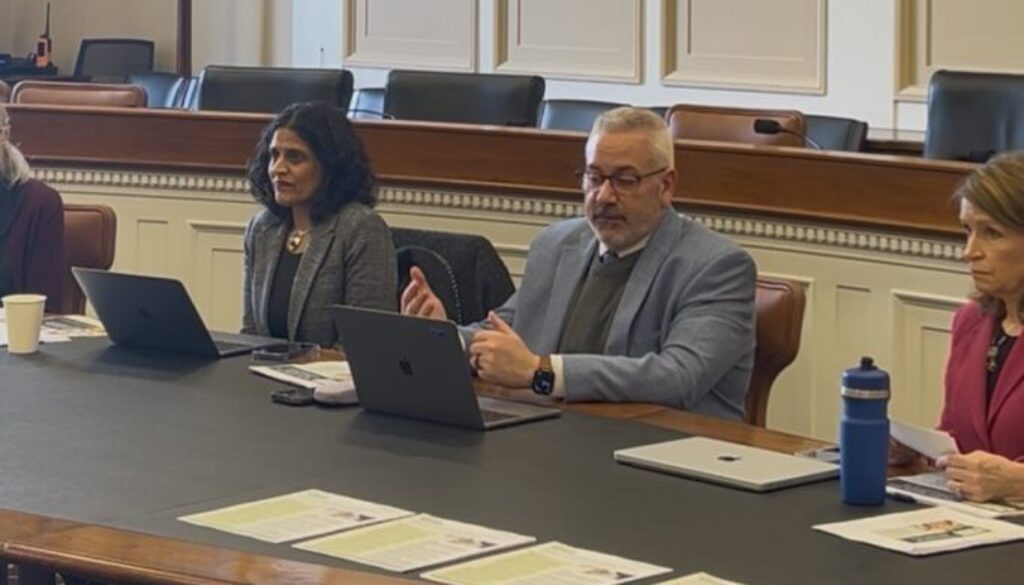
On Wednesday, ahead of the Senate bill’s release, scientists spoke out at a legislative briefing in Washington, DC, to share recent research on how environmental exposures to toxic chemicals harm children’s developing brains.
The briefing was sponsored by Project TENDR, an alliance of over 50 scientists, health professionals and advocates, the American Association of Pediatrics, and the American College of Obstetricians and Gynecologists.
Even before they are born, children are exposed to thousands of toxic chemicals, including trace metals, synthetic chemicals called phthalates used in plastic packaging, flame retardants and pesticides, Carmen Marcit, a professor at Emory University’s Rollins School of Public Health in Atlanta, Georgia, said at the legislative briefing.
“More than 90% of US children two to four years old have multiple neurotoxic chemicals in their bodies,” he said.
A recent study by scientists with Project TENDR showed developmental changes in the brains of young children with higher phthalate exposures, Susan Schantz, a professor at the University of Illinois, said at the briefing.
“The outer coating, the cerebral cortex of the brain, was thinned in certain areas and it was smaller in other areas,” said Schantz.
In other studies, Schantz and colleagues found that male infants with higher exposure to phthalates before birth were slower to develop the ability to understand and predict how objects behave in the environment.
“Toxic chemicals and neurological conditions, they don’t care if a kid lives in a red state or a blue state,” Maureen Swanson, founder and director of Project TENDR, said at the briefing. “They’re harming our children and they’re preventable.”
She said the proposed changes to TSCA prioritize the chemical industry “at every decision point, even for the most harmful chemicals.”
Chemical industry leaders argue that they want to work with regulators to improve TSCA so they can get their products on the market more easily, without undermining public health protections.
“This isn’t about fixing TSCA by weakening standards,” Denise Dignam, the president and CEO of the chemical company Chemours, a spin-off of DuPont, said at a chemical industry conference in Washington, DC on Monday. “It’s really about how to make sure it works in the ways that Congress intended, using strong science-based protections that really deliver protection of health and the environment, but also giving us the certainty that we need to continue to innovate and manufacture right here in the United States.”
In a keynote address at the conference, which was hosted by the American Chemistry Council, Douglas Troutman, the assistant administrator of the EPA’s Office of Chemical Safety and Pollution Prevention, said the proposed changes to TSCA would improve the timeliness of chemical approvals, easing a longstanding backlog, without sacrificing scientific integrity.
“Whenever there is exposure risk to children and vulnerable populations, we will always take an especially disciplined look at the science,” said Troutman.
Featured image: Scientists speak at a legislative briefing in Washington, DC. (Credit: Shannon Kelleher/The New Lede)