
Hearing underscores partisan rift over GOP proposal to loosen chemical safety rules
Listen to the audio version of this article (generated by AI).
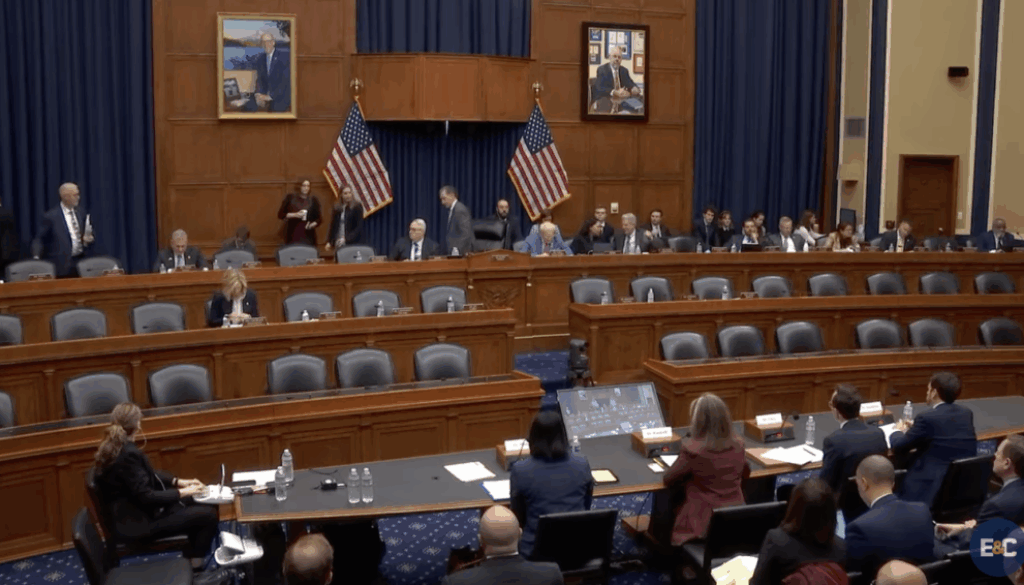
The deep rift between Democrats and Republicans over the future of the nation’s premier chemical safety law was on full display on Thursday in a hearing designed to kickstart legislation that would allow faster federal approvals for new chemicals.
The hearing was convened by the House Environment Subcommittee to hear testimony on a draft discussion bill released last week by House Republicans that would roll back several provisions in the Toxic Substances Control Act (TSCA), a federal law under which the US Environmental Protection Agency (EPA) evaluates chemicals to make sure human and environmental health will be protected before chemicals are put into the marketplace.
The draft bill was introduced Jan. 15 by Rep. Brett Guthrie, a Kentucky Republican and chairman of the House Committee on Energy and Commerce, and Rep. Gary Palmer, a Republican from Alabama who is chairman of the Subcommittee on Environment.
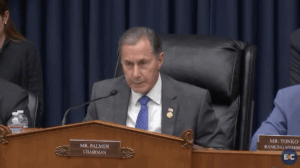
“Chemicals are central to many aspects of modern life,” Palmer said in his opening statement at the hearing. “This important law is still not working as Congress intended.”
The move by Republicans aiming to re-open TSCA was telegraphed for months, as GOP House and Senate members have echoed industry complaints about the law over the past year. The hearing featured witness testimony from two industry representatives that said the proposed changes are necessary to modernize TSCA and provide clarity for US manufacturers.
“EPA’s current approach to TSCA puts US manufacturers at a disadvantage by causing delays and inconsistencies that hinder investment in innovative technologies, sustainable chemistries, and advanced materials essential for economic growth, AI, health care and national security,” Kimberly Wise White, vice president of regulatory and scientific affairs at the American Chemistry Council said during the hearing.
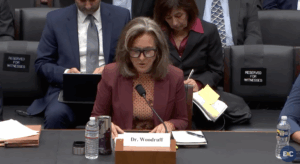
The lone witness who was critical of the proposal, Tracey Woodruff, director of the Program on Reproductive Health and the Environment at the University of California, San Francisco, said the changes would “significantly weaken the law” and was an industry wishlist.
“The proposed changes to this law are alarming to anyone who is concerned about people’s health,” she said during the hearing. “The chemical lobby has spent millions of dollars to undermine TSCA and this draft bill gives them their money’s worth.”
Democrats at the hearing similarly skewered the draft bill and lamented the deterioration of bipartisanship around TSCA. The draft “continues Republicans’ assault on the health and wellbeing of American people,” said Rep. Frank Pallone, a Democrat from New Jersey. “It’s shocking that this draft comes to us today as this has always been a bipartisan effort.”
Public health, worker impacts
Health, environmental and labor advocates — who for months urged Congress against weakening TSCA — have echoed Woodruff’s concerns that the draft discussion bill would pressure the EPA to rapidly approve chemicals under a strict deadline, limit its ability to request safety data, raise the burden of proof for finding risks, weaken worker protections and ignore real-world exposure scenarios.
“EPA’s current approach to TSCA puts US manufacturers at a disadvantage by causing delays and inconsistencies.” – Kimberly Wise White, American Chemistry Council
In addition to mandating faster reviews, the draft calls for chemicals approved in certain other countries to be fast-tracked by the EPA. The agency would also be required to prioritize chemicals that are designed to be substitutes for more harmful ones or chemicals aimed at easing supply-chain risks for critical materials. The draft also prohibits the EPA from restricting any chemicals used in aerospace fire suppression that have been certified by the Federal Aviation Administration or the Department of Defense. Such firefighting foams were previously a major source of per- and polyfluoroalkyl substances (PFAS).
The discussion draft is “really pushing the EPA to quickly green light these chemicals while really undermining the EPA’s ability to seek data on chemicals and fill gaps,” Melanie Benesh, vice president, government affairs at the Environmental Working Group (EWG), said in an interview.
“If a company hasn’t presented information about particular risks from a chemical, the bill imposes new standards that would make it much more difficult for the EPA to request that information while also working against this shot clock,” she added.
The discussion draft shifts the burden from showing a chemical is safe to requiring EPA to prove it is likely unsafe. This seemingly slight change would revert the review process to how it functioned before 2016 when several dangerous chemical compounds, including per- and polyfluoroalkyl substances (PFAS) entered the market, Woodruff said during the hearing.
“Widespread PFAS contamination is a perfect example of why Congress amended TSCA in 2016,” she said. “The chemical industry wants to take us back to a time when they can do whatever they want with little oversight and no ramifications for making people sick.”
Benesh said workers would suffer under the proposed changes, which assume that workers are going to wear proper protective equipment and would defer to Occupational Safety and Health Administration (OSHA) standards for worker protections.
“It is reasonably foreseeable that workers may not properly use their personal protective equipment either because they haven’t been adequately trained on how to use it .. they are under pressure from an employer who is skirting the rules … an employer is urging them to go faster,” she said. “It really ignores these real world scenarios.”
A coalition of 217 groups — including several labor advocates — sent a letter to House members in advance of the hearing saying that adopting the draft proposal’s changes would be a “historic step backward on chemical safety” and as a result, “the public, especially children, workers and fenceline communities, would suffer from more cancer, infertility, cardiovascular disease, Parkinson’s disease, birth defects, and other harms.”
Addressing chemical review delays
Industry counters that the system is broken and rife with delays. The EPA conducts new chemical reviews within its 90-day deadline less than 10% of the time, according to a 2023 report from the Government Accountability Office (GAO).
“The chemical industry wants to take us back to a time when they can do whatever they want with little oversight and no ramifications for making people sick.” – Tracey Woodruff, University of California, San Francisco
John Carey, a regulatory director at the a global fragrance, bioscience and nutrition company dsm-firmenich, pointed out during the hearing that there’s been a 70% decline in new chemical submissions since TSCA was updated in 2016. He said over the past four years dsm-firmenich registered 12 new fragrance ingredients — none in the US.
“Fragrance materials should be among the simplest chemistries to evaluate,” he said during his opening statements. “If low risk, consumer safe materials can’t get through the system, then more complex chemistries needed for advanced manufacturing, sustainability, and supply chain resilience stand little chance.”
Wise White said during the hearing that 70% of respondents to a recent ACC survey said they would introduce new chemistries outside the US due to delayed and inconsistent reviews. “EPA’s current implementation approach places U.S. manufacturers at a competitive disadvantage,” Wise White said, lauding the changes in the draft bill that would make the EPA issue statements describing the reasons for any delays in reviews.
Rep. Palmer said during his opening statements that not only do delays harm American competitiveness but also “slow the transition to safer alternatives.”
Woodruff said, however, that the EPA has approved the “overwhelming majority of new chemicals submitted, with over 4000 new chemicals approved since 2016.”
“And in almost half the cases where new chemicals are being held up it is because EPA is waiting for the submitter,” she added.
In addressing Republican concerns about length chemical review delays, Benesh said this is the “same party that systematically hasn’t provided the EPA with resources to have the staff needed to quickly review these chemicals.”
Rep. Paul Tonko, a Democrat from New York, said the 2016 TSCA changes took “years of bipartisan meetings” and was a “serious chore.” He said he remained open to addressing TSCA implementation issues but would “not support the precedent that every 10 years we chip away at public health protections at industry’s behest.”
Rep. Palmer said the committee would continue gathering input over the next few weeks on the draft bill.
Featured image: House Energy & Commerce Committee