
EPA official touts controversial TSCA reforms
WASHINGTON, DC — A top US regulatory official on Monday championed controversial chemical review reforms that critics say will support industry interests while weakening protections against toxic chemicals for the public.
Douglas Troutman, confirmed in December to be the assistant administrator of the Environmental Protection Agency’s (EPA) Office of Chemical Safety and Pollution Prevention, blamed former President Joe Biden’s administration for a “backlog” of chemical reviews that he said will be addressed in the reforms to the Toxic Substances Control Act (TSCA).
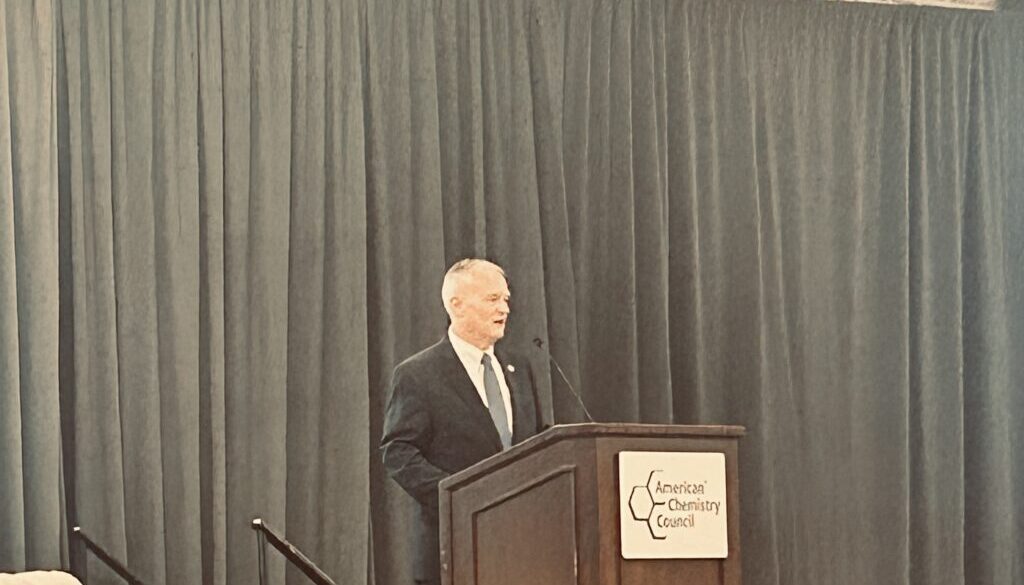
“We’re going to build a chemical safety program that supports the great American comeback,” Troutman said in a keynote speech at the American Chemistry Council (ACC)’s conference in Washington, DC.
“Over the last four years, the backlog of new chemicals under review steadily increased because the prior administration chose to focus their efforts in other places,” said Troutman.
Troutman said the work to amend TSCA, which provides for environmental and human health safety reviews of new chemicals, “is extremely important to the Trump administration.”
He said the changes to TSCA would improve the timeliness of approvals without sacrificing scientific integrity, “because innovation should not sit in limbo.”
The draft discussion bill introduced in January to amend TSCA would allow the EPA to fast-track chemicals approved in certain other countries. The agency would also be required to prioritize chemicals meant to replace more harmful ones and those designed to alleviate supply-chain risks for critical materials.
Troutman is a former chemical industry insider, and is one of several appointed to a high-level EPA position in the Trump administration. He most recently served as an interim CEO and lobbyist at the American Cleaning Institute, which represents cleaning product producers and has a track record of pushing back against chemical regulations.
At a hearing convened last month by the House Environment Subcommittee, tensions flared between Democrats and Republicans over the proposed changes to TSCA, with Rep. Frank Pallone from New Jersey calling the proposed bill an erosion of past bipartisan efforts around TSCA.
Tracey Woodruff, director of the Program on Reproductive Health and the Environment at the University of California, San Francisco, called the move an industry wishlist.
Chris Jahn, the ACC’s president and CEO, said at the chemical industry conference that the proposed reforms to TSCA should be a bipartisan effort.
“To be clear, targeting reforms are not about weakening protections, despite what some may have you believe,” said Jahn. “They’re about strengthening the system so it can deliver the protections Congress intended.”
A sluggish chemical review process discourages companies from investing in advanced materials and breakthrough technologies in America, encouraging them to move development overseas, he said.
“We can’t allow the United States to fall behind because our regulatory system can’t keep pace with scientific progress,” Jahn said.
Featured image: EPA official Douglas Troutman speaks at a conference hosted by the American Chemistry Council in Washington, DC. (Credit: Shannon Kelleher/The New Lede)