
Loan transfer removes bulk of USDA digester delinquencies amid pause
Listen to the audio version of this article (generated by AI).
The US government is no longer guaranteeing funding for the nation’s largest manure digester project that was years behind on paying its loans, but the troubled government loan program that had backed that project and many others remains on hold.
The move wipes out nearly all the $102.6 million in delinquent loans for anaerobic digesters the US Department of Agriculture (USDA) cited in a January directive, announcing what at the time was to be a three-month “pause” in the program. In April, the agency said it was extending the pause through 2026.
The agency has been providing loan guarantees for anaerobic digester projects across the country — which take crop waste, animal manure and other organic material to extract usable gas — as well as other agricultural applications, such as hydroponics, through the Rural Energy for America Program (REAP).
But the agency said last month it has identified “continuing and significant risks” in the program, and needs to slow the speed at which new projects are coming into the program to allow time to improve underwriting and other safeguards for taxpayer funds.
The pause threatens to hamper a growing industry as such digesters are increasingly common in the US to deal with the massive amounts of waste generated at large-scale livestock and dairy farms. There are an estimated 394 manure-based digesters operating in the US, with more than 70 under construction, representing a 55% increase over the past decade. Advocates say the pause is harming an industry that is reducing greenhouse gas emissions from farms while also offering a renewable energy source.
Critics counter that the government support for manure digesters is incentivizing expansion of concentrated animal feeding operations (CAFOs), which contribute to widespread water and air contamination and are harmful to human health.
The selling point of such projects is their ability to reduce climate-warming emissions — especially methane — from animal waste. Manure digesters reduced greenhouse gases by more than 13 million metric tons in 2023, according to the most recent data available from the Environmental Protection Agency (EPA).
But they still emit methane; the Wisconsin project recently culled from the guarantee program has emitted nearly 5,000 metric tons of climate-warming methane, for example, according to its most recent state air emissions filing, roughly equivalent to emissions from 30,000 gasoline-powered vehicles.
BC Organics
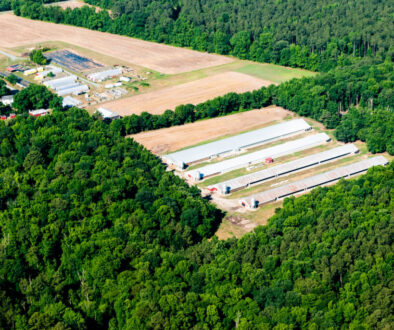
An analysis from The New Lede of the USDA’s Lender Lens portal in February showed four anaerobic digester loans in delinquency that totaled $102.6 million — with $100.1 million of the delinquent loans belonging to the nation’s largest manure digester, Wisconsin-based BC Organics, via two loans awarded in 2021 during the Biden administration.
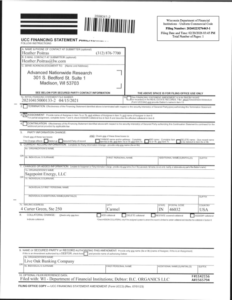 BC Organics’ loan debt, which was previously held by Live Oak Banking Company and guaranteed by the USDA’s Rural Development program, was transferred to its parent company Sagepoint Energy on February 20, according to a filing with the Wisconsin Department of Financial Institutions obtained by The New Lede. The transfer took place three days after The New Lede reached out to Sagepoint Energy in February for comment on BC Organics’ $101 million in delinquent loans.
Amee Andreason, a spokesperson for the USDA, confirmed that the ownership of the BC Organics loan was transferred. “As a result of that transfer, Live Oak Bank and USDA Rural Development are no longer associated with the project,” she said in an emailed response.
“Live Oak Bank and USDA Rural Development are no longer associated with the project.” -Amee Andreason, USDA
When asked if the USDA played a role in the loan transfer, Andreason said the USDA’s Rural Business-Cooperative Service program “worked diligently with the lender to ensure the taxpayers’ interest was protected as much as possible,” but would not elaborate.
The updated Lender Lens portal now lists just two anaerobic digester projects in delinquency: Dovetail Energy LLC in Ohio, which is 2-3 years delinquent on $891,179, and Ringler Energy LLC in Ohio, which is 1-2 years delinquent on $696,492.
Sagepoint Energy would not respond to requests for comment on the loan transfer, or ongoing operations at BC Organics, which, according to its website, takes in roughly 900,000 gallons of manure from 11 farms daily and runs the waste through 16 anaerobic digesters to capture methane and produce renewable natural gas.
BC Organics is currently seeking a permit renewal in the Town of Wrightstown, where it is located. Town officials have been discussing the permit at biweekly town meetings, but go into closed session for the discussions despite the rest of the meeting being open to the public.
William Verbeten, chairman of Wrightstown, said the town’s focus “remains on the health, safety and welfare of the town’s residents, our visitors and the greater Wrightstown community as a whole” as the board considers renewing the permit.
Sagepoint Energy announced an $85 million loan from Power Sustainable Infrastructure Credit (PSIC) to finance its work on extracting natural gas from landfill waste just four days after the company filed its loan transfer of BC Organics’ debt with the state of Wisconsin.
“This financing from PSIC supports our ongoing portfolio expansion and enables us to accelerate key projects that enhance [renewable natural gas] production capacity,” Aaron Johnson, CEO of Sagepoint Energy, said in a statement.
Featured image: USDA Secretary Brooke Rollins delivers remarks during the 2026 Ag Day celebration in March. (Credit: USDA)