
Senate Republicans draft bill aimed to speed up new chemical reviews
Senate Republicans released a draft discussion bill on Thursday aimed at loosening the nation’s premier chemical safety law with the goal of reducing chemical review delays.
Farmers across the US are leaving potential energy lying on their fields, and have the ability to reap billions of dollars in revenue by turning animal manure, crop and food waste into natural gas, according to two industry reports released this month.
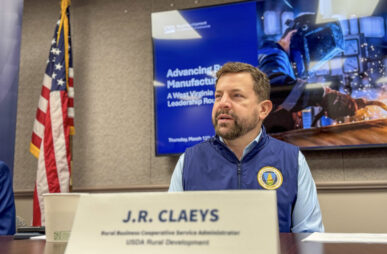
Five years after the US Department of Agriculture (USDA) guaranteed more than $100 million to what’s billed as the “world’s largest manure biogas project”, the loans are in delinquency, which, along with operational failures and underperformance at such plants, has seemingly prompted an agency-wide pause on loan guarantees for such projects, according to The New Lede’s analysis of federal data.
The US Environmental Protection Agency (EPA) repealed Biden-era regulations that forced power plants to cut harmful pollutants including brain-damaging mercury and particulate matter, EPA administrator Lee Zeldin announced on Friday.
The US Department of Agriculture (USDA) wants to increase how fast meat plants can slaughter chicken, turkeys and hogs, raising alarm over food and worker safety and the welfare of livestock animals.
Colorado officials are failing to require legally mandated water quality monitoring near concentrated animal feeding operations, allowing for widespread water contamination with animal waste, conservation groups allege in a new legal challenge to the state.
A proposed 3,450-cow dairy in mid-Michigan is sparking fierce debate over clean water, antibiotic resistance and manure digesters. Supporters say it means jobs and renewable energy. Critics warn local rivers are already overwhelmed with dangerous contaminants associated with large livestock operations. The big question: how many animals can one watershed support?
A proposed dairy CAFO in mid-Michigan is fueling a heated fight over clean water, manure pollution and the future of industrial farming — as supporters tout jobs and renewable energy, and critics warn local rivers are already overwhelmed.
In a widely expected move, the US Environmental Protection Agency (EPA) on Friday reapproved the pesticide dicamba, an herbicide used on genetically modified crops including corn, cotton and soybeans that is prone to far-reaching drift and linked to crop damages.
The US Department of Agriculture (USDA) is pausing a loan program aimed at promoting anaerobic digesters — many of which are issued for large-scale farms that turn animal waste into gas — to investigate high loan delinquency rates and underperformance.