California illegally spurred “gold rush in cow manure,” lawsuit alleges
California regulators broke state environmental laws by allowing polluters to buy clean fuel credits from large farms that are extracting gas from manure, a policy that harms poor communities and perverts the state’s clean air program, four advocacy groups allege in a lawsuit.
In an opening brief filed this week against the California Air Resources Board (CARB), the groups allege the state is incentivizing farms to get larger and generate more manure through 2024 amendments to its Low Carbon Fuel Standard (LCFS).
The LCFS is designed to provide a range of low-carbon and renewable fuel alternatives to help cut California’s greenhouse gas (GHG) emissions and other air pollutants. But LCFS amendments are instead, the lawsuit alleges, leading to actions that harm water, air and quality of life in some California farm communities by incentivizing the development of anaerobic digesters to break down manure generated at large-scale dairy farms and other concentrated animal feeding operations (CAFOs). These digesters turn the animal waste into “biogas”, a mixture of mostly methane and carbon dioxide. Biogas can be refined into a renewable natural gas (RNG) and used in some vehicles, and as a natural gas substitute.
The groups allege by incentivizing more digester use, LCFS is adding to the pollution burden in communities near CAFOs and digesters, which capture methane but can increase other air pollutants such as ammonia and particulate matter (PM2.5). Ammonia can irritate people’s eyes and respiratory systems, while PM2.5 exposure is linked to asthma, heart and lung problems and preterm births.
The program’s more stringent fuel requirements also contribute to higher gas and diesel prices, a cost, the groups argue, largely shouldered by poorer residents that cannot switch to electric cars.
“Instead of … enhancing California’s climate efforts, the LCFS has become a massive wealth machine for factory farm biogas credit generators, a mechanism for oil companies to avoid direct emissions reductions, and an affordability burden on low-income Californians,” reads the brief, filed by Defensores del Valle Central para el Aire y Agua Límpio (“Defensores”), Animal Legal Defense Fund, the Center for Food Safety and Food & Water Watch.
During public comments prior to adopting the 2024 amendments “a wide variety of voices called on CARB to fix this problem of perverse incentives for factory farm biogas,” said Food & Water Watch staff attorney Tyler Lobdell.
“And they didn’t do that. They adopted changes to the program that really doubled down on these problems. So, our arguments are that they are causing a disproportionate impact on low-income communities through that decision,” he said.
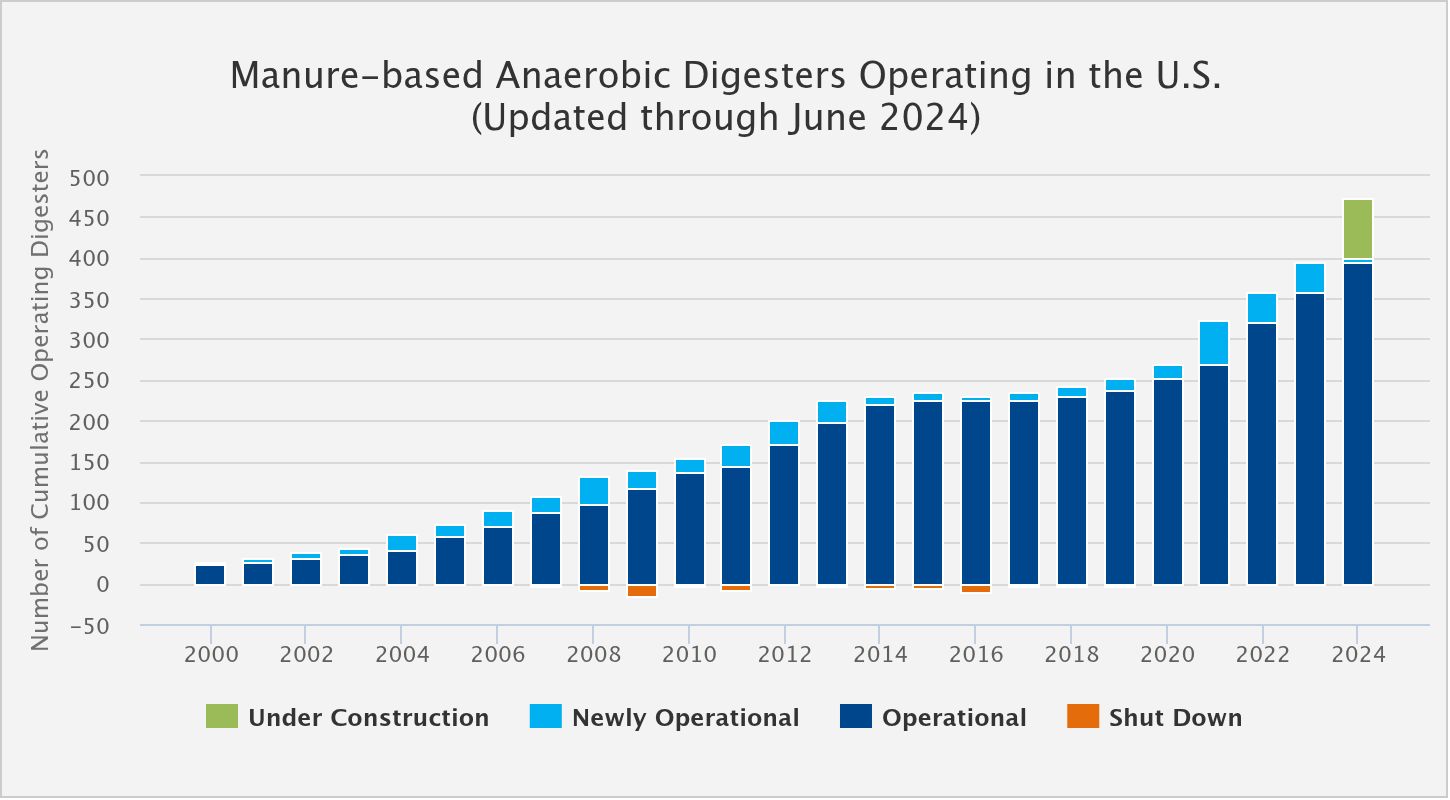
California’s LCFS is the largest and most influential state-level clean fuel program and has been a major driver of anaerobic digesters for dairy and livestock waste. There are an estimated 394 manure-based digesters operating in the US, with more than 70 under construction, representing a 55% increase over the past decade. California leads the nation in manure digesters — it has an estimated 123 dairy farm waste digesters alone — but LCFS also provides money via clean fuel credits to an estimated 196 digesters in 16 other states.
A spokesperson for CARB said the agency cannot comment on active litigation. But the spokesperson said the program has driven down the state’s greenhouse gas emissions from livestock and advanced zero-emission vehicles.
Researchers estimate manure digesters decrease methane emissions by 80% over farms that use open air lagoons and storage pits. The California Department of Food and Agriculture found that dairy digester projects that the agency has helped fund reduce total methane emissions from manure management in California by nearly 30% — which is more than 8% of the state’s total agricultural greenhouse gas emissions.
However, critics argue that LCFS and other incentives for manure digesters are spurring CAFOs to get even bigger. In July researchers reported that expansion at California dairy farms that tap into state and federal incentives to build digesters wipes out an estimated 9% of the farms’ purported greenhouse gas reductions. Leaks can wipe out some of these emissions reductions too. In a March study, researchers reported some leaks at 98 manure digesters in California were emitting methane at 10 times higher rates than open manure lagoons.
And there is increasing evidence that digesters can also concentrate and worsen certain air pollutants, including ammonia and particulate matter. The new lawsuit cites this additional air pollution and residents who live near dairies that say the odors worsened after herd sizes increased and digesters were installed.
“In the Central Valley, we live near 90% of cows in California and some of the largest dairy operations in the entire world. The impacts are getting worse as dairies are getting more cows and dairy digesters are installed,” David Rodriguez, founding member of Defensores, said in a statement.
“The impacts are getting worse as dairies are getting more cows and dairy digesters are installed.” – David Rodriguez, founding member of Defensores
The opening brief outlines the groups’ argument that the CARB adopted new amendments for LCFS that encouraged manure digester expansion in the state and beyond without taking into account the air pollution and emissions impacts, especially on low-income and Latino communities in the Central Valley.
“What we’re hearing from people in the community is that the odor impacts from dairies and digesters is becoming inescapable,” said Phoebe Seaton, co-director and attorney at law for the Leadership Counsel for Justice and Accountability, which is representing Defensores in the lawsuit. “And it’s only getting worse.”
The opening brief claims state regulators broke the law “by cursorily dismissing critical impacts from herd expansion, failing to properly analyze the impacts from producing factory farm biogas, and refusing to fully consider a project alternative that would have eliminated avoided methane crediting.”
Seaton said residents feel as though their concerns are not being heard. “They’re just speaking to everybody they can speak with about the issue, and nobody’s listening in terms of local decision makers and state decision makers,” she said.
The CARB will file their response brief by December and oral arguments will likely begin in February 2027.
The lawsuit is not the first to allege environmental injustice from manure digesters. In 2021, the Southern Environmental Law Center, or SELC, filed a complaint with the EPA under Title VI of the Civil Rights Act of 1964 on behalf of North Carolina community groups, arguing that the NC Department of Environmental Quality’s permitting of manure digesters “will put more harmful ammonia into the air nearby residents breathe, increasing fine particulate pollution associated with premature death and serious health problems.” The EPA has the case listed as in “informal resolution agreement negotiation.”
Featured image: Jonathan Adams/Unsplash +