
Study says eating less meat could slash emissions. Americans are eating more than ever.
Listen to the audio version of this article (generated by AI).
A global shift to mostly plant-based diets with minimal processed foods and red meat, coupled with a large decrease in food waste, would decrease greenhouse gas emissions by more than 85% by 2050 compared to 2020 agricultural emissions, according to a new study.
The study, published Wednesday in Nature, calculated the economic and environmental impacts of people across the world adopting a diet that mostly consists of vegetables, fruits, whole grains, nuts and legumes, with a massive decrease in red meat, ultra-processed foods, dairy and added sugars, along with a halving of global food waste. They found that such changes would slash greenhouse gas emissions and spur an estimated 6% decrease in farmland and a 17% decrease in farm production over the next 25 years when compared to the current trajectory.
The emission decreases are largely due to the estimated reduction in animal agriculture, which accounts for about twice the greenhouse gas emissions compared to crops.
The study assumes global acceptance of the diet shift, but such changes face many obstacles. In the US, for example, health officials have prioritized meat consumption, which is at all-time high levels, and ultra-processed foods still make up a sizable chunk of many people’s diets.
However, the authors say drastic measures are needed for the health of humans and the planet.
“We should consider these scenarios not as a forecast of what will happen, but as a useful early guide,” said Daniel Mason-D’Croz, a co-author of the study and senior research associate at Cornell University, in a statement. He added that such modeling “is a valuable tool to inform actions today for more sustainable, healthy, and just food systems tomorrow.”
Planetary Health Diet
The researchers made their predictions using the “Planetary Health Diet,” which was developed by international researchers who say it is the optimal diet for people’s health, with the side benefit of being more sustainable and healthy for the planet. Last year, a study from the group that developed the diet found that, if adopted, it could prevent 15 million premature deaths each year, mostly by reducing heart disease, stroke, type 2 diabetes and some cancers.
In the new study, they shifted the focus to the diet’s impact on global agriculture. The dietary shift would decrease the money generated by US farms by about 21% by 2050 compared to 2020. While money generated from livestock farms would decrease by 73%, the production value from crops would go up 20%. US farms — livestock and crops combined — currently generate an estimated $573 billion annually, according to the US Department of Agriculture.
 “Transforming food systems … [would lead] to fundamental changes to global agriculture and affect the lives of millions of farmers and food producers,” said Matt Gibson, lead author of the study and a research fellow at the London School of Hygiene & Tropical Medicine, in a statement.
“This means confronting powerful groups that profit from the status quo and a global food system that currently fails both those who produce our food and those who should be nourished by it,” he added.
Meat and ultra-processed foods in the US
The study comes as people in the US are eating more meat than ever. An annual Food Industry Association survey released in March showed that the vast majority of Americans view meat as part of a healthy diet and that meat sales hit a record high in 2025, reaching $112 billion.
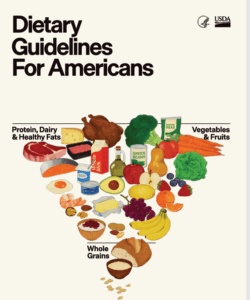
Meat featured prominently in the new US dietary guidelines released in January that emphasized protein from animal products. Health and Human Services Secretary Robert F. Kennedy Jr. said the guidelines would “revolutionize” the nation’s food culture. Meat eating has been central to the Make America Healthy Again, or MAHA, movement — a slogan and coalition promoted and kickstarted by Kennedy, a carnivore diet adherent himself.
Americans also get a large percentage of calories from ultra-processed foods. Last year, the Centers for Disease Control and Prevention published a study examining food consumption from 2021-2023 and found that about 55% of total calories consumed by Americans came from ultra-processed foods. For children, it was nearly 62%.
Sandwiches, sweet bakery products, savory snacks, and sweetened beverages were among the top sources, according to the study.
Unlike meat, Trump administration officials have pushed for a reduction in ultra-processed foods in Americans’ diets. The new dietary guidelines called for “dramatically” reducing highly processed foods.
Featured image: Sandie Clarke/Unsplash +