Groups sue Oregon over new CAFO permit
Listen to the audio version of this article (generated by AI).
Four environmental and food advocacy groups sued Oregon regulators last week alleging that the state’s new water quality permits for large-scale animal farms fail to protect waterways and do not include adequate monitoring.
The groups — the Willamette Riverkeeper, Food & Water Watch, Center for Food Safety and Animal Legal Defense Fund — say that the new regulations do not meet national standards under the Clean Water Act and will allow concentrated animal feeding operations, or CAFOs, to release excessive manure and associated nutrients and pollutants into rivers. CAFO manure contains nitrogen that can convert into cancer-causing nitrates in water, as well as ammonia, phosphorus, and pathogens like E. coli.
The state’s new permitting, which passed in May and establishes requirements for hundreds of CAFOs in the state for the next five years, establishes how the state will regulate the farms under the federal Clean Water Act. There were 328 CAFOs registered under the previous permit.
The new general permit “does not comply with state and federal laws, regulations, and standards designed to protect water quality and beneficial uses like drinking water, recreation, and wildlife habitat,” the groups wrote in the lawsuit.
“State regulators have capitulated to Big Ag and pushed through a permit that allows factory farms to continue to pollute our waters with far too little oversight,” said Food & Water Watch legal director Tarah Heinzen in a statement.
The new permits mostly prohibit any CAFO discharges to waterways with limited exceptions, and limit manure application when the ground is frozen, which will prevent excess runoff. However, the lawsuit alleges the permits only require monitoring after a violation has taken place, do not include any groundwater monitoring requirements, and do not regulate airborne pollutants at all.
“Because the permit fails to address aerial deposition, it violates the Clean Water Act and Oregon’s water quality protection laws,” the lawsuit says.
The Oregon Department of Agriculture told The New Lede that it cannot respond to ongoing litigation. However, prior to passing the new rules, the state opened up the changes to public comment and received thousands of comments. In its response to concerns over monitoring, the state wrote, “The Department cannot accommodate the requests for monitoring at discharge points because the proposed general permit does not allow facilities to operate with direct discharge points and accordingly, there is no location to monitor.”
The state also defended the exclusion of groundwater monitoring, saying the permit is drafted to comply with all state requirements, including groundwater protection rules.
Critics of the permits say the state needs to crack down on nitrate contamination. The Lower Umatilla Basin in the northeast part of the state has been the epicenter of nitrate contamination for decades. A 2025 state report found that around 40% of the more than 30 tested wells exceeded the federal drinking water standard for nitrates, with CAFO waste, along with fertilizer and wastewater, as the likely causes.
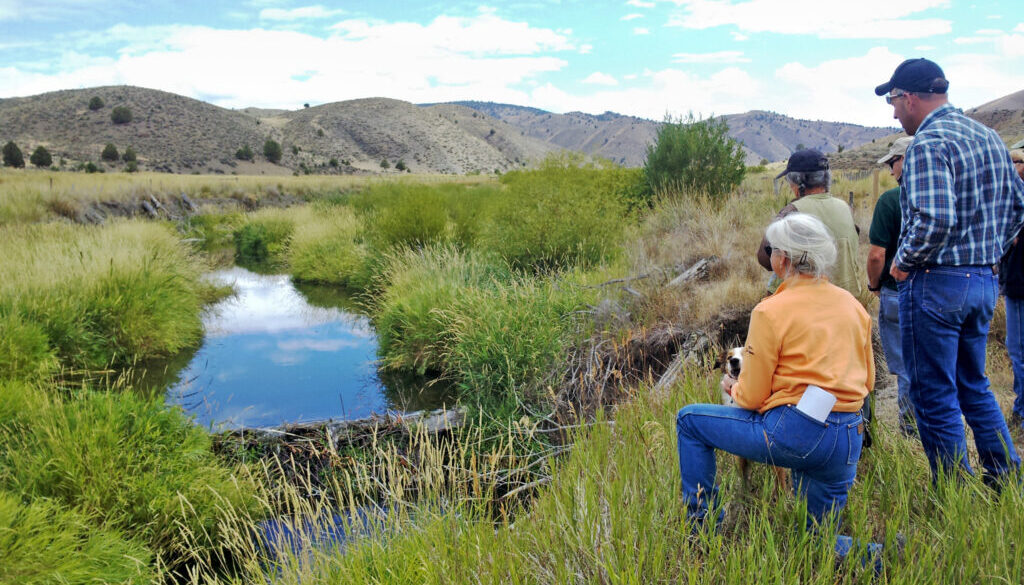
Featured image: South Fork John Day River in Oregon. (Credit: Oregon Department of Agriculture)