EPA to hold roundtable on “documented safety challenges” of widely used paraquat weed killer
US regulators will hold a forum this summer to explore safety concerns surrounding paraquat weed killer, a pesticide used for decades in farm fields that has been linked to health risks that include Parkinson’s disease.
The Environmental Protection Agency (EPA) said on Tuesday that it will host a roundtable to hear from scientists, farmworkers, community advocates, and others to discuss the “documented safety challenges associated with the chemical,” and explore “potential solutions and alternatives.”
The agency did not specify a date or location, but said details would be announced later. An EPA spokesperson said the agency could not yet say if the event will be open to the public.
The use of paraquat in agriculture and elsewhere has been under scrutiny for the last few years, largely due to mounting scientific research connecting chronic exposure to harm to the brain. As well, litigation brought by Parkinson’s sufferers uncovered internal corporate records showing paraquat maker Syngenta and former paraquat distributor Chevron had concerns about chronic health harms that began decades ago, but the companies never warned users and instead worked to hide the risks.
The EPA has not confirmed a connection between paraquat and Parkinson’s disease, but has expressed concerns about the use of the pesticide. In November, the agency said that fresh data raised questions about paraquat’s ability to volatize and move beyond areas where it is sprayed, potentially causing “non-occupational bystander inhalation exposure.”
The EPA roundtable is expected to address the “the state of the science informing EPA’s ongoing reassessment,” and the “range of possible protective measures and alternative approaches,” the agency said.
“When new science raises questions, we will not look the other way. We are requiring manufacturers to prove that current uses are safe under real-world conditions, and if they cannot meet that standard, decisive action will follow,” EPA Administrator Lee Zeldin said in a statement.
Amid the scrutiny, Syngenta announced in March that it will stop making its paraquat weed killer products and will stop selling herbicides made with paraquat by the end of June. Generic supplies of paraquat from other suppliers are not impacted.
The company is also trying to bring the litigation to an end with a class action settlement plan, though many plaintiffs have been unwilling to accept the terms.
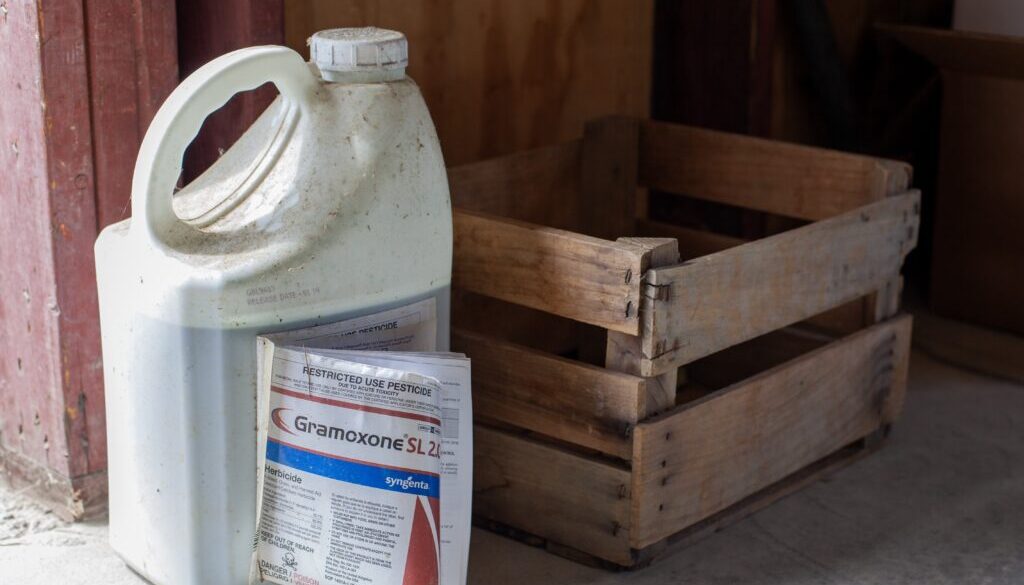
Paraquat has been used in the United States since 1964 as a tool to kill broadleaf weeds and grasses. Though banned in several countries, Syngenta’s paraquat-based Gramoxone herbicide brand has remained popular with US farmers for use in growing soybeans, cotton, and corn as well as in growing grapes, pistachios, peanuts and many other crops.
The research connecting it to Parkinson’s has prompted widespread calls for bans across the US, including by many state and federal lawmakers. Vermont became the first state to ban the pesticide in May.