US judge calls proposed Bayer Roundup settlement a “filthy” deal
In a tense hearing on Thursday, a federal judge who has been overseeing thousands of cases in nationwide Roundup litigation expressed scathing criticism of a proposed class action settlement that Roundup maker Bayer is pushing forward in a Missouri court.
The proposed $7.25 billion deal, which Bayer and a group of plaintiffs’ attorneys unveiled in February, appears “mind-boggling,” “legally problematic,” plagued with “major problems,” and was filed in a secretive and hasty manner that amounted to a “filthy” deal, US Judge Vince Chhabria said in a hearing over the proposed agreement.
Chhabria, who serves in the Northern District of California, is in charge of multidistrict litigation (MDL) involving people suing the former Monsanto company, now owned by Bayer. Plaintiffs in the cases allege that exposure to Monsanto’s glyphosate weed killers caused them to develop cancer and Monsanto failed to warn them of cancer risks.
Chhabria has overseen the litigation since 2016, and in 2021 rejected a proposed $2 billion class action settlement filed in his court.

Bayer has since paid out more than $11 billion in jury awards and settlements to resolve more than 100,000 claims, but still faces approximately 60,000 unresolved cases. Company officials have said they hope the new settlement plan will help bring the litigation to a close.
The new class action settlement effort is not filed in Chhabria’s court, but instead was filed by Bayer and the group of plaintiffs’ lawyers in Missouri, in the St. Louis Circuit Court for the City of St. Louis, where many Roundup cases are pending.
“How this went down”
The agreement was filed on Feb. 17. Lawyers for Bayer and the team of plaintiffs’ lawyers joining with Bayer in the deal held a meeting with the St. Louis judge the same day they filed it, without public notice and without a transcript being made of the conversations.
Bayer and the supporting plaintiffs’ counsel tout the deal as a means to “deliver billions of dollars of compensation to tens of thousands of plaintiffs.”
But opposing lawyers who also represent Roundup plaintiffs were not given notice and were not allowed a hearing to air concerns about the deal before the judge in St. Louis granted the deal preliminary approval.
Those opposing lawyers allege the class action deal arranged between Bayer and the group of supporting plaintiffs’ lawyers enriches that group of plaintiffs’ attorneys while providing little benefit to large numbers of people suffering from cancer who will be covered by the settlement. So far, the Missouri judge has rebuffed their efforts to slow the process of approving and implementing the agreement.
In Thursday’s hearing in federal court, Chhabria pressed an attorney involved in putting together the settlement agreement about the circumstances surrounding how and when the class action settlement was filed in the Missouri court.
“I’m just trying to understand how this went down,” he said. “The judge knew you were coming in that day. You have a meeting with the judge on the day you filed it, presumably a prearranged meeting with the judge … in his courtroom. It was not transcribed and nobody was aware that this was happening. And then there is no hearing at which anybody has an opportunity to discuss with the judge these concerns,” Chhabria said.
“And the judge preliminarily approves the settlement,” Chhabria continued, “which all of a sudden imposes all these significant obligations on people all over the country … and he did that without giving the other side an opportunity to be heard?”
Lawyer Christopher Seeger, who was involved in putting together the class action agreement, told Chhabria that he was “not pushing back” and acknowledged that “it was not transcribed as far as I know” and “nobody knew about it.”
“In other words, it was filthy,” Chhabria said.
Seeger responded that there will be a final approval hearing and objections to the deal will be “fully heard.”
A “difficult position”
Thursday’s hearing was called to address a motion filed by the plaintiffs’ lawyers who oppose the class action. They are seeking some type of intervention or declaration by Chhabria reflecting concerns with the terms of the class action agreement.
Under the agreement, an average payout for a residential user of Roundup who was diagnosed with aggressive non-Hodgkin lymphoma before age 60 is $40,000, from which attorneys’ fees, litigation costs, and medical and other liens are deducted, the opposition motion notes.
Among other things, the opposing lawyers specifically take issue with the settlement agreement’s “opt-out” process. Under the terms of the proposed agreement, people around the country who do not want to be part of the agreement and want to continue to take their cases to trial in hopes of much higher monetary awards would need to take part in “onerous, unfair and indeed unconstitutional opt-out procedures,” the opposing lawyers state in their brief.
They told Chhabria he had authority to “enjoin Monsanto and those acting in concert” from “abusing or permitting abuses of the opt-out process to trap litigants who do not want to be part of the class.
In response, however, Chhabria said that while he does see numerous problems with the settlement, he doesn’t see it as his role to address them.
“I think it is true that the settlement agreement puts a significant burden on people with claims in this MDL and with claims … in other state court cases,” Chhabria said. “This opt-out procedure is bizarre. I’ve never ever seen anything like it. It puts people in a difficult position. Nobody needs to convince me that there are major problems with this settlement agreement.”
But problems with the agreement can be taken up by other courts, he said.
“Whatever problems there are with this settlement agreement, and there are many, that is for the appellate courts in Missouri to address and possibly the United States Supreme court,” Chhabria said. “But it’s not for me to address.”
Supreme Court hearing
The proposed class action settlement is only one part of Bayer’s strategy to end the litigation. The company has also asked the US Supreme Court to rule that federal law preempts states and juries in state courts from holding it liable for failing to warn of a cancer risk if the Environmental Protection Agency (EPA) has not found such a risk exists and has not required such a warning. The EPA’s position is that glyphosate is “unlikely” to be carcinogenic. The Supreme Court heard oral arguments April 27 in the case and is expected to issue a ruling this summer.
Observers said the court appeared divided on the question and the outcome is too close to call.
The uncertainty around the Supreme Court ruling adds to the tension around the class action settlement proposal because it calls for plaintiffs to opt in or out of the agreement before the ruling is expected.
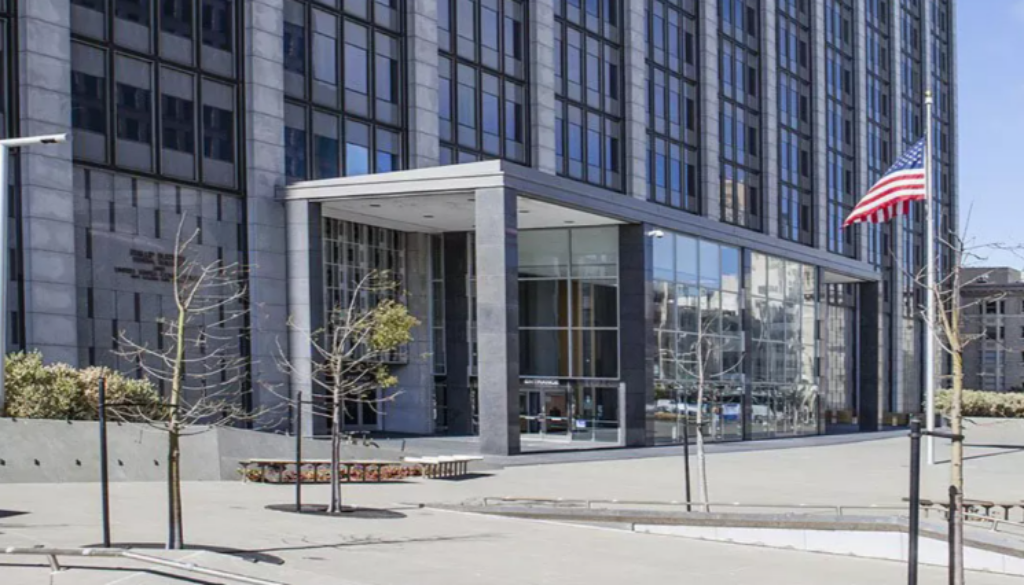
Featured image from the Northern District Court of California.