House Republicans move to roll back key protections in US chemical safety law
Listen to the audio version of this article (generated by AI).
In a widely anticipated move, House Republicans released a draft discussion bill that would roll back several provisions in the nation’s premier chemical safety law with the stated goal of bolstering manufacturing and innovation.
The draft discussion bill would amend the Toxic Substances Control Act (TSCA), a federal law under which the US Environmental Protection Agency (EPA) evaluates chemicals to make sure human and environmental health will be protected before chemicals are put into the marketplace.
Under the proposal, chemicals approved in certain other countries would be fast-tracked by the EPA and the agency would be required to prioritize chemicals that are designed to be substitutes for more harmful ones or chemicals aimed at easing supply-chain risks for critical materials.
The House Subcommittee on Environment will hold a hearing on the draft on January 22.
“Getting TSCA back on track is critical for American chemistry and for the industries like energy, healthcare and agriculture that rely on our innovations,” American Chemistry Council (ACC) president and CEO Chris Jahn said in a statement. “America’s chemical manufacturers depend on a regulatory system that is timely, predictable, and grounded in the best available science.”
The draft bill was introduced Thursday by Rep. Brett Guthrie, a Kentucky Republican and chairman of the House Committee on Energy and Commerce, and Rep. Gary Palmer, a Republican from Alabama who is chairman of the Subcommittee on Environment. In a joint statement, the pair said the reforms would “increase accountability, strengthen domestic manufacturing, and safeguard the health and safety of our communities.”
The draft drew swift and fierce criticism from environmental and health advocates.
“This bill is a chemical lobby wish list,” Liz Hitchcock, director of Safer Chemicals Healthy Families, a program within the Toxic-Free Future nonprofit, said in a statement.
TSCA was updated in 2016 with bipartisan support, and has since drawn the ire of the chemical industry, which says it is unnecessarily slow and unreliable, and is stifling US innovation. Congressional Republicans echoed these industry talking points in several hearings last year, and environmental groups have been bracing for a bill targeting TSCA and pleading with Congress to leave it intact.
“Getting TSCA back on track is critical for American chemistry and for the industries like energy, healthcare and agriculture that rely on our innovations.” – Chris Jahn, ACC
The proposed amendments include numerous instances of softened language around industry requirements. For example, in multiple places where existing language requires chemical makers to make changes so that “the chemical substance or mixture no longer presents such risk,” the amendments change to minimize risk “to the extent reasonably feasible.”
The draft also prohibits the EPA from restricting any chemicals used in aerospace fire suppression that have been certified by the Federal Aviation Administration or the Department of Defense. Such firefighting foams were previously a major source of per- and polyfluoroalkyl substances (PFAS).
Environmental and health groups said the changes undermine previous bipartisan support on the bill, allowing more new chemicals onto the market with little safety data. The bill would weaken the nation’s key defense against toxics that people — especially vulnerable populations like pregnant women, children, workers and frontline communities near polluting industries — are routinely exposed to, critics charge.
“Tearing down these protections would allow more chemicals, like PFAS, to come to market without a proper safety review. Americans don’t want potentially toxic chemicals fast-tracked into their lives,” Joanna Slaney, vice president for political and government affairs at the Environmental Defense Fund, said in a statement.
Chemical review delays
Last year Congressional Republicans started echoing industry frustrations with TSCA. Specifically, that the TSCA review process is too slow, creating uncertainty for companies and pushing chemical innovations out of the US. The EPA conducts new chemical reviews within its 90-day deadline less than 10% of the time, according to a 2023 report from the Government Accountability Office (GAO).
“This regulatory uncertainty and delay holds back innovation and makes it difficult to invest in technologies we desperately need … 15 to 20 years ago, the vast majority of new chemistry science came from the United States and Europe,” Peter Huntsman, president and CEO of the Huntsman Corporation, said in an October Senate hearing on TSCA.
Influential industry groups, such as the ACC, have for years advocated for TSCA changes. The proposed amendments would require the EPA to make public how long it took the agency to complete reviews.
“This legislation represents a vital opportunity to get TSCA working as intended [and] reduce the backlog of new chemical reviews,” Jahn said.
In addressing industry concerns, Suhani Chitalia, a senior manager of federal affairs at the Environmental Defense Fund, said delays happen, but “chemicals are getting approved. There are very few that are not approved or approved with very strict restrictions.”
“EPA’s main and primary authority is to make sure that a chemical does not pose an unreasonable risk prior to it going onto the market,” Chitalia said. “A lot of these delays happen because there’s just this back and forth between the EPA and industry.”
“Industry often wants to minimize restrictions to their chemical and go back and forth on data with the EPA – it’s like a student getting a bad grade and re-doing their paper over and over again until they get the grade they want.” she added. “In reality, they should have just done their assignment correctly the first time.”
“Industry often wants to minimize restrictions to their chemical and go back and forth on data with the EPA – it’s like a student getting a bad grade and re-doing their paper over and over again.” -Suhani Chitalia, Environmental Defense Fund
In addition, some delays in the chemical approvals are due to staffing shortages at the EPA and companies needing to submit more data, Tracey Woodruff, director of the Program on Reproductive Health and the Environment at the University of California, San Francisco, said at an October TSCA hearing.
Health advocates also pointed out that prior to the 2016 amendments, if the EPA didn’t act on a submitted chemical within 90 days then the chemical could go on the market.
“We had thousands of chemicals on the market with very little review and that led us to the proliferation of PFAS chemicals, for example,” Hitchcock said in an interview.
Worker protections in jeopardy
Rebecca Reindel, the director of occupational safety and health for the AFL-CIO, said the weakening of TSCA is not just an environmental problem — but a workplace one.
“We hear a lot about the environmental impacts and the community and consumer impact, which are all really important parts of this bill. But the occupational aspects are absolutely critical as well,” Reindel said.
The proposed amendments direct the EPA to take federal occupational safety and health standards into account in chemical reviews, meaning personal protective equipment and other measures that could deem it a lower risk to workers.
Reindel said TSCA has allowed the EPA to address potential chemical exposures and risks for workers in “a much deeper” way than the US Occupational Safety and Health Administration (OSHA).
“There is a myth that we’ve heard from the chemical industry that the EPA should not be involved in worker protection or worker occupational exposures. But TSCA was specifically written so that the EPA could fill the gaps that OSHA could not,” she said.
“We don’t support re-opening [TSCA]. It’s taken a lot of steps and a lot of legwork to get where we are,” she added.
EPA targeting TSCA
The EPA under Trump has already targeted aspects of TSCA. In September the agency proposed getting rid of TSCA amendments added during the Biden administration and, in a separate announcement, said that it will fast track the review of chemicals needed in data center projects.
The agency also recently announced it plans to significantly increase the threshold for inhalation of known-carcinogen formaldehyde, which is regulated under TSCA.
Any changes to administering TSCA will be in the hands of the former industry lobbyists now heading up the EPA’s chemicals office. Nancy Beck, a former chemical industry executive with the American Chemistry Council (ACC) is the agency’s Office of Chemical Safety and Pollution Prevention’s (OCSPP) principal deputy assistant administrator, and Lynn Ann Dekleva, formerly with DuPont and the ACC, is the office’s deputy assistant administrator.
Douglas Troutman, the OCSPP’s assistant administrator, most recently served as an interim CEO and lobbyist at the American Cleaning Institute, an organization that represents the cleaning products industry and frequently pushes back against the regulation of chemicals, including TSCA.
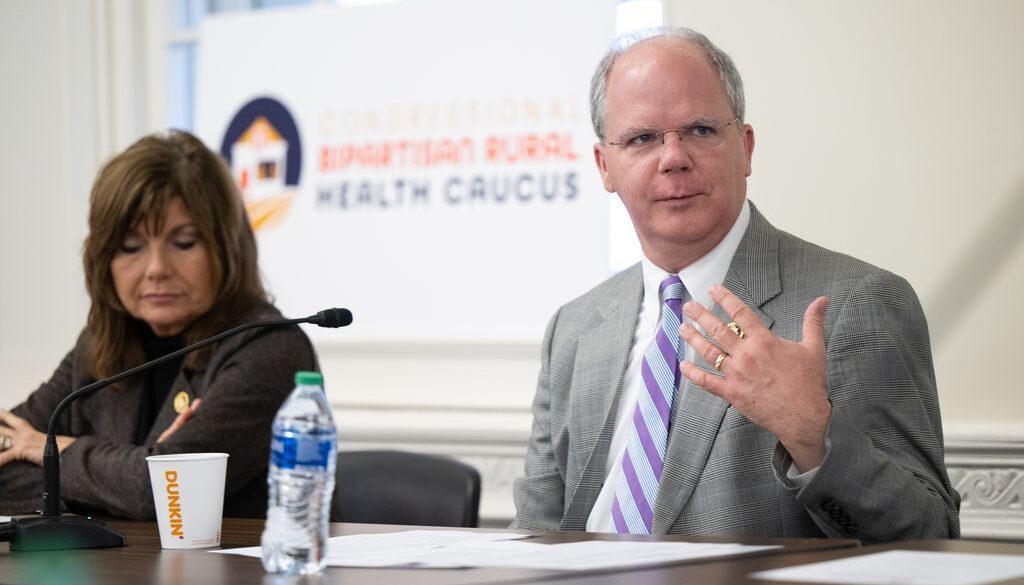
Featured image: House Rep. Brett Guthrie (right), a Kentucky Republican and chairman of the House Committee on Energy and Commerce, co-sponsored the discussion draft bill of TSCA amendments. (Credit: guthrie.house.gov)