EPA chief ’s MAHA tweet – PR stunt or real progress?
Environmental Protection Agency (EPA) Administrator Lee Zeldin sparked news stories around the US last week when he tweeted that the agency had made the “proactive decision to freshly reassess” the safety of the weed killer paraquat, a controversial pesticide widely used by farmers that is linked to Parkinson’s disease.
Zeldin cited the EPA’s recognition of the “leadership” of the Make America Healthy Again (MAHA) movement in calling for stronger protections from pesticides, and attributed the decision on paraquat to “More MAHA Progress!” News outlets large and small, including the international newswire Reuters, published articles about the paraquat reassessment.
But when asked to specify what exactly the agency is doing that is new in terms of assessing paraquat, the EPA response was – essentially nothing.
The agency is not starting a new safety assessment, according to an EPA spokesperson. The spokesperson confirmed there are no new actions behind Zeldin’s Jan. 9 tweet, and that the status of paraquat remains unchanged from November when the agency asked paraquat manufacturers to provide additional data on paraquat volatilization to help understand exposure risks to people living beyond areas where paraquat is sprayed.
Even that November action was a spillover move from the Biden administration’s EPA. The volatilization data request is part of a years-long registration review of paraquat started well before Trump took office that is driven largely by litigation filed by the Michael J. Fox Foundation for Parkinson’s Research and several other health advocacy organizations. The groups challenged the EPA’s 2021 interim registration review decision in which the agency concluded that there was insufficient evidence linking paraquat exposure to Parkinson’s.
That led the EPA under Biden to say it would withdraw its interim decision on paraquat and seek more data, including on volatilization.
The EPA is also continuing a long-ongoing process of looking at the potential for paraquat to disrupt hormone function and to better understand its impact on endangered species, the EPA spokesperson confirmed.
Zeldin’s tweet did not mention the litigation nor the prior Biden administration action but did state that under the current EPA “It’s all about gold-standard science and radical transparency for Americans.”
In response to questions about Zeldin’s tweet implying new action is being taken despite the actual absence of new action by the EPA, the agency spokesperson said the “Trump EPA has been consistent in our mission to ensure human health and the environment are protected as we Make America Healthy Again.”
 Kelly Ryerson, a MAHA leader, said all the media attention was confusing given the lack of any real fresh action by the EPA. She said MAHA was happy in November to see the data request by EPA, but much more action on paraquat is needed.
“It’s not like it’s some huge MAHA win,” she said. But “it’s better than absolutely nothing.”
Zeldin has been under intense pressure from the grassroots MAHA coalition to take action on several pesticides linked to human health problems and has yet to do so. A recent move by the Trump administration to side with Bayer in a court action designed to help the company limit litigation over its Roundup weed killer enraged MAHA leaders. The groups’ unhappiness with Zeldin and the EPA led MAHA in December to launch a petition drive to oust Zeldin from office.
Nathan Donley, environmental health science director at the Center for Biological Diversity, which was a plaintiff in the 2021 action against the EPA over paraquat, said the EPA was simply “rehashing” old news “staged to give Zeldin cover from MAHA backlash.”
“Repackaging a Biden administration action as a MAHA win is pretty desperate,” Donley said. “Zeldin’s EPA hasn’t done a single thing to protect public health this past year and he now seems intent on “MAHA-washing” everything that comes out of his office. This is nothing but a weak Biden administration action being sold as a MAHA win.”
Paraquat is a highly toxic weed killer commonly used by farmers to wipe out weeds in fields before crops are planted, for drying out crops before harvest, and for killing weeds in pastures and non-agricultural areas. Even a tiny amount, if ingested, can quickly kill a person, so the pesticide is restricted to licensed applicators.
There have been mounting concerns about the chronic effects of exposure to paraquat as many scientific studies have linked long-term exposure – through inhalation or other routes of exposure – to the incurable Parkinson’s brain disease. Many countries have banned paraquat, and there have been calls for bans from many US groups, including from several members of Congress.
Several thousand people suffering from Parkinson’s disease are suing paraquat maker Syngenta in US courts, alleging the company failed to warn them of the risks that paraquat exposure could cause Parkinson’s. The first US trial is set for January 26 in Pennsylvania. It is not certain the case will actually go to trial, however, as Syngenta has previously settled multiple cases just before trials were due to start.
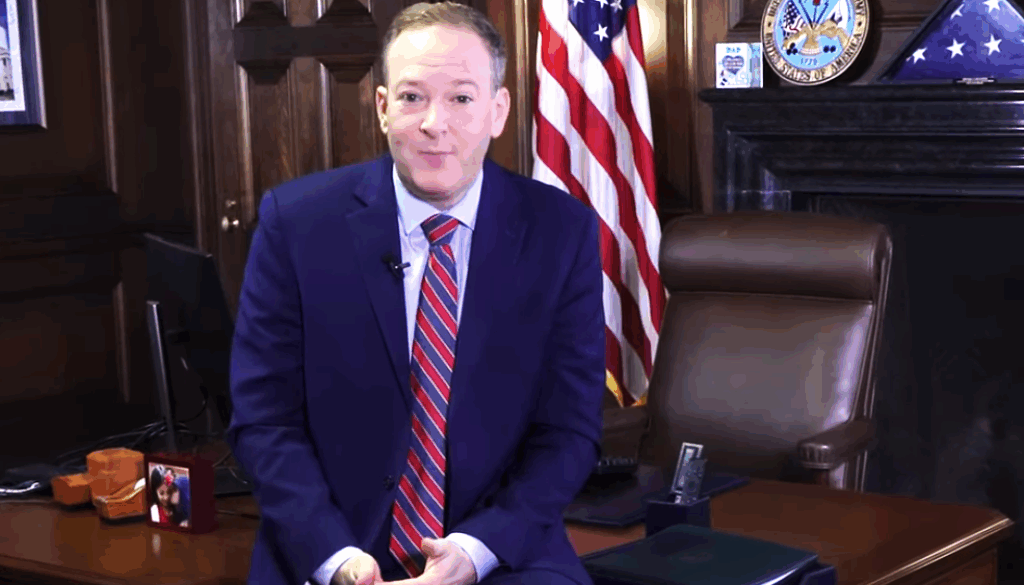
Featured image of EPA Administrator Lee Zeldin sourced from an EPA video.