
EPA delays reporting requirements for health-harming chemicals
Listen to the audio version of this article (generated by AI).
Federal regulators are giving chemical manufacturers and petroleum refiners more time to provide data on a group of chemicals that have been linked to human health harms as officials consider tighter regulations.
The US Environmental Protection Agency (EPA) extended the deadline one year for compliance with the Health and Safety Data Reporting Rule to May 2027 saying the extension is necessary to provide “regulatory certainty.” The agency said it will use the extension to determine whether to revise the rule, partly due to “legitimate concerns” raised by industry groups regarding the rule’s cost and scope.
Passed in 2024, the rule requires industry to send the EPA any unpublished safety and health data that they have on 16 chemicals that the agency is considering more tightly regulating due to concerns about environmental and human health risks. The chemicals include common plastic additives bisphenol A (BPA) and vinyl chloride, as well as oil refining chemicals benzene and naphthalene.
The deadline extension was widely criticized by health and environmental groups who said companies simply have to turn over existing health and safety studies that they already have, and warned that delaying these submissions denies people information about chemicals they are frequently exposed to.
“This is just another tactic by the Trump EPA to make it more difficult to regulate some of the most toxic chemicals, such as vinyl chloride and hydrogen fluoride,” said Maria Doa, a senior director focused on chemicals policy at the Environmental Defense Fund. “They are delaying a simple request for industry to provide EPA with any unpublished studies on potential harms from the chemicals they manufacture.”
The EPA received dozens of comments on the delay before it was finalized, with the majority opposing the extension. A joint comment by 49 environmental and health groups, for example, said that people are routinely exposed to the 16 chemicals in question.
“Many of [the chemicals] are associated with cancer, developmental and reproductive harm, and other serious illnesses,” the joint comment from the environmental and health groups stated. “The public has a right to know the full range of harms caused by those chemicals.”
Tom Fox, policy director at the Center for Environmental Health, which was one of the groups that signed the joint comment, said the extension signals that the EPA doesn’t intend to conduct adequate risk evaluations for these chemicals. “They’re trying to reduce the scope of what they’re looking at,” he said.
“They’re trying to reduce the scope of what they’re looking at.” – Tom Fox, Center for Environmental Health
In its final rule the agency defended the delay and dismissed concerns.
“EPA disagrees that the one-year extension undermines statutory obligations or the agency’s ability to rely on the best available science,” the rule reads. “EPA does not expect the extension to result in loss of relevant data, as entities remain subject to applicable recordkeeping requirements.”
In addition to its plans to revisit the reporting rule, the agency cited executive orders from President Trump as partially behind the extension, including a Department of Government Efficiency (DOGE) order from February 2025 that calls for “rescinding unlawful regulations and regulations that undermine the national interest.”
Several industry groups expressed support for the extension, including the American Petroleum Institute which wrote that “the reporting cannot be required before EPA has considered and decided on the appropriate modifications to this one-time reporting rule, including aligning it with current executive orders.”
Jonathan Kalmuss-Katz, a senior attorney focused on toxic exposure and health at Earthjustice, said the extension was “pointless and harmful” as the rule did not require any new testing or new data from industry.
“All this did was tell chemical manufacturers to provide the EPA with studies already in their knowledge and possession,” he said, adding that, in his view, the extension is unlawful.
“The EPA has either begun risk evaluations for some of these chemicals or has identified them as candidates for regulation under the Toxic Substances Control Act (TSCA),” he said. “TSCA legally requires the EPA to conduct risk evaluations on reasonably available information and these studies are reasonably available.”
Broader fight over toxic chemicals law
The delay comes amid the backdrop of a broader fight over the TSCA — a federal law under which the EPA evaluates chemicals to make sure human and environmental health are protected before chemicals are put into the marketplace.
TSCA was updated in 2016 with bipartisan support, and has since drawn the ire of the chemical industry, which says it is unnecessarily slow and unreliable, and is stifling US innovation.
Federal data suggest that reviews are lengthy, with the EPA conducting new chemical reviews within its 90-day deadline less than 10% of the time, according to a 2023 report from the Government Accountability Office (GAO).
Despite past bipartisanship around TSCA, support for the current law now falls along party lines — with Democrats expressing a desire to leave it intact or strengthen it, and Republicans echoing industry talking points that TSCA in its current form is harming US competitiveness in the chemical marketplace. Republicans in both the House and Senate have put forth discussion draft bills in the past few months that aim to amend TSCA to speed up chemical safety reviews.
Congress is expected to take up TSCA amendment legislation before September 30 when TSCA fees are set to expire.
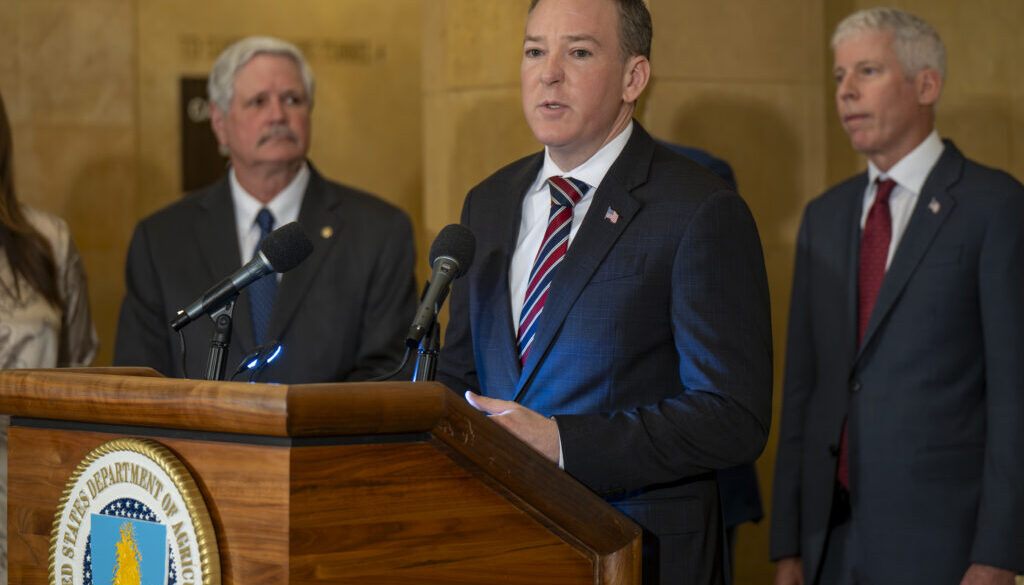
Featured image: Administrator of the U.S. Environmental Protection Agency (EPA) Lee Zeldin. (Credit: USDA)