An industry-backed “Trojan horse” bill would trample state food safety laws, critics warn
A federal bill that would preempt hundreds of state food safety laws would weaken protections for consumers from toxic chemicals, critics warn even as backers of the bill argue it would lower food costs and ease supply chain burdens.
The FDA Review and Evaluation for Safe, Healthy (FRESH) and Affordable Foods Act is a “Trojan horse for the food industry” and “a direct attack on the health and safety of our kids” that would eliminate dozens of state food safety laws passed in both red and blue states across the country, Jessie Gabriel, a Democrat in the California state assembly, said during at an April 29 press event organized by the Environmental Working Group.
“This would move the federal government, which for many decades has been asleep at the switch, from inaction to obstruction, to actually getting in the way of public health,” said Gabriel.
In addition to establishing a single federal standard, the FRESH Act would also exclude “common food ingredients” from being regulated as food additives, a category it defines as ingredients consumed or sold as food on or before January 1,1958.
Additionally, the bill would require companies to notify the US Food & Drug Administration (FDA) of food ingredients they use under the designation Generally Recognized as Safe (GRAS), which exempts the additives from review – a status companies can currently give their ingredients without informing the FDA.
The FRESH Act, which would amend the Federal Food, Drug, and Cosmetic Act, also calls for the agency to create a program for assessing the safety of chemicals in the food supply by September 30, 2026 and to publish a list of chemicals to prioritize for risk assessment by September 30, 2027.
“This would move the federal government, which for many decades has been asleep at the switch, from inaction to obstruction, to actually getting in the way of public health.” — Jesse Gabriel, California state assembly member
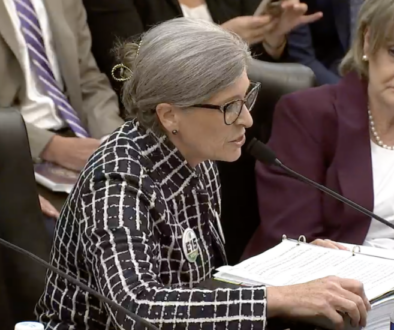
The bill was debated Wednesday at a hearing for the US House Committee on Energy and Commerce Subcommittee on Health, which covered 28 different food bills for issues including GRAS reform, infant formula and allergens.
“States across the country are responding and have passed laws banning various chemicals in our food supply,” US Representative Debbie Dingell, a Democrat from Michigan, said at the hearing. “Now we need to follow suit with strong federal legislation to ensure hazardous chemicals are not allowed in or near the food we eat.”
The FRESH Act comes in the midst of a bipartisan wave of food safety legislation, with laws banning toxic food chemicals recently introduced or passed in more than two dozen states. Some bills, such as the California School Food Safety Act, specifical ban additives such as certain artificial dyes in foods served at schools.
While the FRESH Act is being marketed as reform, “it’s really laden with industry favors,” said Natalie Mihalek, a Republican state representative for Pennsylvania said during the press call. “It does nothing to promote transparency or ensure the safety of our ingredients, and that’s exactly what we’ve been doing at the state level.”
The bill’s move to establish a program for conducting safety assessments of chemicals already in the food supply “doesn’t matter when the FDA doesn’t have any funding, when the FDA continues to face cuts to its workforce,” added Mihalek. “I don’t see any language in the bill whatsoever to actually increase the resources needed to conduct any sort of robust assessment of what is in our food supply.”
The FRESH Act’s proposed changes mirror policy priorities set by Americans for Ingredient Transparency (AFIT), a coalition of food giants formed last fall, including Coca-Cola, PepsiCo, General Mills and Nestle. AFIT’s policy priorities call for the FDA to set a uniform standard as the “sole entity setting the floor and ceiling” for food safety assessments, ingredient approvals, registrations, and reporting and labeling requirements, and to pass GRAS reform legislation.
“The current patchwork of food and beverage regulations being enacted across the country will have unintended consequences that negatively impact the entire nation,” says AFIT’s website. “These inconsistent rules confuse consumers and limit their choices, drive up costs, and hurt farmers and small businesses.”
A February 2026 study by the Policy Navigation Group, a lobbying and consulting firm, concluded that recent ingredient disclosure laws passed in Louisiana, Texas and West Virginia would increase the cost of groceries for consumers in these and neighboring states by over $12 billion per year, predicting grocery cost hikes nationwide driven by a “patchwork” of state regulations.
Joe Colalillo, a member of the board of directors for the Wakefern Food Corporation and president of several ShopRite stores in New Jersey, said at the hearing that he supports the FRESH Act since he believes a fragmented, state-led regulatory approach would “drive up costs, reduce product availability and ultimately make it harder for families to afford groceries,” creating confusion for consumers and disrupting the whole supply chain.
Featured image: April Walker/Unsplash