

Scientists call for urgent action on glyphosate, citing strong links to cancer
Listen to the audio version of this article (generated by AI).
US and European regulators should take urgent action to more tightly regulate glyphosate, the world’s most widely used weed killer, in light of strong scientific evidence that the pesticide can cause cancer and other health problems, a group of international scientists said on Friday.
The scientists, who gathered at a “glyphosate symposium” in Seattle March 25 – 26 to examine a range of research conducted over the last decade, determined that evidence showing glyphosate herbicides can harm human health “is now so strong that no additional delays in regulation of glyphosate can be justified.”
The group affirmed prior findings linking exposure to non-Hodgkin lymphoma and warned that harmful health impacts are being found at levels of exposure consistent with current use patterns.
“Agencies should act without further delay to limit their use, or eliminate them if legally required, to protect public health,” the scientists said in their statement.
Participating scientists included experts affiliated with multiple US universities, the Centers for Disease Control and Prevention and the National Cancer Institute, as well as experts from Europe and Canada.
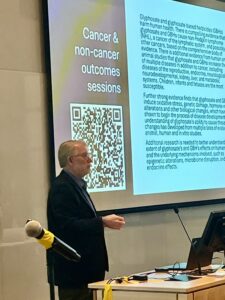
The full findings of the group, which included specialists in epidemiology, toxicology, cancer and risk assessment, will be detailed in a peer-reviewed paper the group hopes to publish later this year.
Glyphosate is widely used by farmers and landscapers and others, introduced 50 years ago by Monsanto and marketed as a uniquely safe way to kill weeds.
But evidence has grown over the years linking glyphosate to an array of health and environmental health harms.
The work at the Seattle symposium comes a little more than a decade after the World Health Organization’s International Agency for Research on Cancer (IARC) conducted an extensive review of scientific literature on glyphosate prior to 2015, determining that the chemical was “probably” carcinogenic to humans.
The Seattle review of more recent science affirms and strengthens that classification, the scientists at the symposium said. Many are now convinced that there is no longer room for doubt about the carcinogenicity of glyphosate.
“It’s clear the evidence has changed and become stronger since 2015,” said Christopher Portier, a former US government scientist and an adjunct professor at Emory University, who was a participant in the Seattle symposium and also the 2015 IARC glyphosate review.
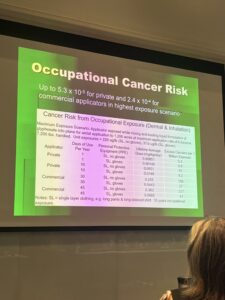
Additionally, the scientists said there was evidence from human and/or animal studies that glyphosate and glyphosate-based herbicides increase the risk of multiple adverse health problems, including diseases of the kidney and liver. Research also shows impacts to reproductive, endocrine, neurological, and other metabolic systems. Children, infants and fetuses are the most susceptible, the scientists said.
The scientists focused on research conducted since 2016, including reviewing data on how and where people are exposed, statistics on the pervasive presence of glyphosate in household dust in certain agricultural areas and the prevalence of glyphosate in urine samples.
The scientists further warned that other pesticides are also not being adequately evaluated and regulated, and approval processes globally should be “fundamentally revised” to protect human health. Preventive measures to reduce human exposures should be implemented without delay while research continues, they said.
Glyphosate is not the only chemical in which regulators are failing to follow and act on scientific evidence of harm, though it is a key example, according to the scientists at the symposium,
“There is a huge contrast, conflict, between the scientific consensus and the regulatory perspective,” said Lianne Sheppard, symposium organizer and professor in public health sciences at the University of Washington. “This [glyphosate] is the starkest example of that.”
The scientists are proposing an overhaul to the regulatory system, requiring scientific data from independent laboratories and organizations free from conflicts of interest, with the costs of that research work being borne by the pesticide industry. Regulatory agencies should base pesticide approval decisions on “unbiased” health effects data, rather than relying heavily on unpublished data submitted by the companies seeking approvals of pesticide products, the scientists said. For pesticide products on the market, regulatory agencies “must closely monitor use, exposure data and harmful outcomes, especially for susceptible and highly exposed groups,” the scientists said.
Ultimately, pesticide use must be reduced overall, the group concluded, and “eliminated to the extent possible.”
“This is imperative for the health of humans, ecosystems and future generations,” the group said in their statement.

“It’s hard to get the government to change, particularly because the industry spends a lot of money lobbying Congress to make sure the laws favor their point of view,” said Tracey Woodruff, a professor at Stanford University and former senior scientist for the EPA’s Office of Policy who participated in the symposium.
“People are really mad that they are getting sicker, their families are getting sicker, and they’re being exposed to toxic chemicals. It is universally agreed … that people don’t want to be exposed to toxic chemicals.”
Germany-based Bayer, which bought Monsanto in 2018 and inherited the glyphosate-based Roundup brand and other glyphosate-based herbicides, is currently embroiled in litigation in the United States brought by tens of thousands of people who allege that exposure to the company’s glyphosate herbicides caused them to develop non-Hodgkin lymphoma, a type of blood cancer.
Bayer maintains that its glyphosate products are safe and do not cause cancer or other health problems, but several research studies challenge that position.
A 2022 study, for example, found that glyphosate can have neurotoxic effects at doses lower than levels considered safe by regulatory agencies. And a 2023 study linked childhood exposure to glyphosate to liver inflammation and metabolic disorders.
Last month, a review of 15 years of published studies confirmed that human exposures to glyphosate herbicides have been associated with numerous adverse health outcomes that not only include cancers, liver and metabolic problems, but also reproductive and endocrine-system effects, and disruption of the microbiome, among others.
Bayer is trying to settle the litigation, and is pursuing an appeal before the US Supreme Court that could limit future lawsuits.
Neither Bayer nor the US Environmental Protection Agency had an immediate comment on the statement issued from the Seattle symposium.