
House Farm Bill clears committee with controversial pesticide and livestock provisions intact
After days of debate and disagreements, the House Committee on Agriculture on Thursday passed its version of the 2026 Farm Bill, which includes controversial provisions critics say will hamper the ability of states to put in place strict rules for pesticides and animal welfare.
The “Farm, Food, and National Security Act of 2026” passed Thursday morning with a 34-17 vote. Seven Democrats joined all 27 Republicans on the committee in a yes vote. The Farm Bill is a massive piece of legislation renewed roughly every five years that guides the federal government’s food and farm policy. The 2026 version, which spans 802 pages, touches on everything from subsidies and trade restrictions to pesticide regulation and livestock conditions, and has drawn widespread criticism over its industry-friendly provisions and environmental rollbacks both for farm chemicals and animal welfare protections.
House Committee on Agriculture chairman Glenn “GT” Thompson, a Republican from Pennsylvania, shepherded the legislation through the markup over the past few days, in which the committee debated late in the evenings. Thompson stressed that the legislation was bipartisan and “restores regulatory certainty in the interstate marketplace, expands investments in rural communities, and brings science-backed management back to our national forests.”
“This proposal includes the bipartisan policy improvements to assist beginning farmers, advance soil health initiatives, protect private forest lands, and fund advancements in conservation technology,” Thompson said in his opening statement on Tuesday. “This title is widely supported by farmers, ranchers, foresters, sportsmen, and the environmental community.”
Several farm groups lauded the passage, with American Farm Bureau Federation president Zippy Duvall calling it “critical as farmers face headwinds not seen in a generation,” in a statement.
Though seven Democrats voted yes on the bill, several echoed the concerns of public health, animal rights and environmental groups that the bill contains harmful changes to pesticide labeling and approvals, and restricts states from protecting farm animals. But efforts to strip these provisions failed.
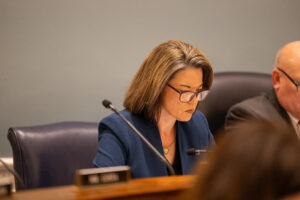
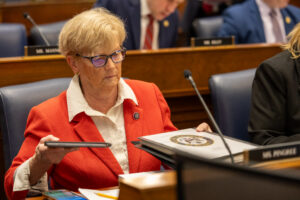
House Agriculture Committee ranking member Angie Craig, a Democrat from Minnesota, said Democrats were largely sidelined during the drafting of the bill. It represents “a missed opportunity to address the most pressing challenges that our family farmers and our families are facing,” Craig said in her opening remarks.
Pesticide labeling
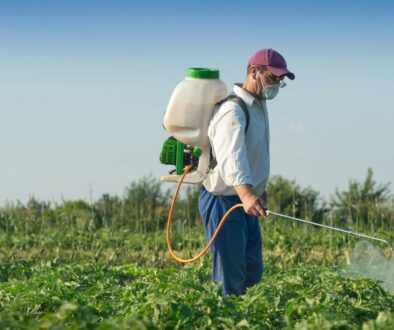
Several sections in the bill reduce or eliminate the government’s ability to regulate potentially harmful pesticides. For example, the bill extends the deadline for the review of hundreds of pesticides, and would force uniform pesticide labels across the country, which preempts state or local governments from mandating stricter labels that differ from those of the US Environmental Protection Agency (EPA). Representative Chellie Pingree, a Democrat from Maine, introduced an amendment to strip the provision that gives the EPA the ability to override states in pesticide labeling, but the amendment was voted down.
“This provision would handcuff states and local communities when federal regulators drag their feet or bow to industry pressure, and it would slam the courthouse doors on people who’ve been poisoned and harmed,” Pingree said in a statement.
The bill’s proposed industry-friendly pesticide changes come as pesticide-maker Bayer seeks to make the EPA the ultimate arbiter of warning labels on pesticides such as the company’s popular Roundup weed killer in a US Supreme Court case scheduled for April, and as President Trump signed a recent executive order that granted “immunity” for glyphosate-based herbicides, such as Roundup, which have been linked to cancer and are the subject of widespread US litigation.
This bill “is widely supported by farmers, ranchers, foresters, sportsmen, and the environmental community.” – Rep. Glenn “GT” Thompson, a Republican from Pennsylvania
Food & Water Watch senior food policy analyst Rebecca Wolf said the bill’s pesticide provisions are “clear handouts to industry.”
“The industry has been trying to get this language wherever they can get it,” she said. “It’s a clear indication that they’re desperate and they’re losing so they’re trying to do it with their cronies in Congress.”
When the 2026 House Farm Bill was introduced a month ago more than one hundred organizations responded saying it was “anti-environment” and “anti-public health,” in a letter to the House Committee on Agriculture leadership.
“The House Farm Bill will shield chemical companies from accountability, erode states’ rights, delay protections for endangered species, increase deforestation, and result in the unchecked discharge of dangerous pesticides and chemicals into the environment,” states the letter, sent by 118 health and environmental advocacy groups.
Animal welfare concerns
The bill also reduces state authority in regulating large-scale livestock and dairy farming operations. It bars state or local governments from having protections for animals at farms – including at concentrated animal feeding operations, or CAFOs – or those sold within the state that differ from other states’ rules. The section specifically targets two state laws — California’s Proposition 12 law and Massachusetts Question 3 — which require that hogs, calves and chickens that are on confined farms or sold in the states are raised with adequate room to turn around, lie down and extend their limbs.
Representative Jim Costa, a Democrat from California, put forth an amendment to remove that provision, but later withdrew it.
The National Pork Producers Council praised the bill’s passage this morning, saying it provides “relief for pork producers facing an imminent patchwork of state animal housing laws spurred by California Proposition 12,” in a statement.
“Pork producers of all shapes and sizes need this regulatory relief and are grateful for Chairman Thompson’s steady commitment to providing relief from state laws outside our borders,” said Duane Stateler, president of the council. “Now, it is up to the full House of Representatives to finish the job: pass this farm bill.”
Julia Johnson, head of farmer advocacy and policy at the farmed animal welfare organization Compassion in World Farming, said the pork industry has led the challenges to these laws and the provisions in the bill are “driven more by corporate issues and interests rather than actual farmers and the public.”
“We’re not asking for much here … it’s pretty common sense for pigs to be able to turn around and lay down comfortably and take a few steps in their group housing setting,” she said, adding that the US Supreme Court upheld California’s Proposition 12 in 2023.
“We’re not asking for much here … it’s pretty common sense for pigs to be able to turn around and lay down comfortably and take a few steps in their group housing setting.” – Julia Johnson, Compassion in World Farming
Johnson said the provision is not just an animal welfare issue — but a democracy issue. “The federal government is trying to overreach on states’ rights,” she said.
The Farm Bill will now go to a full House vote, and the Senate is expected to put forth its version in the coming months. The two chambers would then put together a final bill.
Featured image: House Committee on Agriculture chairman Glenn “GT” Thompson, a Republican from Pennsylvania. (Credit: USDA)