US EPA reapproves the controversial herbicide dicamba
Listen to the audio version of this article (generated by AI).
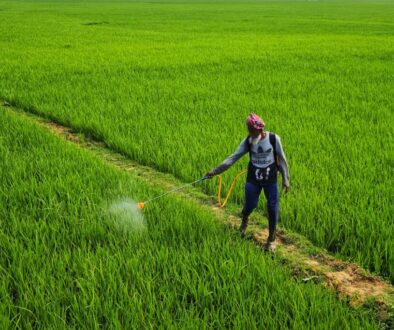
In a widely expected move, the US Environmental Protection Agency (EPA) on Friday reapproved the pesticide dicamba, an herbicide used on genetically modified crops including corn, cotton and soybeans that is prone to far-reaching drift and linked to crop damages.
The move amounts to yet another regulatory reversal for the controversial herbicide that has spurred lawsuits over crop and landscape damage. Dicamba has twice faced federal court-ordered bans: most recently in 2024, when the EPA was found to have violated public input requirements required by the Federal Insecticide, Fungicide and Rodenticide Act, when the agency re-approved the herbicide in 2020.
The EPA called the reapproval the “strongest protections in agency history” for dicamba while acknowledging concerns over the herbicide’s drift and putting forth measures to curb such risks. The reapproval statement included several restrictions including limiting how much could be sprayed during high temperatures, cutting the annual usage amount in half, and requiring conservation measures to protect endangered species.
“EPA is making clear that these restrictions are not optional suggestions. They are enforceable legal requirements,” the agency said in its statement, which added that the determination is for the next two growing seasons and subject to review.
The new statement also said the EPA’s dicamba review found “no unreasonable risk to human health and the environment.”
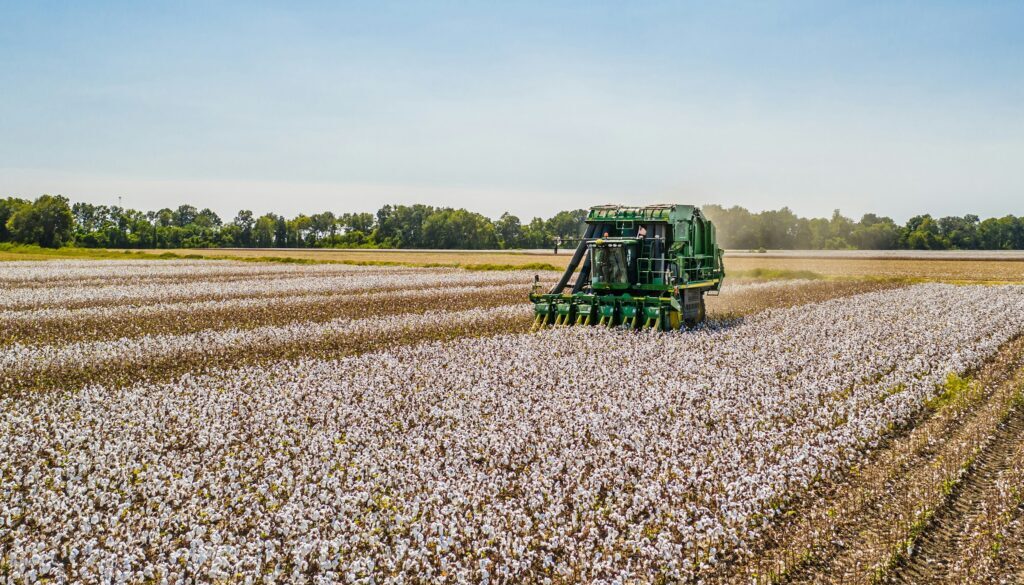
The reapproval was expected after last summer when the EPA signaled its support for use of three dicamba herbicides on soybeans and cotton. The agency, at the time, said the herbicides would be approved for “over the top” use — ”primarily to target pigweed species, such as Palmer amaranth and waterhemp.” The agency pointed out that the US cotton industry accounts for more than $21 billion in products and services annually, and the nearly 85 million acres of soybean harvested on average annually in the US is worth more than $57 billion.
Farm groups applauded the reapproval.
“Farmers appreciate the decision by Administrator Lee Zeldin and the EPA to release a new registration and updated label for dicamba, an important herbicide that allows farmers to grow safe and healthy food and fiber,” said American Farm Bureau Federation president Zippy Duvall in a statement. “Today’s announcement will provide farmers with certainty as they plan for this year’s planting season.”
Friday’s decision, however, was widely criticized by food and farm advocates who have for years warned that dicamba drifts far from where it is sprayed, damages non-target crops, plants, bushes and trees, and has been linked to certain cancers.
“It is both irresponsible as well as unlawful for the EPA to issue an approval for the third time for this broken product,” said George Kimbrell, the co-executive director and legal director for the Center for Food Safety, which was part of the both the 2019 and 2024 lawsuits that banned dicamba use.
“This product is going to drift off field dramatically. It’s going to harm other farmer’s crops. It’s going to harm trees. It’s going to harm endangered species, contaminate ecosystems and waterways,” Kimbrell added.
Dicamba has been used in the US since 1967, but was largely avoided in warm months because it is volatile and drifts long distances. However, about a decade ago Monsanto and BASF developed dicamba-tolerant genetically modified crops and new dicamba herbicides, following widespread resistance to another herbicide, glyphosate, caused by heavy use on GMO crops. Previously farmers couldn’t use dicamba via over the top spraying on mature crops because it would kill them. The change allowed much broader use.
“It caused a dramatic increase in use but it also changed the times of those applications … now it can be sprayed in spring and summer when it’s much more humid and hot,” Kimbrell said. “And one of the major issues with dicamba drift is that it’s not like wind-based drift. It’s vapor drift. It’s a very volatile herbicide where basically on humid days it will rise up to make these dicamba clouds.”
The pesticide is notorious for its far-reaching drift and damage to other crops and landscapes. The EPA during the Biden administration acknowledged it has damaged millions of acres of non-target crops, including more than 150,000 acres in a wildlife refuge.
After a few years of use on genetically modified crops, federal courts found in 2020 the EPA broke the law in approving the new dicamba products and had “substantially understated” their risks. Internal documents also showed Monsanto (acquired by Bayer in 2018) and BASF knew the system would likely damage neighboring farms and worked to block third-party testing that could alarm regulators.
Bayer and BASF have faced more than a hundred lawsuits, including a $265 million verdict in 2020 in favor of Missouri peach farmers Bill and Denise Bader, who alleged nearby dicamba spraying wiped out tens of thousands of their peach trees and ruined their farm.
George Naylor, an Iowa farmer, said he started using dicamba herbicides 50 years ago. “It was so effective, all season long that field looked like a black asphalt parking lot with corn growing out of it.”
However, he noticed that it would kill other crops. “If I had a corn and bean field next to each other, if there was a big rain that drained off the corn into the bean field, boy, the beans would be goners.”
Naylor switched to organic farming in 2014, but said several of his neighbors still use dicamba. “Over the years my neighbors tell me their beans get dinged by dicamba drift, and they don’t know where it came from,” he said, adding that, beyond the drift concerns, he noticed more than a decade ago that weeds were becoming resistant to dicamba treatments.
“If farmers start using it again, it’s going to add to the resistance of the weeds. [Dicamba] is bound to become obsolete,” he said.
Kimbrell said the Center for Food Safety is reviewing the decision and exploring all of their legal options.
(Featured image by Karl Wiggers on Unsplash.)