

New study advances science linking pesticide exposures to cancer
A new study of pesticide exposure in Peru finds a mechanistic association between exposure and cancer, and shows how “complex pesticide mixtures” can contribute to the development of cancer in people, even at exposure levels currently deemed safe.
The authors of the study, published in Nature Health, said the findings call into question classical toxicological approaches that are based on the evaluation of isolated substances and the setting of safety thresholds, and demonstrate the importance of looking at the impacts of multiple pesticide mixtures.
The US Environmental Protection Agency (EPA) and other regulatory agencies around the world typically evaluate pesticides individually and not in combination, a practice that has drawn criticism.
“We have long assumed that pesticide risks are assessed one at a time, but in reality people are constantly exposed to complex mixtures in their everyday environment — and our findings suggest this overlooked reality may be an important component of cancer risk,” said study co-author Stephane Bertani, who is research director in molecular biology at the French Institute for International Scientific Research (IRD).
In addition to the IRD, the research team included scientists from the Pasteur Institute and the National Institute of Neoplastic Diseases (INEN).
The team said their study is the first to highlight the biological mechanisms by which pesticide exposure can contribute to the development of certain cancers.
The researchers focused on Peru, combining environmental data with information about more than 150,000 people diagnosed with cancer between 2007 and 2020 contained in national cancer registries, and biological analyses.
The study involved mapping areas within Peru most exposed to pesticide contamination between 2014 and 2019. The authors said they found that certain tumors, even those affecting different organs, share common biological vulnerabilities linked to their cellular origin that can be weakened by pesticide exposure.
 “Molecular analyses performed on liver tissue, a key organ in the processing of chemicals and considered a sentinel of environmental exposure, show that pesticides disrupt the mechanisms that maintain cell identity and normal function,” a press release accompanying the new study states.
“These biological alterations appear before the development of cancer, suggesting early, cumulative, and silent effects. They could make tissues more vulnerable to other factors, such as infections, inflammation, or environmental factors,” the press release states.
Bruce Lanphear, professor of health sciences at Simon Fraser University, said the study is a move in “the right direction” in terms of looking at pesticide mixtures, real-world exposures and biological plausibility but “stops short of showing that pesticides are driving the observed cancer patterns.”
“The next step is straightforward, if not easy: measure what people are actually exposed to and follow them over time,” Lanphear said. “That means combining biomonitoring with cohort or case-control studies, accounting for other major risk factors, and linking individual exposures to early biological changes and disease.”
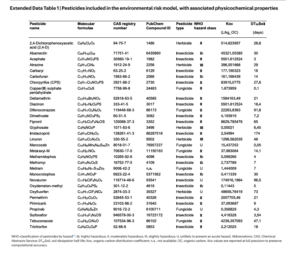
The study included exposure information on 31 different pesticides, including atrazine, glyphosate, and 2,4-D – all commonly used herbicides; as well as chlorpyrifos, imidacloprid and permethrin – commonly used insecticides. In all, 19 insecticides, 7 fungicides and 5 herbicides were part of the study. None are currently classified by the International Agency for Research on Cancer as carcinogenic, though several are classified as probably or possibly carcinogenic.
Tens of thousands of people in the US have sued glyphosate maker Monsanto and its owner Bayer, alleging exposure to glyphosate products caused them to develop cancer. The US Supreme Court is slated to take up an appeal by Bayer in late April in which the company argues it should not be held liable for failing to warn of cancer risks if the EPA has not required such warnings.
Analyses by two non-profit public health groups has found, however, that the EPA has a history of failing to require cancer warnings on pesticides even when the agency itself has determined a product’s ingredients are carcinogenic.
Featured image by Dibakar Roy on Unsplash.