USDA seeks higher slaughterhouse line speeds; critics say workers will pay the price
Listen to the audio version of this article (generated by AI).
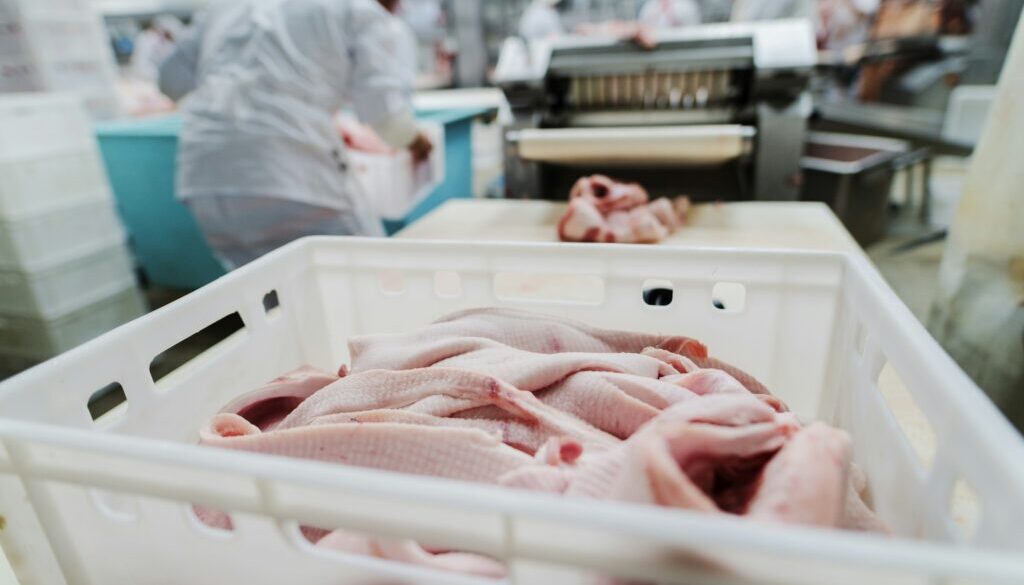
The US Department of Agriculture (USDA) wants to increase how fast meat plants can slaughter chicken, turkeys and hogs, raising alarm over food and worker safety and the welfare of livestock animals.
On Tuesday the USDA proposed updating the line speed rules at poultry and pork plants by increasing the allowed slaughter rates for chickens from 140 to 175 per minute; for turkeys from 55 to 60 per minute; and by eliminating any caps on speed at pork plants, saying that plants would “determine their own line speeds based on their ability to maintain process control.”
In a press release announcing the proposed changes, the agency said the changes are an effort to lower food costs, remove unnecessary regulations and create a more “efficient and resilient food supply.”
“My responsibility is to ensure that American families have access to affordable, safe, and abundant food,” USDA Secretary Brooke Rollins said in a statement. “These updates remove outdated bottlenecks so that we can lower production costs and create greater stability in our food system.”
The Meat Institute, which represents meat packers, processors and suppliers, said the changes would benefit consumers as well as livestock and poultry producers.
“With this long overdue regulatory certainty, our member companies can invest in their operations to continue growth of the processing sector which benefits the consumer with more affordable and nutritious food,” Meat Institute CEO Julie Anna Potts said in a statement.
However, food and worker advocacy groups said increased line speeds put workers and, ultimately, consumers at risk.
“Corporate poultry and hog processing plants are hotbeds for disease and antibiotic resistance. To protect workers, consumers, and animals, these dangerous facilities need more oversight — not less,” Food & Water Watch staff attorney Dani Replogle said in a statement.
Food & Water Watch and several other food and environmental groups are suing the US Environmental Protection Agency (EPA) over its decision to abandon a Biden administration rule that would have limited phosphorous pollution from meat plants across the country.
Higher line speeds lead to rougher handling of animals, including increased use of painful electric prodding and greater risk of birds being scalded alive in poultry plants, according to animal welfare advocates. “You can’t humanely stun an animal when you have a third of a second to do it. The USDA knows this,” said Matthew Dominguez, US executive director at Compassion in World Farming, in a statement.
In its announcement, the USDA said the proposed changes were rooted in years of data that show low non-compliance rates at both pork and poultry processing plants.
Both proposals include language that would remove any worker safety authority from the USDA’s Food Safety and Inspection Service, saying that the Occupational Safety and Health Administration (OSHA) would be the sole federal agency responsible for worker safety and health.
Mark Lauritsen, director of the food processing, packing and manufacturing division and international vice president at United Food and Commercial Workers International Union, said the USDA is ignoring its own studies on pork and poultry workers from last year that showed faster line speeds increase the risk of harm to workers.
The study on poultry workers found 81% of those evaluated were at high risk for musculoskeletal disorders, and that those working with higher rates of animals per minute were at greater risk.
“This proposed rule ignores those studies and seemingly any consideration for worker safety,” Lauritsen said in a statement. “Today’s move risks taking us back to the days of Upton Sinclair’s The Jungle, where terrible working conditions in meatpacking plants left workers sick and injured at alarming rates.”
The proposed changes come as the USDA has fewer staff to inspect such plants. The department’s Food Safety and Inspection Service lost an estimated 9% of its workforce last year.
The USDA is accepting public comment on the proposed rules for 60 days.
Featured image: Getty Images/Unsplash +