Senate vote sets up a clash over Boundary Waters environmental safeguards
The US Senate is poised to vote on a resolution intended to eventually open a long-disputed copper mine close to the Boundary Waters Canoe Area Wilderness in northeast Minnesota, triggering protests from environmentalists who fear the action will diminish the government’s ability to protect America’s cleanest waters, most exquisite forests, and wildest natural landscapes.
The upcoming Senate vote will consider a resolution to end a 20-year mining ban in the Superior National Forest issued by the Biden administration in 2023. But if approved and signed by President Trump, the measure would not only undo protections for roughly 225,000 acres of the forest, but could significantly advance the president’s goal of accelerating development of coal, oil, timber, and minerals on public lands across the US.
The White House wants to achieve that result by deploying the Congressional Review Act (CRA) to eliminate specific federal environmental safeguards, including the prohibition on mining near the Boundary Waters Wilderness. The CRA gives Congress the authority to hastily review and approve resolutions to nullify federal agency rules. In the 20 years between the law’s passage and Trump’s election victory in 2016, Congress had never passed a resolution to impede environmental safeguards.
Like so many other precedents, Trump broke that trend in 2017, soon after he took office for his first term. Congressional Republicans seized on the CRA to approve four resolutions, signed by President Trump, to end environmental protections, including one regulation that limited coal mine wastes from being dumped into streams and another to prevent natural gas leaks on public lands.
A legislative shortcut
The move in Minnesota would be the latest in a string of such actions. Last year, Congress considered 76 CRA resolutions to change or halt federal regulations, according to the Center For Progressive Reform think tank.
Acting on the president’s executive orders to limit environmental oversight and speed development of natural resources, Congress proposed 23 resolutions to nullify regulations administered by the Environmental Protection Agency (EPA), more than for any other agency.
Of those 23, 16 became law, including one resolution that nullified a federal rule that reduced hazardous air pollution from rubber manufacturing that took the EPA over two years to finalize.
The Minnesota action gained traction in January when House Republicans approved a joint resolution to end a 20-year moratorium on mining near the Boundary Waters that was established by the Biden administration in 2023.
The White House, congressional Republicans, and mining interests hailed the House vote as a strategic step to improve the economy and job growth in rural areas.
Rich Nolan, the president of the National Mining Association, was especially enthusiastic.
“We are in a global race to secure the metals and minerals required for a secure economy and national defense,” he said in a statement. “We simply can’t afford to let needless, outdated policies stand in the way of responsible mining projects in our country while China strengthens its global minerals monopoly.”
Critics cried foul, asserting that the CRA was meant to evaluate administrative rules and was never intended to reverse agency decisions tied to the environment and public lands. Allowing the vote to stand, they argue, would set a new path for industries to target and remove limits on mining, logging, grazing and other development of public resources.
“We are a nation of laws. The protections that we have put in place with the Boundary Waters, like all public lands, were done by the book following the orders laid out in the Federal Land Policy and Management Act,” said Minnesota Sen. Tina Smith, a Democrat.
“What’s happening right now is that Congressman Stauber and Republicans are using an unprecedented tool, a never before used gambit claiming that Congress can claw back the protections for public lands, our lands, without any of the normal procedures and processes. If this effort is successful, we all need to understand big corporations and their friends in Congress will be looking for where they can next go to exploit our public lands for their profit and our loss.”
Stout history of protection
The Senate decision carries significant consequences. Not the least is the effect it could have on one of the epic confrontations between development and resource protection in American history. Until today actions by presidents and Congress almost always sided with safeguarding the unique natural character of the Boundary Waters. What’s distinctive now is the collaboration between Congress and the president to open one of the country’s most beloved and wildest regions to development.
The 3.9 million-acre Superior National Forest, the largest expanse of wild land east of the Mississippi River, was established in 1909 by President Teddy Roosevelt. The Boundary Waters encompasses about a quarter of the nati0nal forest, and was designated a protected wilderness in 1964 when President Johnson signed the Wilderness Act.
A federal district judge issued a ruling in 1973 that banned mining within the protected wilderness. In 1978 President Carter signed legislation that expanded the wilderness area and added significant protections to outlaw timber production and set limits on motorboats and snowmobiles.
The current battle over Boundary Waters mining dates to 1966 when INCO, at the time the world’s largest nickel producer, gained two federal leases to explore a portion of the Superior National Forest outside the protected wilderness that is drained by the South Kawishiwi River, which flows north into the Boundary Waters, about five miles away.
Ever since, a broad coalition of residents, recreational business leaders, environmental groups, governors, lawmakers of both parties, and federal and state judges formed an opposition campaign that blocked development of nickel and copper reserves that a seminal 1979 state study valued at $50 billion and would support 2,000 jobs.
Federal leases
Right now, the central struggle is allowing the leases awarded to INCO 60 years ago to take effect. Those leases changed ownership until they were acquired by Duluth Metals, a company formed at the turn of the 21st century to develop the copper and nickel minerals discovered in the region in the 1950s.
Duluth Metals partnered with Antofagasta, a big Chilean international mining conglomerate, to form Twin Metals Minnesota in 2010. In 2014, Antofagasta paid Duluth Metals $85 million and took full ownership of the company.
In 2016 the Twin Metals leases came up for renewal, triggering a burst of opposition that concluded near the end of President Obama’s second term, when his administration declined their renewal.
In 2017, in the early days of President Trump’s first term, the Department of the Interior reinstated the leases. The president’s interest clearly aligned with Antofagasta’s billionaire owner, who purchased a $5.5 million home in Washington, DC after Trump’s election that he rented to Trump’s daughter Ivanka Trump and Jared Kushner.
In 2019, Twin Metals submitted a mining plan to the Minnesota Department of Natural Resources meant to calm concerns about the mine’s environmental performance. The mine would take up 1,000 acres for surface facilities. All mining would occur deep underground. Copper, nickel, and other minerals would be recovered from mined ore with a closed-loop water supply and recycling system.
Half of the solid wastes would be used to backfill mined areas. The other half would be brought to the surface and stored dry in stacked tailings storage areas the company says will be lined, monitored, and covered with vegetation to prevent acid mine drainage into regional waters.
Mine authorities say they’ve spent $650 million on community engagement, hydrology, hydrogeology, engineering, project design, environmental studies, and other tasks since Twin Metals was founded 16 years ago.
“Minnesota is fortunate to have both world-class mineral deposits and a stringent regulatory framework that ensures mining projects are held to the highest environmental and labor standards,” the company said in a statement. “Twin Metals is committed to moving forward with the responsible development of our mineral resources for the benefit of Minnesota communities while also contributing to a stronger nation.”
The mine’s opponents weren’t impressed and rallied to oppose any mining. In 2022 the Biden administration canceled the leases. A year later, then-Interior Secretary Deb Haaland issued Public Land Order 7917 that closed more than 225,000 acres of Superior National Forest, upstream from Boundary Waters, to mineral leasing for 20 years.
The Senate this week is considering a resolution to end that mining ban and reinstate the leases.
Whatever occurs in the Senate, President Trump will not see the end of an environmental-industry confrontation that will take years longer to conclude. Courts will decide the validity of the congressional action. The permitting process for the mine, if Twin Metals proceeds, is certain to take years more to finish.
Every step will be contested by mine opponents. They now include four direct descendants of President Teddy Roosevelt who wrote to members of the Senate in early February urging them to vote against the resolution “to send a unified message that America is still a land that relentlessly protects its greatest wilderness terrain.”
Friends of the Boundary Waters, an advocacy group, also called for the Senate to reject the resolution. “We’ve learned from our victories,” the group wrote in a statement. “We know how to organize grassroots opposition. We know how to win in court. We know how to build coalitions that transcend political divisions. We know how to turn public support into political power.”
(This article first appeared in Circle of Blue.)
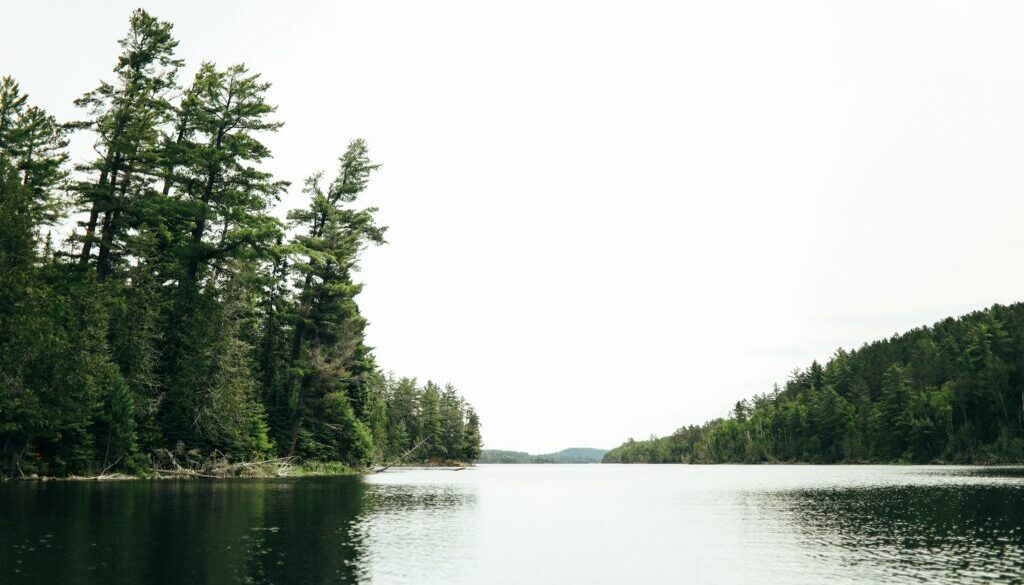
Featured image by Photo by Lee Vue on Unsplash.