
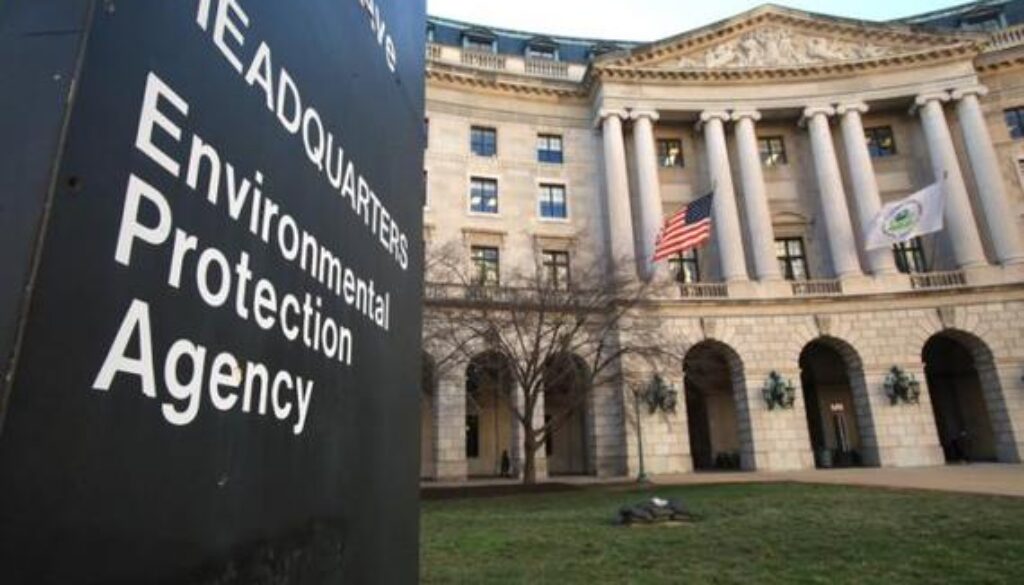
Coming to a social media post near you – a “MAHA-washed” dicamba approval

To start the new year off on the right foot, Environmental Protection Agency Administrator Lee Zeldin needed something he could sell to the Make America Healthy Again (MAHA) movement.
Late last year, this Trump loyalist, who in 2025 oversaw cuts to numerous clean-air and clean-water protections that will harm millions of Americans, faced a strong effort from grassroots MAHA activists to remove him from his post.
At the center of MAHA displeasure was the EPA’s business-as-usual agenda. Despite top administration leaders, including the president himself, promising bold action on pesticides, the administration has refused to take any action to rein in the use of pesticides the public is rightfully concerned about, including glyphosate, atrazine, chlorpyrifos and paraquat.
Lee Zeldin’s response was to do what any wounded political figure would do: He rebranded. In the remake Zeldin is no longer a hapless industry lackey running Trump’s pro-pollution EPA — he’s Lee Zeldin, science advocate and MAHA champion!
This rebrand was on full display with a Jan. 9 post on X, where Zeldin broke the news that the EPA was going to “freshly reassess the safety of paraquat,” the Parkinson’s-linked pesticide so harmful it’s banned in more than 70 countries.
Yet the Biden administration had already decided to reassess the safety of paraquat over three years ago, and reporting by The New Lede confirmed that Zeldin was simply referring to the EPA’s decision two months prior to ask the pesticide company for a study on how paraquat moves in the air.
Nevertheless, this move was extolled as EPA upholding its commitment to “gold‑standard science.”
Of course, the Zeldin-led EPA offered no evidence that it would actually follow the gold standard of following the best available science, recognize that dozens of high-quality studies have linked paraquat to Parkinson’s disease, and take action to finally ban or rein in the use of this pesticide.
Zeldin’s goal is clear: to appease the MAHA crowd while ensuring that Big Ag can continue to use millions of pounds of paraquat each year on crops like citrus, almonds, artichokes, garlic, pears, strawberries, and grapes.
A thimble-full of paraquat can kill you, but don’t worry, everyone — Lee Zeldin’s EPA is asking for one more study on paraquat’s safety to be conducted not by independent, unbiased scientists but by its manufacturer.
This new scientific “gold-standard” is worth about as much as fool’s gold.
EPA’s misleading messaging blitz is what we’ve come to recognize as “MAHA-washing.” Much like the greenwashing you see at the grocery store, with terms like “eco-friendly” or “green” advertising chemical-laden products on store shelves, Zeldin’s MAHA-washing paints the same rosy picture to distract from decisions that harm public health.
And now we’re gearing up for the next round of MAHA-washing, as the EPA is widely expected to reapprove the dangerous pesticide dicamba in the coming days.
Unlike paraquat, dicamba won’t make you drop dead if you accidentally ingest it. But we all stand to lose if this pesticide gets the green light.
Dicamba has been around since the 1960s, but its use exploded in 2016 when it was approved for use on millions of acres of genetically engineered crops designed to tolerate dicamba. On areas across rural and suburban America where non-GMO crops and vegetation cannot withstand the chemical, it has wreaked havoc.
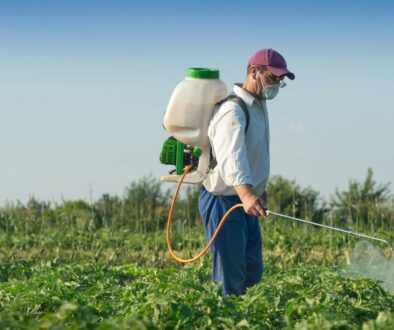
Dicamba just doesn’t stay put; it can drift in the air for miles after it’s applied, damaging farms, orchards, and backyard gardens. It can drift into your kids’ school, playground, or ball field. Since genetically engineered crops are grown on hundreds of millions of acres of US land, mainly in the Midwest and South, the pesticide’s damage has been extensive.
In some parts of the country, dicamba can prevent you from growing your own food. Dicamba is so volatile, or prone to moving in the air, that people have walked out to their backyard gardens and found their tomato plants shriveled up because someone nearby sprayed the pesticide. Small farms that grow real food for their communities have been hit hard by dicamba, and farmers trying to grow organically face the risk of losing their certification because of dicamba drift.
Dicamba can take away your access to nutritious and healthy fruits and vegetables for your family. It enables an agricultural system designed to produce empty calories at the expense of wholesome foods. And in areas where it’s used, dicamba’s links to certain cancers should make anyone leery about indulging in the basic human necessity of breathing air during the spring and summer months.
Although the EPA’s past approvals of dicamba have twice been struck down by federal courts for being illegal, the agency was widely expected to reapprove it for a third time late last year. But that approval has yet to be announced.
An optimist may believe the pause is because the agency is having a MAHA-influenced change of heart and might even be inclined to cancel its plans to reapprove the dangerous, drift-prone pesticide.
But a realist knows there’s likely only one explanation for the delay — Zeldin’s EPA is wrestling with how to message the eventual reapproval.
The smart bet is that Zeldin will simply champion a few minor “new” measures to limit poisonous dicamba drift, measures that will be remarkably like those in previous years that have resoundingly failed.
Expect a big announcement from Zeldin celebrating what he’ll claim is his agency’s amazing innovative win-win for not just the MAHA movement and industry, but also “gold-standard science.”
In reality it’s likely to do nothing to fix the problems with an unfixable pesticide.
But it will make clear Zeldin’s two-step mantra for 2026:
MAHA-wash.
Repeat.
(Opinion columns published in The New Lede represent the views of the individual(s) authoring the columns and not necessarily the perspectives of TNL editors.)


February 7, 2026 @ 8:56 pm
I’ve fought with the neighboring farm for years here in eastern Missouri. The drift is a hideous vapor on an annual basis in the late springtime, a less than astute nose can detect its stench. The average person thinks nothing of it, not unlike the mindless injections they willingly subject themselves to upon regular visits to the pharmacy and MDs office. The damage is widespread on thousands of acres in my area. All of the broadleafs, and non commodity crops are damaged and stunted, weakening them to set them up for deficiency and infestations. It’s absolutely heartbreaking. It reminds me of the exhaust coming out of the airplanes causing eventually milky skies, obscuring the sun on many days. You ask people, “do you see what’s happening in the sky with the aerosols, and they say nothing almost always.
It’s what used to be called the ‘technocracy’ doing what they do. Sadly, believing in government doing the right thing is futile. It’s probably gonna take a cataclysm and a reset to actually change things, so hmmm…..gold guns and goats it is, as Tom Luango says.
February 1, 2026 @ 7:41 pm
I find it extremey concerning that the Trump administration. And many other world leaders ignore input from the science community and prefer that of chemical manufacturers and their biased opinions. This problem supports that in the US we must get money out of politics and the poison producing corporations held accountable for the damage they do to nature and economy. Money corrupts all human relationships, especially politicians seeking support for the next election.
February 4, 2026 @ 12:20 pm
Spot on 100% correct !!!
January 31, 2026 @ 7:48 pm
STOP THIS INSANITY! AS BAD AS AGENT ORANGE.