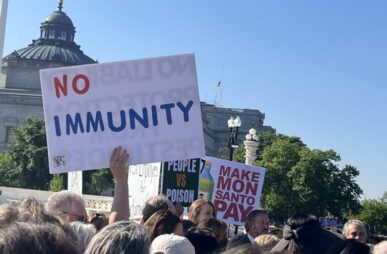

WATCH: “One long poison day” — US Rep. Chellie Pingree on the Monsanto SCOTUS case
US Representative Chellie Pingree discusses today’s SCOTUS hearing on Monsanto.
A US Supreme Court hearing that will take up the thorny question of pesticide regulation on Monday is sparking heated debate over the role of the Environmental Protection Agency (EPA) when it comes to protecting consumers from harm.
The US Supreme Court is set to hear arguments in a key pesticide regulation case on Monday, setting the stage for a ruling that could weaken the ability of consumers to sue companies for failing to warn of product risks.
A major Supreme Court case could decide whether people can hold chemical companies accountable for harm. At the center is Roundup and a legal fight over whether federal law overrides state rights. The outcome could impact thousands of lawsuits nationwide.
The US Environmental Protection Agency (EPA) is putting public health at risk by continuing to let farmers spray glyphosate, a weed killer linked to cancer, directly on top of oats before harvest, a practice that commonly results in residues of the pesticide remaining on popular foods made with oats, according to a new lawsuit.
Hundreds of organizations, individuals, and states are taking sides in a landmark Supreme Court pesticide case. Monsanto’s supporters say a ruling against them could trigger food shortages and leave the US vulnerable to foreign threats. Opponents say a win for Monsanto strips everyday people of their right to sue when dangerous chemicals make them sick.
America could face foreign attacks, food shortages, and agricultural “devastation” if the US Supreme Court rules against Monsanto in a closely watched case over pesticide regulation that is set for arguments later this month, according to a series of legal briefs supporting the company.
A new study of pesticide exposure in Peru finds a mechanistic association between exposure and cancer, and shows how “complex pesticide mixtures” can contribute to the development of cancer in people, even at exposure levels currently deemed safe.
From pesticide labels to a new report out of Iowa, there’s been a lot of news in the past week on how industrial farming may contribute to cancer in the US.
US and European regulators should take urgent action to more tightly regulate glyphosate, the world’s most widely used weed killer, in light of strong scientific evidence that the pesticide can cause cancer and other health problems, a group of international scientists said last week at a symposium in Seattle.