Postcard From California: LA fire recovery stymied by insurance system ill-equipped for climate crisis
 The fires that ravaged Los Angeles County last January destroyed or partially burned more than 18,000 homes and other structures and blanketed a like number in toxic smoke and soot. A year later, recovery is lagging: Fewer than a dozen destroyed homes have been rebuilt, and less than 1,000 rebuilds are on track for this year.
Displaced owners of leveled or damaged homes widely report that insurers are low-balling and delaying repair settlements, a process they believe is deliberately designed to slow things down. Some owners have moved back after insurers declared their homes safe to live in only to find that their properties remain contaminated by lead, asbestos and other hazardous substances. State laws that supposedly protect policyholders are stacked in the insurance industry’s favor.
“We’re at a real breaking point,” Jessica Conkle, whose house in the Altadena neighborhood burned to the ground, told The Guardian. “The way they are treating people who have lost everything is literally inhuman.”
The faltering recovery underscores that the climate crisis is also an insurance crisis. As disasters linked to a warming world grow in frequency and force, some experts warn of an “uninsurable future.”
Climate change didn’t directly cause the LA fires.
The fire in the Pacific Palisades neighborhood appears to have been started by an arsonist, and the Altadena fire was likely sparked by an electric utility’s transmission line. Santa Ana winds of up to 100 mph fanned the flames to raging infernos that burned more than 57,000 acres and killed at least 31 people.
But a recent study in the journal Earth System Science Data estimates that hotter, drier conditions linked to climate change increased the likelihood, intensity and burn area of the fires by as much as one-third.
A hotter climate is making urban firestorms like those that ravaged Los Angeles last year or Boulder, Colo., in 2023, more common. Climate change is also increasing the frequency and severity of Gulf hurricanes, inland tornadoes and coastal flooding, and expanding the reach of the polar vortex that recently brought severe cold to much of the country.
An analysis by the nonprofit research group Climate Central found that the frequency and damage costs of billion-dollar disasters exacerbated by climate change have increased dramatically since 1980. That means insurance companies can no longer rely on historical models to project payouts for future claims.
Even while posting record profits – more than $166 billion in 2024 – the US insurance industry has responded by sharply raising rates, and cancelling or refusing to write policies in high-risk areas.
The US’ two leading insurance companies have stopped writing new policies in California. More than 668,000 California homeowners denied private coverage are now insured through the state’s’ bare-bones public plan, which is funded by the industry, and an estimated 1 in 5 homeowners in the state are “going naked” without insurance.
“Insurance is the climate crisis’s ‘canary in the coal mine,’” Dave Jones, director of the Climate Risk Initiative at the University of California, Berkeley, Law School, recently wrote in the Yale Law Journal. “And the canary is dying.”
The Altadena home of Jeff Van Ness, his wife and two children, was spared by the fire but suffered smoke damage. The New York Times reported that their insurer paid for extensive remediation, then said the house was safe, refused to pay for interior lead testing and cut off payments for temporary housing.
The family moved back in, but were worried by reports of toxins found in other post-remediation Altadena homes. In September, the Times hired a certified hygienist to test for lead and heavy metals throughout the house and toxicologists to test samples of the family members’ hair.
The tests found extremely high levels of lead in the kitchen and attic, and elevated levels of carcinogens in the attic near the home’s HVAC system. Nine different hazardous chemicals were found in the hair samples. A toxicologist concluded: “It’s not safe for humans — or animals — to live in that residence.”
The Van Ness home is far from an isolated case. In December, Eaton Fire Residents United, a citizens’ group of Altadena fire victims, reported that of 50 homes tested after being cleared for occupancy, 90% still had unsafe levels of lead and 36% had unsafe levels of asbestos.
Richard Rieber, an aerospace engineer trained in fighting wildfires, saved his Altadena home from burning, although repairs will cost nearly half a million dollars, far more than his insurer has offered to pay. He’s become an outspoken advocate for reforming California insurance regulations to favor victims, not insurers. In an interview, he said under the state’s weak regulations, victims are “getting screwed.”
“The insurance company hires an industrial hygienist to go through your house,” Rieber said. “But they work for the insurance company, and they’re paid not to find stuff. So they take samples that won’t detect heavy metals, and in locations unlikely to collect those contaminants.”
“There’s no recourse,” he said, “because the state has no consequence for (hygienists) being shills for the insurance company. You can sue the insurance company, but it could take years to hold them accountable. To ask individual homeowners to face down the Goliath of insurance corporations is B.S.”
Some victims and consumer advocates blame outgoing state Insurance Commissioner Richard Lara for kowtowing to the industry. Gov. Gavin Newsom has ordered regulators to draft a report, due April 1, on how recovery costs should be spread among insurers, utilities, government and homeowners.
Victims’ advocates want the insurance commissioner, after a fire, to establish a perimeter in which smoke and soot damage is presumed and testing for a full array of toxins is mandatory. They want to make it easier for victims to challenge insurers, and want stricter penalties for unfair delays and denials.
In his law review essay, Berkeley’s Jones says reforms, such as restricting building in high-risk areas and mandating the use of fire-resistant construction materials, will help in the short to medium term. But “they do not address the underlying driver of the insurance crisis.”
“[T]he risk of loss from climate-driven events keeps climbing and will eventually overwhelm the benefits of these additional policies,” Jones wrote. “The only long-term solution to preserve an insurable future is to transition from fossil fuels and other greenhouse-gas-emitting industries.”
(Opinion columns published in The New Lede represent the views of the individual(s) authoring the columns and not necessarily the perspectives of TNL editors.)
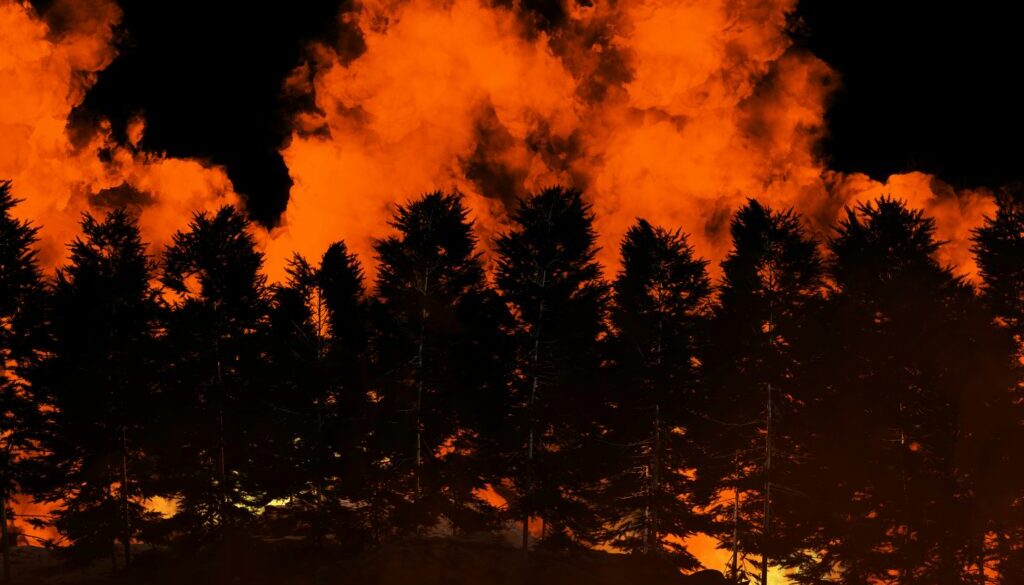
Featured image by Imkara Visual for Unsplash+.