USDA pauses manure-to-gas loans amid high delinquency, project failures
Listen to the audio version of this article (generated by AI).
The US Department of Agriculture (USDA) is pausing a loan program aimed at promoting anaerobic digesters — many of which are issued for large-scale farms that turn animal waste into gas — to investigate high loan delinquency rates and underperformance.
The directive, which orders a 90-day pause on “acceptance, processing or awarding” of loans, comes a week after dozens of health and environmental organizations urged the USDA to disqualify anaerobic digesters that turn animal waste into gas from the agency’s Rural Energy for America Program (REAP), alleging that such funding causes pollution and benefits large factory farms. The renewable energy grant program is designed to help farmers and rural communities pursue clean energy, energy independence and efficiency.
The USDA directive did not mention the petition sent last week.
J.R. Claeys, administrator of the Rural Business Cooperative Service (RBCS), which manages the loan program, wrote in the directive that the agency has seen a sharp uptick in anaerobic digester applications in recent years and a large portion of the loans are delinquent.
“Internal portfolio data indicates elevated rates of project underperformance, loan delinquency and operational failure among existing projects falling under these technologies,” Claeys wrote.
“Internal portfolio data indicates elevated rates of project underperformance, loan delinquency and operational failure among existing projects falling under these technologies.” – J.R. Claeys, USDA
The USDA has 21 loans totaling $386.4 million anaerobic digesters and 27% of the loans ($102.6 million) are in delinquency.
“Federal agencies administering loan programs are responsible for maintaining effective internal controls and managing portfolio risk,” Claeys wrote, instructing staff to “pause the acceptance or awarding of any biodigester or controlled environmental agriculture loan guarantee for a period of 90 days or until further guidance has been directed.”
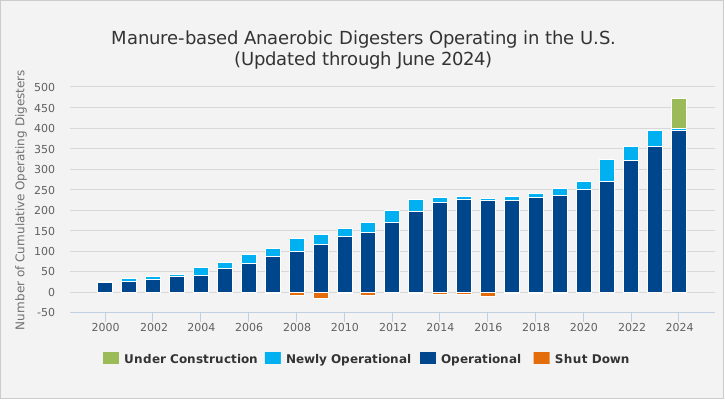
There are an estimated 394 manure-based digesters operating in the US, with more than 70 under construction, representing a 55% increase over the past decade. The farms use bacteria to break down large amounts of animal manure and turn it into “biogas”, which is a mix of mostly methane and carbon dioxide and used in some vehicles and as a natural gas substitute.
Biogas advocates say such digesters are a climate-win, reducing methane emissions and manure land applications. But the groups that petitioned the USDA last week said such projects “are a harmful and inefficient use of taxpayer dollars” and “fail to provide many of the benefits that RBCS identifies and considers when selecting the renewable energy systems it will fund.”
“REAP is supposed to fund projects that are economically viable – these are not economically viable,” Tyler Lobdell, a senior staff attorney with Food & Water Watch, said in an interview. Food & Water Watch was one of 34 groups that signed the petition.
“The only way these projects work is through massive, unending public funding and support,” he added.
REAP-funded digesters generated roughly 4.5 times less energy per dollar spent than REAP-funded solar projects over the past four years.
The Trump administration has sent mixed signals on biogas — extending tax credits that benefits manure-to-gas digesters in the “One, Big Beautiful Bill,” but also removing the eligibility of biogas-generated electricity’s eligibility for the federal biofuels program.
Featured image: Sam Beebe/flickr