Groups petition USDA to block factory farm manure digesters from clean energy funds
Listen to the audio version of this article (generated by AI).
More than 30 food, health and environmental organizations are urging the US Department of Agriculture (USDA) to disqualify digesters that turn animal waste into gas from a federal renewable energy grant program, alleging that such funding causes pollution and benefits large factory farms.
The petitioners say grants and loans under the Rural Energy for America Program (REAP) should not be going to large-scale farms to build anaerobic digesters that use bacteria to break down large amounts of animal manure and turn it into “biogas”, which is a mix of mostly methane and carbon dioxide and used in some vehicles and as a natural gas substitute.
The groups say the program was meant to help farmers and rural communities pursue clean energy, energy independence and efficiency, and, by sending large amounts of federal money to manure digester projects, the USDA is instead funding technology that is benefiting large-scale factory farms, contributing to farm consolidation and causing water and air pollution.
“The USDA should not be funding harmful, dangerous factory farm gas programs,” Tyler Lobdell, a senior staff attorney with Food & Water Watch, said in an interview. Food & Water Watch was one of 34 groups that signed the petition.
“These types of projects work in the opposite direction of REAP,” he added.
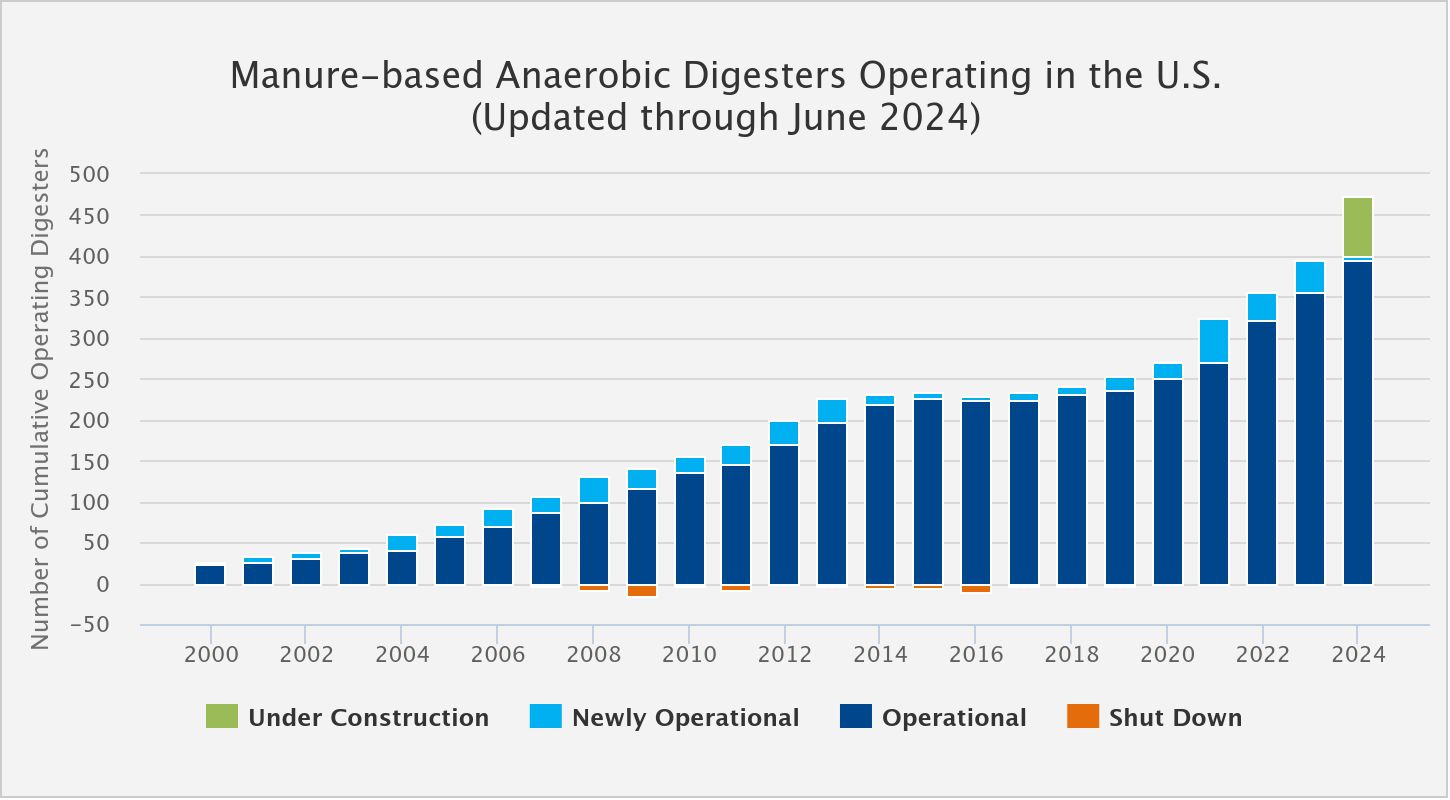
However, biogas advocates say such digesters are a climate-win, reducing methane emissions and manure land applications. Large concentrated animal feeding operations, or CAFOs, are increasingly turning to digesters to deal with the loads of manure they deal with. There are an estimated 394 manure-based digesters operating in the US, with more than 70 under construction, representing a 55% increase over the past decade.
REAP has supported tens of thousands of farmers and businesses since beginning in 2002 but has recently directed “hundreds of millions of dollars to anaerobic digester projects that either are located at industrial animal feeding operations or use manure or other byproducts,” states the petition.
Over the past four years about $257 million was awarded to new manure digesters. The total funding over that period was $3.2 billion in grants and loan guarantees. The petitioners argue that even though the digesters received a small percentage of overall funding, the cost per project is much larger than wind or solar.
“The USDA should not be funding harmful, dangerous factory farm gas programs.” – Tyler Lobdell, Food & Water Watch
Grants and loans for new manure digesters were $855,701 and more than $19 million, respectively, while the average grants and loans for solar projects during the same time period was $131,480 and over $6 million.
The petition calls into question the purported environmental benefits of digesters, saying they offer “uncertain and incomplete greenhouse gas emissions reductions.”
Research finds anaerobic digesters can leak up to around 15% of the methane they’re designed to capture. A study published last year from Johns Hopkins Bloomberg School of Public Health found manure digesters “only address a fraction of livestock-related greenhouse gas emissions and may exacerbate or introduce new occupational and community hazards, such as from flared biogas.”
“Based on the current state of available evidence, manure digesters should not be promoted as a solution for manure management and energy production.” the authors wrote.
In addition, REAP-funded digesters generated roughly 4.5 times less energy per dollar spent than REAP-funded solar projects over the past four years.
“This is about making the best use of scarce resources and public funds,” Chris Hunt, deputy director of the Socially Responsible Agriculture Project (SRAP), which signed the petition, said in an interview. “To promote factory farm gas is terribly inefficient from an energy standpoint.”

In addition, CAFOs produce massive amounts of manure that often contaminate nearby waterways or air. The petitioners found that 12 of the 30 CAFOs that received REAP funding over the past four years for digesters had water or air pollution violations.
“Fundamentally this is a conservation program and conservation programs shouldn’t be rewarding the worst actors in our agricultural system,” Lobdell said. “This is empowering sources of pollution – the only way you’ll have a digester is if you have exceptionally dangerous polluting practices already at your farm.”
Manure digesters only make economic sense at larger farms, since they have the manure to feed the system. The petitioners say REAP funding directed for manure digesters only further exacerbates the ongoing farm consolidation in the US — pushing out small farmers that cannot compete. The most recent USDA census in 2022 found a 7% decline in farms since 2017. The census showed large farms with sales topping $5 million annually accounted for under 1% of all farms but 42% of total sales.
A USDA spokesperson said the agency is aware of the new petition but does not comment on rulemaking petitions while they are under review. “USDA remains committed to ensuring REAP funds are administered consistent with the law and in a matter that supports rural communities, agriculture procedures, and small businesses across the country,” the spokesperson added.
The agency says in its REAP framework that manure digesters qualify for the program. Farm groups and biogas advocates say that manure digesters are an environmentally friendly way to reduce the manure load on the land and nearby water. In a statement congratulating the current USDA Secretary on her appointment the American Biogas Council last year pointed to the growth potential for agricultural biogas.
“Biogas operations in agriculture allow farmers to use animal waste as a resource, producing domestic energy that contributes to the Administration’s goal of energy dominance,” said Patrick Serfass, executive director of the American Biogas Council. “The number of biogas projects in agriculture grew by 24% last year, and more than 8,000 additional farms could install biogas systems.”
REAP has enjoyed bipartisan support. However, the USDA under the Trump administration scaled back REAP’s funding for solar and wind projects, saying in an August announcement that solar and wind installs have made US farmland expensive and less available.
“Our prime farmland should not be wasted and replaced with green new deal subsidized solar panels. It has been disheartening to see our beautiful farmland displaced by solar projects, especially in rural areas that have strong agricultural heritage,” said USDA Secretary Brooke Rollins in an August statement on the rollbacks. “We are no longer allowing businesses to use your taxpayer dollars to fund solar projects on prime American farmland, and we will no longer allow solar panels manufactured by foreign adversaries to be used in our USDA-funded projects.”
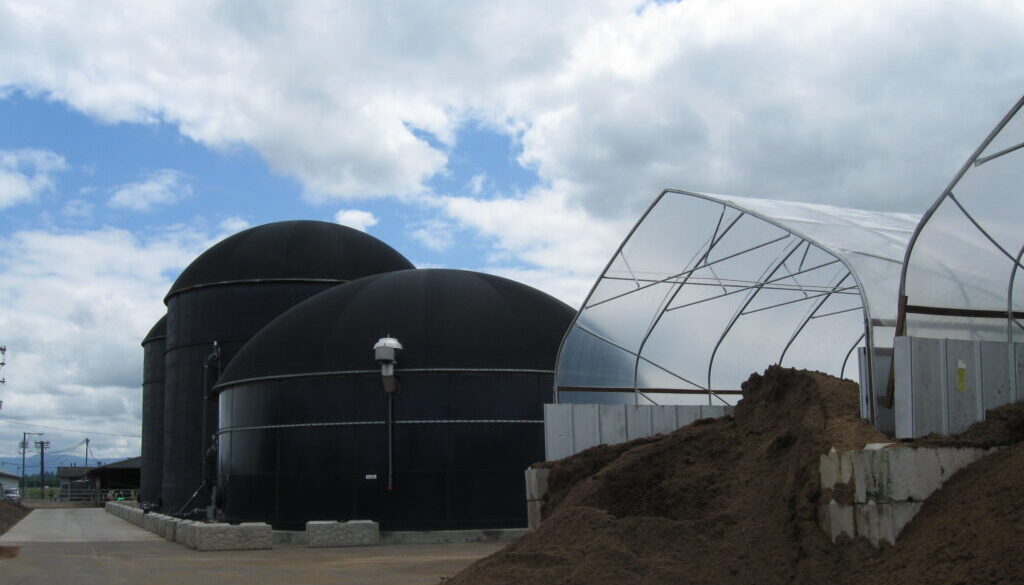
Featured image: A manure digester in Oregon. (Credit: Oregon Department of Agriculture/flickr)