Bayer gets boost as US Supreme Court says it will hear Roundup case
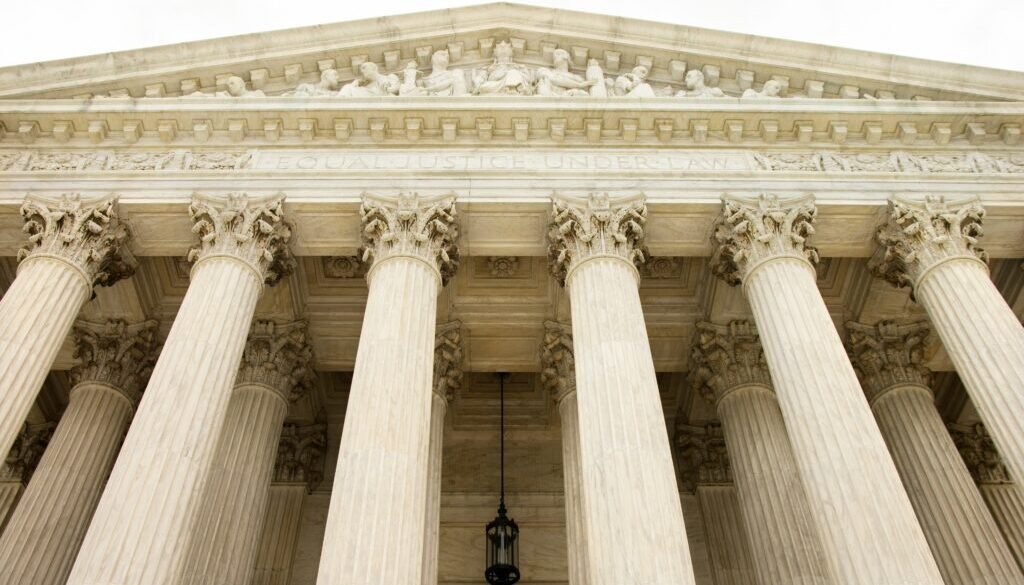
The US Supreme Court said on Friday that it will take up the issue of federal preemption over pesticide warning labels, a move sought by Bayer as a means of blocking costly future litigation over the Roundup weed killer products it inherited from its purchase of Monsanto.
The high court said it will hear the case with the limitation of answering one question: “Whether the Federal Insecticide, Fungicide, and Rodenticide Act [FIFRA] preempts a label-based failure-to-warn claim where [the Environmental Protection Agency] EPA has not required the warning.”
Bayer celebrated the news and said it expects a decision during the Court’s 2026 session, which ends in June.
“The Supreme Court decision to take the case is good news for US farmers, who need regulatory clarity,” Bayer CEO Bill Anderson said in a statement posted to the company website. “It’s also an important step in our multi-pronged strategy to significantly contain this litigation. It is time for the US legal system to establish that companies should not be punished under state laws for complying with federal warning label requirements.”
But public health and environmental advocates were sharply critical of the decision.
“If the Supreme Court agrees with the chemical industry, pesticide companies could escape liability simply because the EPA approved their labels at some point in the past, even if the company concealed how harmful their pesticides were to people,” the nonprofit group Earthjustice said in a statement.
“It would mean that once EPA approves a label, companies could ignore new science, withhold evidence they obtain about the harm caused by their pesticides, and still avoid responsibility when people get sick. That makes no sense, especially because EPA’s pesticide rules often lag behind science,” the group said. Earthjustice plans to file a friend of the court brief arguing against Bayer, it said.
Bayer has been seeking a Supreme Court ruling on the issue for years, but was previously rejected. Friday’s decision comes after Solicitor General D. John Sauer, appointed by the Trump administration in April, told the court that it should take up the appeal from Bayer, agreeing with the company’s position on preemption.
In contrast, the Biden administration’s Solicitor General asked the high court in 2022 not to hear Bayer’s appeal on the same issue, saying that “FIFRA does not preempt” such claims.
Bayer has been fending off over 100,000 lawsuits since buying Monsanto in 2018 and so far has paid more than $11 billion in settlements and jury verdicts to tens of thousands of people suffering from non-Hodgkin’s lymphoma (NHL) they blame on exposure to Roundup and other Monsanto glyphosate-based herbicide brands. At the core of those lawsuits are claims that the company failed to warn users of the risk of cancer.
Bayer maintains its glyphosate herbicides do not cause cancer and argues that FIFRA, which governs the registration, distribution, sale, and use of pesticides in the United States, preempts “failure-to-warn” claims against the company. Because the Environmental Protection Agency (EPA) has approved labels with no cancer warning, failure-to-warn lawsuits should be barred, the company maintains.
Several lower courts have rejected the preemption argument because of a 2005 US supreme court ruling in a case titled Bates v Dow Agrosciences, which established that the EPA’s approval of a product does not rule out claims brought under state laws.
The ruling from the Supreme Court will have implications for other companies, such as Syngenta, which is facing lawsuits from thousands of users of its paraquat pesticide. The plaintiffs in that litigation claim they developed Parkinson’s disease from exposure to paraquat and Syngenta failed to warn of the risks.
Brent Wisner, one of the leading litigators representing cancer victims in the nationwide Roundup litigation, said he expects Bayer will lose the Supreme Court review. Several of the sitting justices have written opinions decrying preemption, he said.
“Now the real fight begins,” he said. “If these conservative justices remain faithful to their prior rulings, this should be an easy win for the plaintiffs. Empowering the authority of the EPA is a liberal idea.”
The case is Monsanto v. Durnell.
Featured image by Getty images for Unsplash+.