

Toxic chemicals in food cost the world $3 trillion a year, new report finds
Four groups of chemicals in the global food system cost the world nearly $3 trillion a year by causing disease, decreasing fertility and polluting water and soil, according to a new report.
The report, authored by the sustainability consultancy and investment firm Systemiq, finds that phthalates, bisphenols, pesticides and per- and polyfluoroalkyl substances (PFAS) are key threats to human health.
The researchers said the available evidence on human exposure and associated health risks from those four groups of chemicals show risks that include heart issues, cancers, reproductive, developmental and immune system disorders, birth defects and endocrine disruption — creating estimated health care costs between $1.4 and $2.2 trillion each year. They estimated an additional $640 billion is spent each year due to water quality issues and agricultural losses.

The substances are widespread in the production, processing and packaging of food, and regulations are severely lacking in protecting consumers from these toxic chemicals, the report states. However, the research team said there is a massive opportunity via policy change and innovation to drastically cut contamination and exposure, which could save almost $2 trillion a year globally.
“Chemical production and use currently generate private profits for companies while imposing public costs on health and ecosystems,” the authors wrote. “Correcting this imbalance requires clear, predictable signals from governments, finance, and consumers that incentivize industry to embrace safety and sustainability.”
The health impacts alone equal “roughly 2-3% of global gross domestic product (GDP), or approximately the profits of the world’s 100 largest publicly listed companies,” the report says.
“All of us in today’s world from the very youngest to the oldest are exposed to hundreds of chemicals and there is an increasingly strong body of evidence that these chemicals are an important cause of disease in people of all ages, but especially in children,” said Philip Landrigan, director of the Global Observatory on Planetary Health at Boston College and a contributor to the report.
The report estimates that if current exposure levels to these chemicals persist, there could be between 200 and 700 million fewer births across the world over the next 75 years. The decrease could be reduced by up to 60% with universal fertility treatment, the report found, but that would cost between $26 billion and $79 billion per year.
“This report connects the dots between widespread toxic exposures and the alarming decline in sperm counts, egg quality, and fertility in human and non-human species,” said Shanna Swan, a scientist at the Action Science Initiative and the Icahn School of Medicine at Mount Sinai, in a statement.
“We have no time to waste,” she added.
Industry influence
The report focused on the four chemical classes. However, there are thousands of chemicals in the global food supply. For example, more than 5,000 chemicals migrate from packaging and other materials alone into food.
Many of these chemicals have known health risks and the authors cautioned that no countries are entirely safe, as regulations remain lacking. All four chemical groups the report examined are used in multiple food products. Phthalates are used in packaging, and in gloves and tubes used in processing. Bisphenols, such as BPA, are used in coatings on cans, resins in packaging and in containers and utensils. PFAS are used in grease and water-resistant packaging, non-stick pans and some pesticides, which are sprayed on crops and used as a pretreatment in seeds.
“All of us in today’s world from the very youngest to the oldest are exposed to hundreds of chemicals.” – Philip Landrigan, Boston College
Industry influence is one of the major impediments to ridding our food system of these contaminants, the authors said. Many of the chemicals sail through regulatory risk assessments, only for scientists or regulators to realize health harms much later. And proposed regulations are often met with intense lobbying efforts that point to potential product costs for consumers.
“While businesses can realize profits today, the costs of harm are borne by the public and deferred over years or decades,” the report states. “The result is a cycle in which short-term interests outweigh systemic risks, frustrating the adoption of safer alternatives and precautionary approaches.”
For example, the report cites an investigation by the Forever Lobbying Project that analyzed more than 8,000 submissions and other documents submitted after a proposed “universal restriction” of PFAS by the European Chemicals Agency. They found many documents contained “false, misleading, or potentially dishonest” claims from industry.
A 2023 analysis in the US similarly found that the chemical industry spent roughly $110 million between 2019 and 2022 to block or delay dozens of proposed PFAS-related federal laws. The chemical and plastics industry has also long defended current uses of bisphenols and phthalates in the US, and multinational agricultural companies continue to push back against any accountability or meaningful regulation of their products.
“Regulators need to give very clear guidelines to industry, most critically setting clear phase-out timelines for hazardous chemicals to help scale existing solutions,” said Rupert Simons, an author of the report and co-lead for Systemiq’s Nature-Food team in Europe.
Reasons for hope
The problem is a significant but not insurmountable problem, Landrigan said.
“I’m optimistic because I was at [US Centers for Disease Control and Prevention] in the 1970s when we took lead out of gasoline,” he said. “That reduced children’s blood levels by 95% and elevated the IQ of every child born in America.”
The authors said the key steps to get these chemicals out of our food system are to first get rid of unnecessary uses, redesign products and processes to reduce the need for the chemicals, find safer substitutes, and then clean up existing contamination. They estimated that if the countries around the world acted to get rid of these exposures, it would cut health and environmental costs by 70%.
“Compared to these savings, the costs of action are minuscule,” the report states.
Many of the solutions already exist, Simons said.
“Many are even profitable – and yet they are not being implemented widely enough,” he said. “For example, we found cost-saving precision agriculture technologies alone could cut toxic exposure by 20-30%.”
Simons, too, draws optimism from past successes in reducing toxic exposures.
“It has been done before. After the thalidomide tragedy in the 1950s, pharmaceuticals moved to a system where safety had to be demonstrated ahead of market entry. [Chlorofluorocarbons] were phased out following the Montreal Protocol. Now phthalates are being reduced and eliminated from many products,” he said.
“It can be done – and the early movers in industry can win at the transition.”
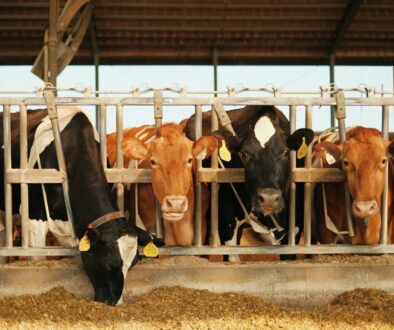
Featured image:Tobias Tullius/Unsplash +



December 15, 2025 @ 2:35 pm
Ever since the organic chemical industry began knocking out hydrogen atoms from the ‘ring’ carbons that are the foundation of fossil fuels, and replacing those hydrogen atoms with atoms from the halogen group- Chlorine, Florin,e Iodine, & Bromine- and then “seeing what they can do” (and these have provided the basis for pesticides, herbicides, dry cleaning chemicals, etc) in our environment. What they HAVEN’T done is test these creations on humans (& other animals) at all.. or for a long enough time to tell what- & how- they might affect ‘us’.
We’ve had hardly any testing of the THOUSANDS of chemicals created since WWII.. and some of the ‘testing’ that DID take place was bogus.
(See https://en.wikipedia.org/wiki/Industrial_Bio-Test_Laboratories )
Now ‘we’ have these ” neonicotinoids” that are industry ‘darlings’, that also cause bees to lose their navigational abilities. There’s NO real oversight or effort to address the damage these chemicals are doing.. but ‘we’ find new ‘clever’ ways to use them.. like spraying glyphosate on grains just before harvest, to ‘dry them out’ enough to safely store them in a grain elevator.
I know relatives who can’t stomach American wheat products, but can go to Italy & safely consume pizza.. or go to France and aren’t troubled by the baguettes & pastries there.
Okay.. this is getting too long. Thanks for the articles. I don’t always read them all, but often find a few that I decide i can’t do without. So, THANK YOU. ^..^