
Health advocates call for policymakers to tackle ultra-processed foods “crisis” at DC summit
Listen to the audio version of this article (generated by AI).
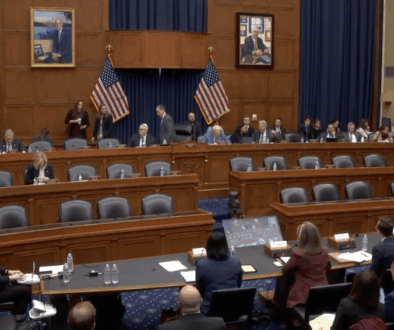
Health advocates and policymakers from both sides of the political aisle called for the federal government to prioritize the public health crisis they warn has resulted from the pervasive ultra-processed foods at Americans’ fingertips at a summit in Washington, DC on Wednesday.
“This has to be in the top two or three priorities for Congress, period,” said Dariush Mozaffarian, Director of the Food is Medicine Institute at Tufts University. “This is the central issue of our time for our economy, for our health, for our future, for our kids.”
Almost 70% of US foods are considered “ultra-processed,” which contain ingredients such as chemical preservatives, emulsifiers and sweeteners and undergo processing techniques that heavily alter their ingredients. These include hot dogs, frozen meals, packaged pastries and instant soups. Ultra-processed foods are linked to heart disease, type 2 diabetes and dementia, among other health problems. While many are considered junk foods, not all ultra-processed foods are considered equally unhealthy.
The Dec. 10 summit, presented by the nonprofit Food Tank and the Food is Medicine Institute at Tufts University, comes on the heels of a new series of papers published in The Lancet, with a related editorial calling for a “well resourced, coordinated global response” to “break the grip of the [ultra-processed foods] industry on food systems worldwide.”
In July, the US Food and Drug Administration (FDA) and the US Department of Agriculture (USDA) formally requested information the agencies said they would use to establish a uniform definition for ultra-processed foods, noting that there is currently no single definition. In responding to the agencies’ request, health groups pushed for a definition that centered public health, while several industry food groups and companies pushed back against a need to define ultra-processed foods, warning that it could create confusion for consumers.
The FDA has also proposed a rule to reform the Generally Recognized as Safe (GRAS) regulatory pathway that opponents consider an industry loophole, allowing new additives to slip into the US food system without FDA review. The proposal was sent to the White House for review earlier this month.
“Defining ultra-processed foods and tackling these issues is a priority for this administration,” Kyle Diamantas, the FDA’s Deputy Commissioner for Human Foods, said at the summit. “It’s not something that we can solve alone at FDA,” he added. “This is something that will take a societal movement to continue to advocate for.”
Diamantas pointed to the “Make America Healthy Again” (MAHA) movement led by Health and Human Services Secretary Robert F. Kennedy Jr. as a driver of the recent push for change in the US food system. However, he said such efforts will require “years of continued buy-in” from private industry, consumer groups and others.
While Mozaffarian said he supports the federal government’s plans to come up with a cohesive definition for ultra-processed foods, he worries some proponents might use the opportunity to go after individual nutrients such as saturated fat, sugar and salt, resulting in loopholes that industry could exploit.
“I hope the federal government will really focus on the processing, not the nutrients,” Mozaffarian said at the summit, citing bills proposed by Massachusetts and Pennsylvania that take this approach.
Mozaffarian suggested the federal government use $100 billion of the more than $5 trillion spent on US healthcare each year to address poor nutrition, particularly for low-income populations that struggle to afford healthy foods.
“We are spending a lot of money and have the worst health outcomes of all high-income countries in the world,” he said. “Let’s shift all these investments towards healthier food.”
US Senator Roger Marshall, a Republican from Kansas, called for changes to the way US foods are grown in order to make them more nutritious, advocating a move towards regenerative and precision agricultural techniques that involve using less water and fertilizers. While the ultra-processed foods summit was taking place, the USDA announced it would allot $700 million for a regenerative farming pilot program.
“Healthy soil is where agriculture meets MAHA,” he said.
In November, Sen. Marshall introduced legislation that would require food companies to report to the FDA the ingredients they put in their products. The Better Food Disclosure Act originally contained language that would have preempted states from putting in place their own regulations on food ingredients, although the language was removed after opposition from MAHA.
“There’s some really good work done in the states and they’re afraid that I’m going to undercut them,” said Sen. Marshall at the summit. “I don’t want to do that.”
Jennifer Pomeranz, a public health lawyer at New York University, said she was “heartened” by Marshall’s statement. “We in public health really want to encourage the states to continue,” she said. “Preemption … this is not the place for it. It would be unprecedented to remove the states’ ability to oversee food safety.”
Summit speakers noted that US states have recently led the way on efforts to reform the food system, with dozens of states introducing legislation this year to restrict or ban synthetic dyes, chemical additives or ultra-processed foods.
Featured image: Md Mahdi/ Unsplash