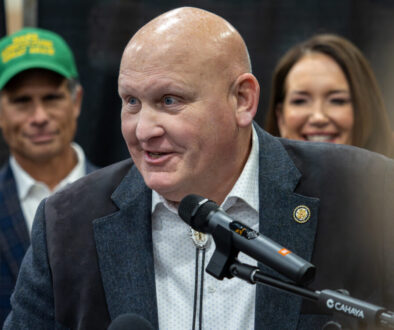
David Jones Jr. is no stranger to treacherous work. For years, the 45-year-old South Baltimore resident made his living scaling tall buildings to install signs.
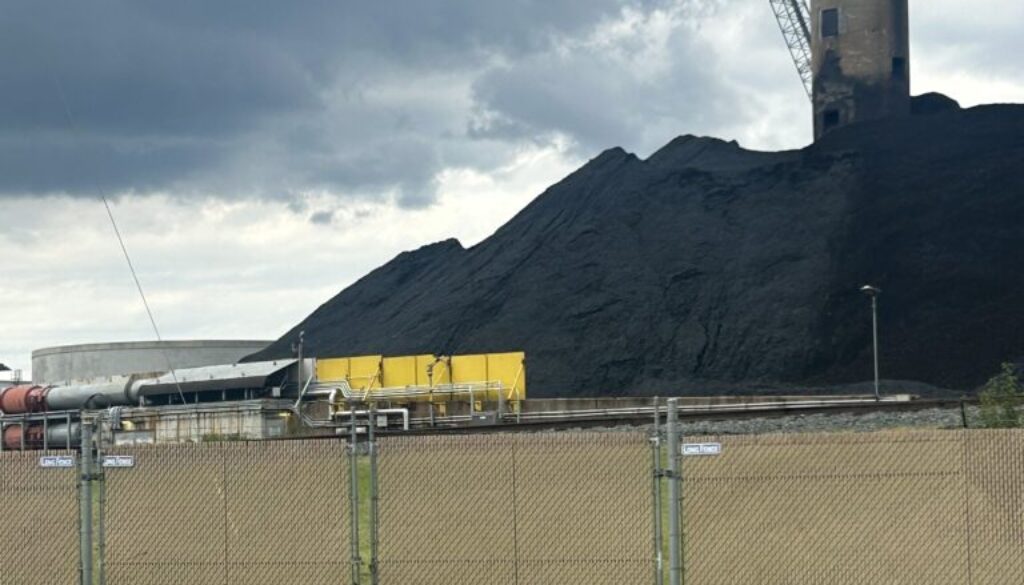
But for Jones, the real danger has been in and around his home: Jones and his wife live a few hundred feet away from a large coal terminal where dust from mountainous, uncovered coal piles has blown over the community day after day for decades.
“You can’t get away from it,” said Jones. “You feel it in your eyes, you feel it on your skin. You taste it. It’s in your nose.”
While there is limited research on its effects in communities, coal dust exposure has been linked in scientific research to worsened asthma, heart and lung problems, among other health effects.
Jones and his wife used to wash the coal dust from their windows as often as they could, he said. But after 25 years living in a home that once belonged to Jones’ grandfather, they’ve given up.
“It’s just not worth it anymore,” said Jones. “I would have to wash them every day. It’s snowing right now. My house literally looks like it cries coal dust.”
Jones said he sometimes wakes up in the morning spitting up blood or “black stuff” he believes is from the coal dust. Even when the couple keeps their windows closed, the dust gets in the house when they open and close their doors, said Jones. In the summertime, when local kids play outside, “they’re sweating black,” he said.
Jones’ father suffers from terminal cancer, which Jones is convinced was caused by living in their polluted community of Curtis Bay, a neighborhood located in South Baltimore.

Jones said he believes the coal industry is an essential part of the US energy infrastructure. He voted for President Trump, who in an April 2025 executive order called for “reinvigorating America’s beautiful clean coal industry.”
But like many of the other area residents, Jones wants the CSX Curtis Bay Piers coal export terminal gone.
“We’re not going in a positive direction, especially when it comes to people’s health and safety,” said Jones of the Trump administration’s track record on environmental justice. “I feel like we’re taking steps back. I want to be able to lay my head down at night and know that when I wake up in the morning, I can breathe clean air.”
When asked about residents’ concerns, a spokesperson for CSX said the company is committed to operating the facility safely and in compliance with all regulatory requirements.
“Devastating health consequences”
Coal export terminals are enormous facilities that receive coal by rail from other parts of the US and store it in massive, uncovered piles before it is shipped across the world or to other US states. Coal often arrives at the terminals from mines in Wyoming, West Virginia, Pennsylvania, Illinois or Kentucky – the top coal-producing states as of 2022, according to the US Energy Information Administration (EIA).
The US currently has about 23 coal terminals that either import or export coal to other countries or operate domestically, with 11 more proposed, according to the Global Energy Monitor’s Global Coal Tracker. In 2024, most US coal exports were shipped from seaport terminals in Norfolk, Virginia, Baltimore, Maryland. New Orleans, Louisiana and Seattle, Washington.
While research suggests coal dust from coal stored at the terminals is harmful for residents’ health, coal industry pollution in South Baltimore and other communities extends far beyond these uncovered piles.
According to an estimate by Johns Hopkins University researcher Christopher Heaney and colleagues, “maybe 125,000 of the population of Baltimore are within three-tenths of a mile of a rail line bringing coal into the city or the coal terminal itself,” said Heaney at a tour of South Baltimore held during an environmental justice symposium in September.
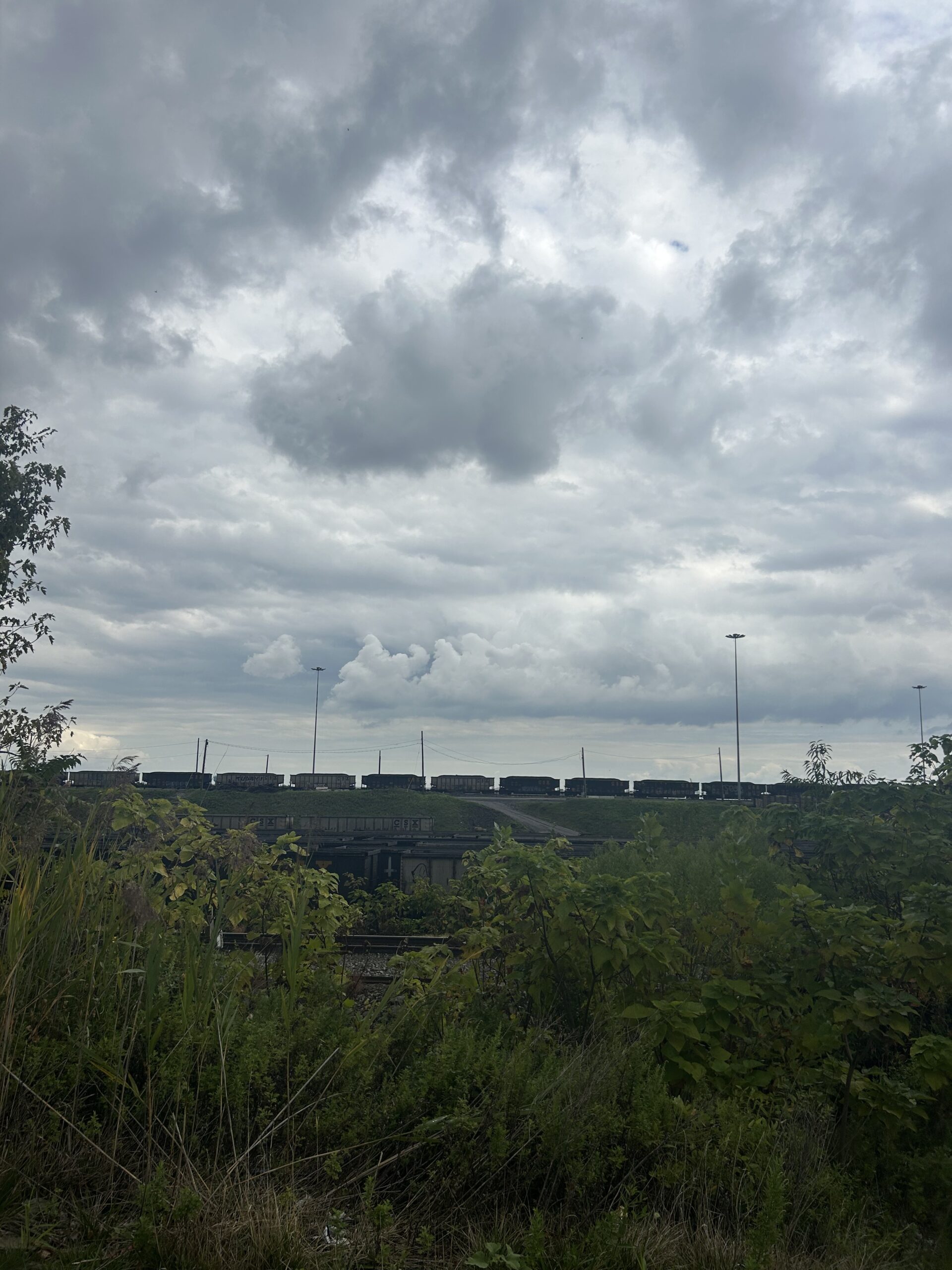
Uncovered train cars loaded with coal in route to the terminal pass within 50 feet of residential housing, said Greg Sawtell, a local activist with the South Baltimore Community Land Trust who lives a little outside Curtis Bay. There is currently no law requiring the coal to be covered while it’s being transported by rail.
“The scale of impact of this is very acute in Curtis Bay, but part of the untold story is the range of the scale of the impact of this issue … hundreds of thousands, millions of people across the country who are living so close to the coal transport,” said Sawtell.
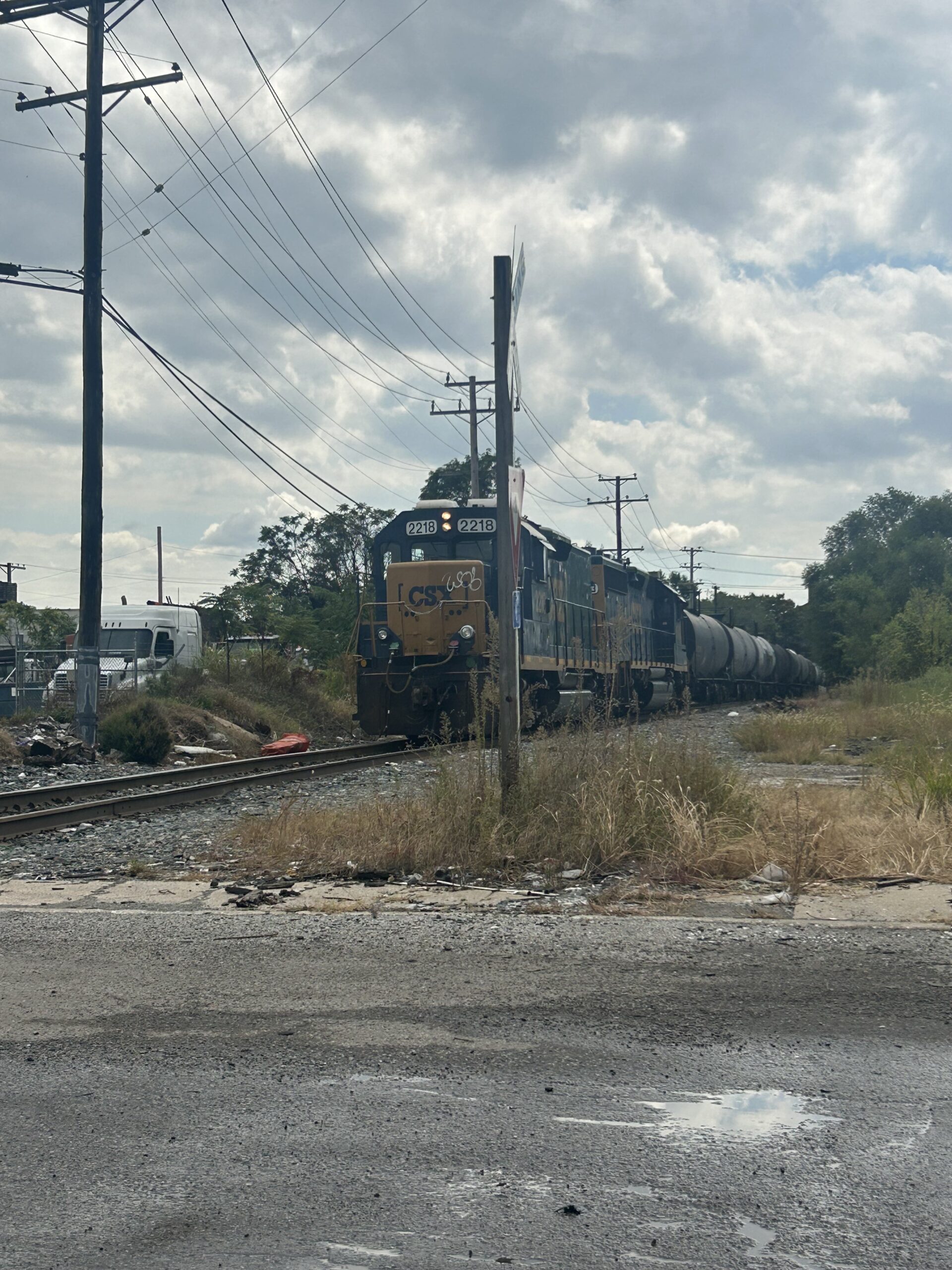
Last February, Appalachian Voices, the Sierra Club, Public Justice, and other environmental and community groups submitted a letter with almost 4,000 signatures to US Environmental Protection Agency (EPA) Administrator Lee Zeldin calling for protections from coal dust from trains across the country that pollutes waterways and can have “devastating health consequences.”
A 2024 study of the San Francisco Bay Area in California – the first ever to assess health impacts from coal train pollution – found higher rates of asthma, heart disease hospitalization and death for people living near the rail lines.
While some trains deliver coal to export terminals where it is shipped overseas, others bring it to US power plants where it is burned for energy. Once there, the coal continues to present risks to nearby communities – the resulting residue, called “coal ash,” contains toxic heavy metals such as arsenic, mercury and lead, polluting waterways and threatening local drinking water.
“Nearly every major river in the South has one or more unlined, leaking pits filled with coal ash from power plants on its banks and sitting in groundwater,” according to the Southern Environmental Law Center.
Bringing back coal?
South Baltimore and many other US communities burdened by coal industry pollution find themselves facing a steeper-than-ever uphill climb for health and environmental protections as the Trump administration accelerates efforts to beef up the faltering US coal industry.
Even as delegates from nations around the world (but not the US) recently made slight but unexpected progress towards phasing out coal and other fossil fuels at the 30th United Nations climate conference in Brazil, the Trump administration is doubling down on efforts to backtrack policies designed to transition the US away from coal production and use, throwing the industry a lifeline in the form of new federal policies and funding and declaring a “national energy emergency.”
In May, the US Department of Energy (DOE) designated metallurgical coal, which is used to make steel, as a critical material under the Energy Act of 2020, with US energy secretary Chris Wright saying in a statement the move ensures “that American steel, generated by American coal, remains the backbone of our manufacturing sector.”
The DOE this fall announced $625 million in funding to “expand and reinvigorate” power generation fueled by coal and $100 million to update existing coal-fired power plants. In late September, the Department of Interior announced an initiative to open over 13 million acres of federal land for coal leasing, “delivering on President Donald J. Trump’s directive to restore American Energy Dominance,” the agency said in a press release.
“You can’t get away from it. You feel it in your eyes, you feel it on your skin. You taste it. It’s in your nose.” — David Jones, Curtis Bay resident
The EPA on Nov. 25 proposed extending the closure deadline for 11 coal-fired power plants from October 2028 to October 2031, a move that critics say would enable them to keep dumping coal ash in unlined ponds.
The moves follow an April executive order in which President Trump called for the removal of “federal regulatory barriers that undermine coal production” and a boost in American coal exports and the use of coal to meet domestic energy demands.
Total US coal production rose from about 513 million short tons in 2024 to 532 million short tons in 2025, with a slight decrease forecast for 2026, according to a short-term energy outlook report from EIA published this month. EIA estimates coal consumption increased by 9% compared with 2024 but expects it will fall by 5% next year, with exports projected to rise 1%.
The US coal industry has nosedived in the last couple decades, with the EIA’s most recent annual coal report finding the US in 2023 produced less than half as much coal as it did in 2008, when the nation’s coal production peaked. The report cites rising mining costs, stricter environmental regulations and competition from other power generation sources as nails in the industry’s coffin.
Some experts question the viability of the Trump administration’s efforts to revive US coal with federal funding.
“Since taking office in 2017, President Trump has promised to bring back the coal industry,” Perry Wheeler, a public affairs and communications specialist for the nonprofit Earthjustice wrote in an Oct. 27 opinion piece. “It didn’t happen in his first term and it will not happen now. While the US may see a temporary bump in coal production, it will not last as the market continues to move toward cheaper and cleaner energy.”
“Imprisoned in their own homes”
For residents of Curtis Bay, industrial pollution has long been an inescapable part of daily life. The low-income, racially diverse neighborhood shares space with a city landfill as well as a medical waste incinerator, a chemical manufacturing facility where radioactive waste was historically disposed of and many other polluting industrial facilities – about 70 in the Curtis Bay neighborhood alone.
All the air pollution exposure is undoubtedly sickening residents. The life expectancy for Curtis Bay is nearly four years less than for the rest of Baltimore, with 6.1% of deaths in the neighborhood linked to chronic lower respiratory disease compared to 3.5% for the rest of the city, according to 2017 data from the Baltimore City Health Department.
Curtis Bay’s coal piles and coal-carrying trains, in particular, have become a top concern for community advocates who say their community has long been treated as a “sacrifice zone” where industries pollute with impunity.
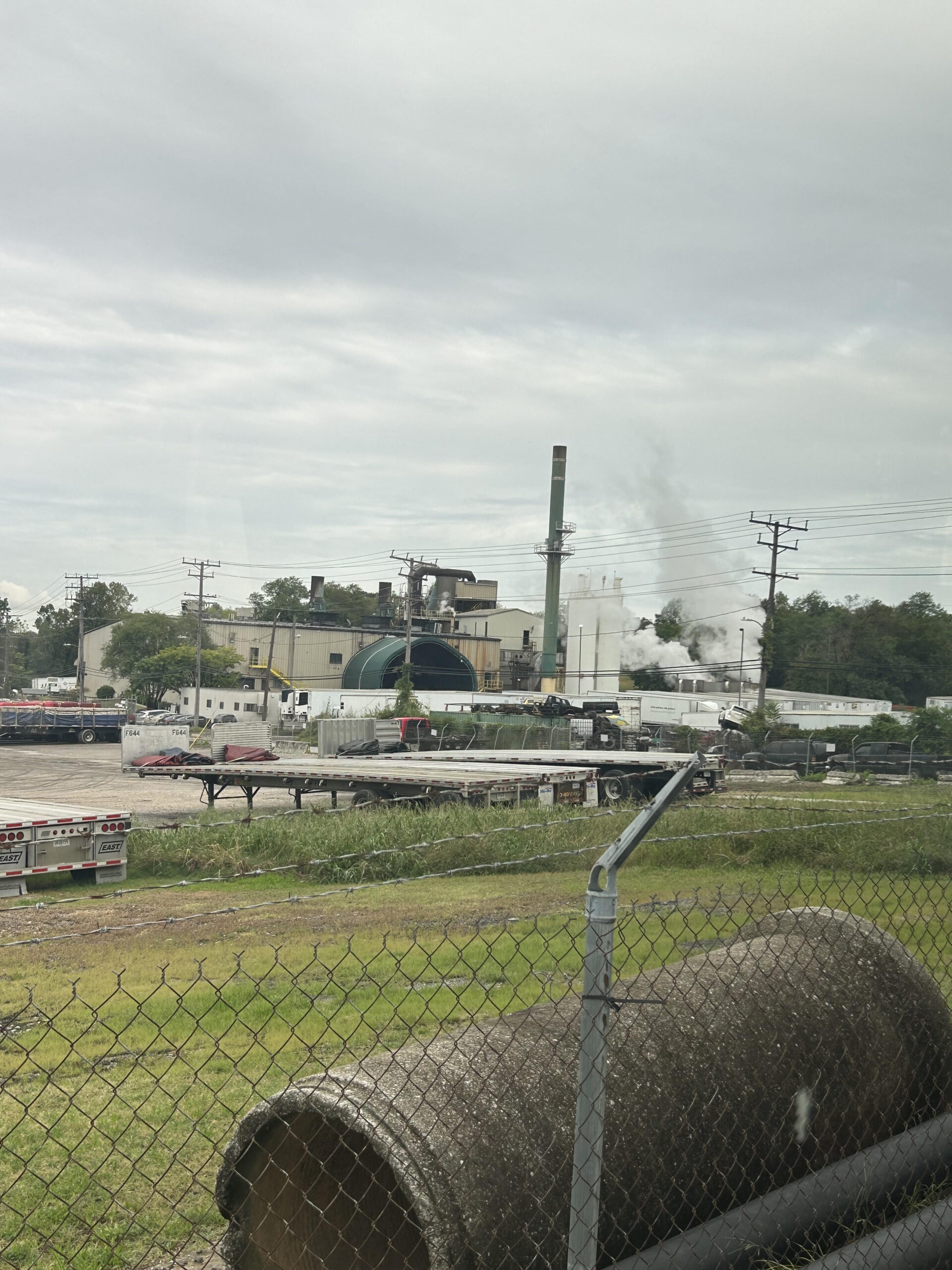
The Port of Baltimore is the nation’s second-largest coal exporter, shipping out coal to India and countries in Europe and Asia. The port exported about 28 million tons of coal in 2023 from its two terminals, which receive coal by train from northern Appalachia and other regions. The larger of the two, the CSX Curtis Bay Piers facility, sits just a few hundred meters from nearby homes, a recreation center, schools and businesses in the Curtis Bay neighborhood.
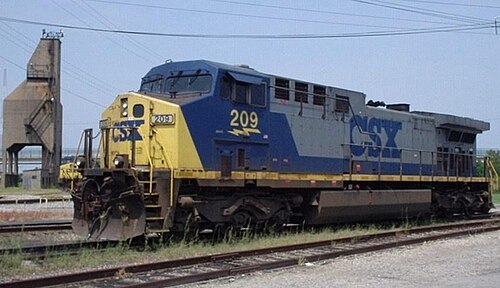
The Curtis Bay facility is over 140 years old and can handle up to 14 million tons of coal each year following a recent $60 million upgrade to increase its capacity and efficiency. The terminal is owned by CSX Corporation, a Jacksonville, Florida-based railroad giant that operates more than 20,000 miles of railroads across the eastern US, moving coal and other freight to 70 ocean and freshwater ports.
A 2021 explosion at the coal terminal shattered windows and doused Curtis Bay in coal dust, resulting in a $1.75 million settlement last year for a class action lawsuit.
The persistent problems with coal dust leave residents of Curtis Bay feeling “imprisoned in their own homes,” said Carlos Sanchez-Gonzalez, a 20-year-old youth leader for the South Baltimore Community Land Trust who went to high school in the neighborhood. “If you go in Curtis Bay, you’ll rarely see a window open.”
The “signature of coal dust”
In a July study, a team of researchers from Johns Hopkins University collaborating with community members found a close link between bulldozer activity at the terminal and air pollutants in Curtis Bay, with notably higher levels of harmful particulate matter and black carbon in the community’s air when bulldozer activity was visible.
A prior study by the team, published in December 2024, confirmed the presence of coal particles as far as 1.2 kilometers from the terminal, backing up concerns residents have expressed for years.
The full extent of the impact of coal dust exposure on public health is not well understood, said Joshua Smith. a senior attorney with the Sierra Club.
“Coal dust, as kind of a fugitive source of emissions, it’s just not tracked as closely as pollution that’s coming out of a stack, which is easier to measure, or pollution coming out of a pipe,” said Smith.
“The diffuse nature of coal dust makes it much more difficult to track, combined with the fact that much of the coal dust for many power plants and landfills originates on their private property.”
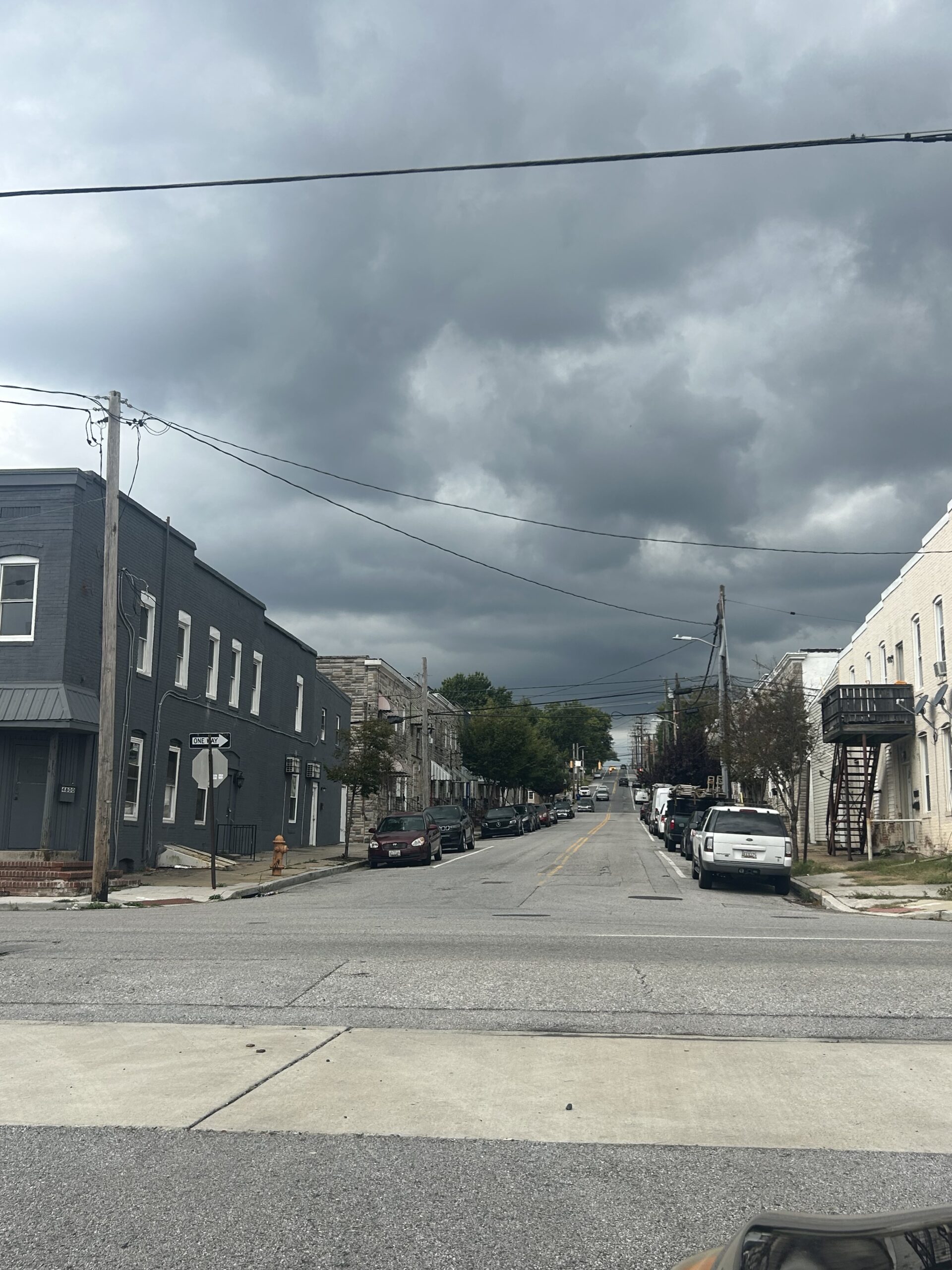
As part of a 2023 investigation into coal dust, air pollution and health concerns in Curtis Bay, led by community groups, the Maryland Department of the Environment (MDE) and Maryland universities, area homeowners reported having to spray down the outside of their houses and wash their windows and windowsills daily in an endless battle to keep the dust at bay. Some expressed concerns about how breathing in the coal dust may be impacting their health.
The investigation concluded that coal dust is present throughout the community, with coal particles found at all eight sampling locations and in every sample taken at sites as much as three-quarters of a mile away from the coal terminal, including homes, businesses, a church, a park and a school.
“We detected the signature of coal dust leaving the terminal’s fenceline on average nearly once every hour and a half,” the researchers wrote.
A third-party review of the investigation’s findings published in 2024 on behalf of CSX “found no evidence to support the conclusion that coal particles from the Terminal have a substantial impact on air quality in the Curtis Bay community,” said CSX in a statement.
Over the summer, the MDE issued CSX a new permit that requires the company to submit a plan to build a windscreen taller than the maximum height of its coal piles in an effort to block coal dust from the terminal’s piles from blowing into the community. The company already has a shorter windscreen on the southern edge of the facility.
The coal terminal’s 2018 state air quality permit was set to expire in 2023. The 2021 explosion at the terminal brought increased public attention to the facility and its permit requirements.
However, community advocates argue the requirement is too vague and likely would not offer adequate protections from the dust blowing onto their homes, calling instead for MDE to refuse to renew the company’s permit.
“If you go in Curtis Bay, you’ll rarely see a window open.” — Carlos Sanchez-Gonzalez, South Baltimore youth leader
“The devil is in the details,” said Sawtell. Such a windscreen could be built in a “completely ineffective way” since the permit doesn’t require CSX to produce modeling data showing how they would decide on a windscreen design, he said.
A spokesperson for MDE said the department does not have the legal authority to deny CSX a permit renewal or shut down the facility if it meets “all applicable requirements,” said a spokesperson for the agency.

“However, we are holding CSX to a higher standard than ever before,” said the MDE spokesperson, calling the requirement “a major improvement over the current screen, which is shorter than the pile and only blocks wind from one direction.
CSX has pushed back against the requirement altogether, asking the Surface Transportation Board in a Nov. 19 filing to block this part of the permit since it argues the matter falls under federal law rather than the state’s authority.
“Certain new permit conditions imposed by MDE in the facility’s recent permit to operate interfere with federally protected rail activities and have never been applied to any comparable facility – rail or non-rail,” said a spokesperson for CSX.
“We need justice”
A similar struggle is playing out in the small southeastern Virginia city of Newport News. That community is home to two coal terminals – Dominion Terminal Associates and Kinder Morgan Bulk Terminals – both of which receive coal from the CSX rail system.
“There’s coal in our houses, on our windowsills, around our doors, our cars,” said Yugonda Sample-Jones, a 46-year-old local resident who grew up in Newport News and raised her four children there. “Everybody you talk to has an auntie, a cousin, a sister, if not themselves, who has asthma, breathing issues, strokes.”
Sample-Jones founded the community consulting group Empower All, which partners with residents, city officials, academia and other local groups to combat push back against the area’s coal dust pollution.
As trains carrying coal make their way to the terminals, they pass through neighborhoods in nearby Norfolk, with the uncovered coal “piled up to the very top … blowing coal dust everywhere,” she said.
“The trains actually come through the entire community to get to these terminals to be exported out to China,” said Sample-Jones.
After years of trying to get the Virginia Department of Environmental Quality (DEQ) to monitor local air for coal dust pollution, said Sample-Jones, the University of Virginia and local activist groups including Empower All set up a system of about 22 monitors that offers real-time monitoring data on outdoor air quality. Eventually, the team will present data gathered through the project to Virginia DEQ and ask for tighter regulations, she said. Regulation of air quality in Virginia, including coal terminals, falls under DEQ’s authority.
“There’s coal in our houses, on our windowsills, around our doors, our cars” — Yugonda Sample-Jones, Newport News resident
This past spring and summer, Empower All partnered with the University of Virginia to test the air inside about 100 local houses, with chemists currently analyzing the results, said Sample-Jones.
“The labs are going to prove that we are breathing in coal dust, we’re breathing in all the toxins that come with that, the arsenic,” and not just air pollution from interstate emissions, said Sample-Jones.
In 2022, Virginia DEQ announced an air monitoring project designed to “study and reduce the potential health risks associated with dust coming from nearby coal storage and transportation facilities.”
As of Dec. 1, the project’s air monitors have not been put in place, but their locations have been approved and the agency hopes to begin monitoring in the spring, said Irina Calos, communications manager for Virginia DEQ, who cited delayed federal actions as a reason for the holdup.
“EPA is currently reviewing a revised budget that we submitted due to increased construction costs, as well as a request to extend the grant by a year (until October 2027),” said Calos. “However, with the recent government shutdown, EPA’s review timeline is a bit longer than normal. We will be able to begin constructing the monitoring stations after EPA approves the revised budget.”
“It’s just excuse after excuse,” said Sample-Jones. “That has been their answer for years.”
In January 2025, Newport News failed to lock down a $20 million EPA-funded grant it planned to use to address its coal dust problem, after which President Trump issued an executive order that called to cut DEI programs and environmental justice positions. The Trump administration also pulled a separate EPA-funded Thriving Communities grant that an application from Empower All and its university partners had applied for, said Sample-Jones.
In lieu of federal funding, the city has partnered with the Bloomberg Sustainable Cities program, which is paying for a study on the feasibility of building a wind fence around the terminals’ coal piles. Sample-Jones said she hopes federal grants to help communities like Newport News will become available again in the future, at which point it will have the data it needs to put such protective measures in place.
At this point, it’s hard to say if more coal is coming into Newport News than it was before the current Trump administration began, since there was already “a tremendous amount,” she said.
“We have coal trucks coming through here it seems like every day and they’re always adding to this pile,” said Sample-Jones.
“We need justice,” she said. “The coal is killing and poisoning Americans. It’s killing Americans all across the United States.”
Featured image: Coal piles at CSX Curtis Bay Piers. Photo by Shannon Kelleher, The New Lede.