
Chokehold: The Trump administration’s stealth plan to unleash poisonous air
The EPA stopped valuing the lives it could save, setting up a deregulatory disaster that will be hazardous to your health.
Wherever Trump looks, he sees existential threats to America that do not exist. He invents fantasy crises as a pretext to exercise emergency powers, like the emergency tariffs just invalidated by the Supreme Court.
The US Senate is poised to vote on a resolution intended to eventually open a long-disputed copper mine close to the Boundary Waters Canoe Area Wilderness in northeast Minnesota, triggering protests from environmentalists who fear the action will diminish the government’s ability to protect America’s cleanest waters, most exquisite forests, and wildest natural landscapes.
In an opening salvo aimed at convincing the US Supreme Court to curtail costly Roundup litigation, Bayer is citing support from President Donald Trump and US regulators while renewing a threat to stop sales of glyphosate-based herbicides to farmers if it does not prevail with the justices.
In a move enraging health and environmental advocates, President Donald Trump has signed an executive order protecting production of and providing “immunity” for glyphosate-based herbicides, such as Roundup, which have been linked to cancer and are the subject of widespread US litigation.
In a bold bid to put costly US Roundup litigation behind it, Bayer on Tuesday announced a $7.25 billion proposed class action settlement for users of its glyphosate-based weed killing products who have cancer now or develop cancer in the next several years, with average awards ranging from $10,000 to $165,000.
The US Supreme Court has set an April hearing in a closely watched case brought by Bayer that seeks to make the Environmental Protection Agency (EPA) the ultimate arbiter of warning labels on pesticides such as the company’s popular Roundup weed killer.
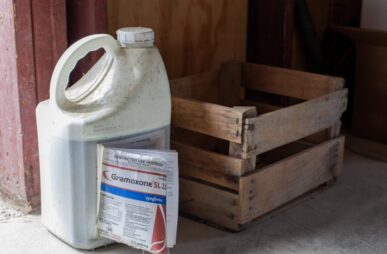
On the eve of the opening of what would have been a bellwether US trial over allegations that a widely used weed killer causes Parkinson’s disease, paraquat-maker Syngenta reached a settlement with the retired landscaper who blamed the company for his diagnosis with the incurable brain disease.
To start the new year off on the right foot, Environmental Protection Agency Administrator Lee Zeldin needed something he could sell to the Make America Healthy Again (MAHA) movement.
Environmental Protection Agency (EPA) Administrator Lee Zeldin sparked news stories around the US last week when he tweeted that the agency had made the “proactive decision to freshly reassess” the safety of the weed killer paraquat, a controversial pesticide widely used by farmers that is linked to Parkinson’s disease.