Postcard from California: The ‘literal dumpster fire’ burning under an LA suburb

In a canyon 40 miles north of downtown Los Angeles, a fire is smoldering. Unlike the forest fires that erupt every year in Southern California, this fire is 30 feet underground. It’s been spewing toxic gases for three years, with no end in sight.
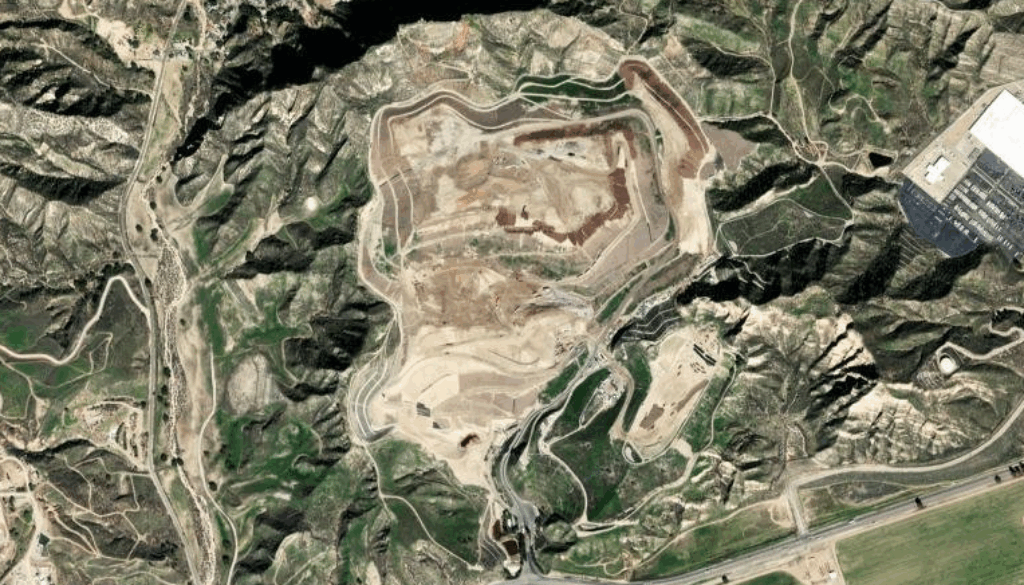
Chiquita Canyon, near the upper-middle-class suburb of Castaic in the Santa Clarita Valley, is the site of a 639-acre landfill owned by Waste Connections Inc., the third-largest waste management company in the US. It opened in 1972, and was the No. 2 dumping ground for Los Angeles County waste until it was forced to close at the end of last year.
The cause of the fire – technically, a combustive chemical reaction Waste Connections prefers to call an “elevated temperature event” – is unknown. When it was first detected in 2022, it covered 30 acres but has since tripled in size. State Assemblywoman Pilar Schiavo, who represents the area, said in October that state regulators have told her it could burn for “two decades at least.”
“We are seeing … a literal dumpster fire in the back of our communities that is making people sick,” Schiavo said at a news conference that month.
In 2024, Los Angeles County sued Waste Connections in federal court for the landfill’s release of noxious odors and toxic gases “that severely and persistently impact” nearby neighborhoods. That same year, the company was cited by the US Environmental Protection Agency for violating federal air pollution standards, for which it faces fines of almost $60,000 for each day of violation. Earlier this year, two state environmental agencies declared that the landfill poses “an imminent and substantial danger” to public health, and ordered Waste Connections to take corrective action or pay fines of up to $70,000 a day.
Since the beginning of 2023, area residents have filed almost 30,000 complaints about the landfill’s sickening stench and air and water pollution. More than 2,000 residents are parties to class-action and mass tort lawsuits against Waste Connections that are working their way through federal court.
Kevin Smalley moved in 1987 to a house in the small majority-Latino town of Val Verde, less than two miles from the landfill. In March, he told a state Assembly committee that his real estate agent told him the landfill would close by 1997. Instead, Los Angeles County twice allowed it to expand.
“Here we are years later, and the landfill has finally closed only after it caused a public health emergency,” Smalley said. He said the landfill has improperly taken in radioactive and hazardous waste. “The fire is burning all those toxic articles, releasing fumes into the air for us to breathe and contaminating our water.”
Steven Howse moved in 1998 with his wife and four kids to a house less than a mile from the landfill. In March, Howse told the committee that in 2023 his neighbors started suffering from trouble breathing, bloody noses, headaches, nausea and “brain fog.”
“Over 10 of my very close neighbors developed various types of cancer, including my next door neighbor,” Howse said. “In February of 2024, my wife was diagnosed with stage 3 breast cancer. In July, my 19-year-old daughter was diagnosed with a rare autoimmune disease.”
Records of the South Coast Air Quality Management District show that in 2024, Chiquita Canyon emitted more than 37,000 pounds of benzene, a potent carcinogen linked to leukemia and other blood cancers. It also emitted more than 292,000 tons of smog-forming criteria air pollutants, including nitrogen and sulfur oxides and tiny particles of soot. In 2023, state sampling of the landfill’s wastewater found elevated levels of benzene and “forever chemicals,” which could leach into streams that flow into the nearby Santa Clara River.
Chiquita Canyon is also a “super-emitter” of methane, a gas released when the organic waste in landfills decomposes under sunlight or internal heat. Methane is a climate-heating greenhouse gas that is the second-leading driver of climate change, at least 25 times more powerful than carbon dioxide in the short term. Landfills are the second-leading source of methane emissions in California, and the third-leading source in the US.
In March, California launched a satellite that can detect large plumes of methane leaking from landfills. A methane plume is a strong marker of a landfill at risk of generating internal temperatures that could catch fire and release dangerous levels of air toxins. The first-in-the nation program has since detected 10 large leaks, alerting dump operators to take action quickly.
The satellite data will add teeth to the state’s newly adopted methane landfill management rules. The rules hadn’t been updated in 15 years, but in November the California Air Resources Board voted unanimously to approve tougher rules for controlling landfill emissions of methane.
The new rules will take effect in 2027. They require landfill operators to fix methane leaks detected by the satellite, install additional systems to capture leaking methane, and respond more quickly when problems are found. Reducing methane emissions will also mean reducing emissions of toxic gases like those assaulting residents near Chiquita Canyon.
But tighter controls can’t eliminate emissions entirely. Better landfill management must go along with reducing the amount of organics and plastics going to landfills in the first place.
California is trying, with mixed results.
A 2016 law set a goal of diverting 75% of food and plant waste to composting facilities by this year. About three-fourths of cities and counties have set up residential organics collection, and a report on how much waste has been diverted is due next year.
In 2022, a landmark law was passed that would require producers to manufacture less plastic and to make all single-use plastic products recyclable or compostable. But in March, after a lobbying campaign by plastics producers and packaging companies, Gov. Gavin Newsom threw out those rules and ordered new ones exempting many single-use plastic products.
At Assemblywoman Schiavo’s October news conference, Jane Williams, executive director of California Communities Against Toxics, said she’s not a fan of landfills, but that it’s possible to operate them safely so they don’t catch on fire.
“But we have more and more plastics going into our landfills because of more plastics production,” she said. “And plastic is the perfect fuel for landfill fires. So we have to get in front of this problem.”
(Opinion columns published in The New Lede represent the views of the individual(s) authoring the columns and not necessarily the perspectives of TNL editors.)
Featured image: EPA aerial view of Chiquita Canyon Landfill.