
EPA dismisses new cancer warning on atrazine, echoing Syngenta criticisms
Listen to the audio version of this article (generated by AI).
By Brian Bienkowski and Carey Gillam
US regulators are dismissing new research by international cancer experts that warns of links between cancer and the widely used pesticide atrazine, deriding the team of cancer scientists and echoing atrazine maker Syngenta in its criticism.
The Environmental Protection Agency (EPA) sees no need to act quickly on the new assessment issued last month by the World Health Organization’s International Agency for Research on Cancer (IARC), according to an EPA spokesperson.
IARC has “a long history of being severely misguided in its findings,” said EPA spokesperson Carolyn Holran.
IARC classified atrazine — the second most widely used herbicide in the US after glyphosate — as “probably carcinogenic to humans,” in November after a lengthy review of years of scientific studies.
The group cited evidence in human, animal and mechanistic studies leading to its conclusions, including research linking the chemical to non-Hodgkin lymphoma in people. IARC said there was “strong” evidence in mechanistic studies showing atrazine exhibits key characteristics of carcinogens, including inflammation, oxidative stress and cell death.
IARC has “a long history of being severely misguided in its findings.” – EPA spokesperson Carolyn Holran
The cancer classification did not come as a surprise to public and environmental health advocates, who have long called for a ban on atrazine not only because of cancer concerns but also due to research tying it to reproductive and developmental harms.
Syngenta’s own research more than 20 years ago showed high rates of cancer in its pesticide plant workers, a fact the company did not disclose until forced to by litigation.
“This should be just another nail in what should be atrazine’s coffin,” said Lori Ann Burd, an environmental health program director and senior attorney at the Center for Biological Diversity. “Despite all the mounting evidence, it seems nothing is happening to rein in this terrible chemical that’s banned in so many other places.”
Atrazine is banned in an estimated 60 other countries, including throughout the European Union, but US farmers apply roughly 70 million pounds of the pesticide to their fields every year, commonly using it to grow corn, sorghum and sugarcane, according to EPA estimates.
Stirring up fear?
IARC has four classifications for the different substances, lifestyle practices and other environmental factors it reviews to determine hazard levels for humans – and the majority of conclusions for more than 1,000 such reviews have been deemed by IARC “not classifiable” as to carcinogenicity.
The rating given atrazine – “probably carcinogenic” – is the rarest classification given out by IARC. The second-most rare classification is “carcinogenic.”
“This should be just another nail in what should be atrazine’s coffin.” – Lori Ann Burd, Center for Biological Diversity
Nonetheless, the EPA sees IARC’s atrazine classification as “just another example of the World Health Organization’s International Agency for Research on Cancer using a deeply flawed approach to its cancer assessments,” Holran said.
She said IARC is simply stirring up fear, pointing out that the group’s final full scientific assessment is not expected to be published until late 2026 or 2027.
When the full IARC assessment becomes available in the next couple of years, the agency will consider if there is any new science to be taken into account for regulatory purposes, Holran said. Atrazine is currently under registration review by the agency, but Holran didn’t comment on its progress.
Prior EPA assessments found “the totality of the available evidence does not support an association between atrazine exposure and human cancer.”
IARC’s atrazine classification summary was published in The Lancet Oncology journal last month. It is common IARC practice to publish the summaries well before the final lengthy volume of classifications.
Holran echoed criticism by Syngenta, which issued a statement the same day the IARC finding was released, in pointing derisively to previous IARC classifications on such practices as drinking very hot beverages, working as a barber or hairdresser exposed to hair coloring chemicals, consuming red meat and working the night shift — all of which the IARC classified as “probably carcinogenic.”
In its statement, Syngenta called the report “wholly inconsistent with the scientific consensus held by close to 50 regulatory authorities and scientific expert bodies worldwide,” and said that IARC “does not systematically assess the quality nor consistency” of the studies it examines in making its assessments.
IARC’s classification did not establish a “causal link between atrazine exposure and an increase in cancer risk,” Syngenta said.
Under scrutiny for years
Atrazine has been under scrutiny for years amid scientific evidence linking exposure to birth defects, low birth weights, hormone disruption, some cancers and immune system problems. One 2011 study concluded that atrazine “causes severe effects on human health” ranging from effects on the nervous system, immune system, kidney, heart and liver as well as on hormones and enzymes. It is considered an endocrine disruptor, meaning it can interfere with the human hormone system.
While farmworkers are seen as the key population group exposed to atrazine, the chemical commonly washes from farm fields into waterways and is a recurring pollutant of drinking water supplies for millions of Americans.
Russell Cattley, a researcher and professor at Auburn University and chair of the 22-member IARC working group on atrazine, did not comment on whether or not the new classification should impact regulatory decisions in the US, but said the classifications “are often used as a basis for national and international policies, guidelines, risk assessments, and recommendations to minimize cancer risks.”
When asked about Syngenta’s criticisms, Cattley said the group “rigorously and systematically review publicly available studies, mainly from the peer-reviewed scientific literature, and assess the strength of the evidence that an agent can cause cancer in humans,” adding that the atrazine group consisted of 22 independent, international experts from 12 countries.
Daniele Mandrioli, an Italian scientist and member of the IARC working group on atrazine, said the atrazine determination was based on a “strong consensus” of the IARC working group.
He said the group’s finding on atrazine could “serve globally as a solid and independent hazard assessment that public health authorities and all stakeholders might trust and adopt.”
Internal documents obtained through litigation against the company over atrazine revealed the company went to extreme lengths to discredit or silence critics of the weed killer, including hiring a detective agency to investigate scientists on a federal advisory panel, secretly paying third parties to appear to independently support atrazine safety, and attempting to smear the reputation of a scientist who found alarming impacts from atrazine on amphibians.
Steve Tillery, the lawyer who uncovered Syngenta’s internal files in a nine-year legal battle, said the evidence of atrazine harm is clear, and Syngenta has worked to hide that evidence.
“They have not been forthcoming,” he said of the company. “From everything we’ve seen it is a chemical that almost certainly causes several types of very serious human ailments.”
He said the EPA should take action.
“When it comes to human lives, human suffering, I think the first and foremost obligation of the EPA and of these manufacturer are the safety of the people who use these chemicals,” Tillery said.
Different chemical, same debate
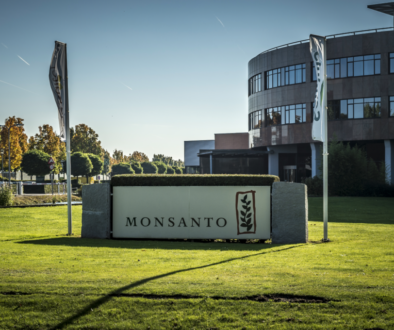
The criticisms of IARC by the EPA and Syngenta are similar to the reaction that came from the EPA and pesticide maker Monsanto when IARC in 2015 classified the weed killer glyphosate as probably carcinogenic to humans. Monsanto, which introduced glyphosate weed killers in the 1970s, called IARC’s work “junk science” and worked to intimidate and harass the cancer researchers and pushed for the US to defund the cancer research agency.
Prior to that time, IARC classifications were not typically seen as controversial, but Monsanto and allies worked to discredit the organization and its findings. A group shown to receive funding from the chemical industry has also attacked IARC over its classification of a type of per- and poly-fluoroalkyl substances (PFAS).
Since the IARC classified glyphosate, more than 150,000 lawsuits have been filed by plaintiffs alleging exposure to Monsanto’s glyphosate-based weed killers, such as Roundup, caused them to develop non-Hodgkin lymphoma.
The EPA still maintains that glyphosate is not likely to cause cancer in humans, and the Trump administration this week sided with Bayer, which bought Monsanto in 2018, in its battle against the ongoing Roundup litigation.
“The EPA has twisted itself into pretzels to deny the World Health Organization’s findings on glyphosate and to stand by its assessment and so I don’t have a lot of hope that they will look at atrazine with open minds under the current political leadership,” said Burd.
The IARC classification comes after the EPA in October walked back its previous determination that atrazine likely harms more than 1,000 endangered species. The agency along with the US Fish and Wildlife Service in October now says atrazine poses little to no risk to endangered species.
Philip Landrigan, director of the Global Observatory on Planetary Health at Boston College, said it was likely the EPA position on atrazine would remain unchanged, despite the concerns raised by IARC.
“I think EPA under the present leadership will find a way to ignore it,” he said. He had higher hopes for other countries, however.
“Regulatory processes don’t change overnight,” he said. “But I think you’ll see things happening over the next couple of years.”
Featured image: Getty Images for Unsplash+