
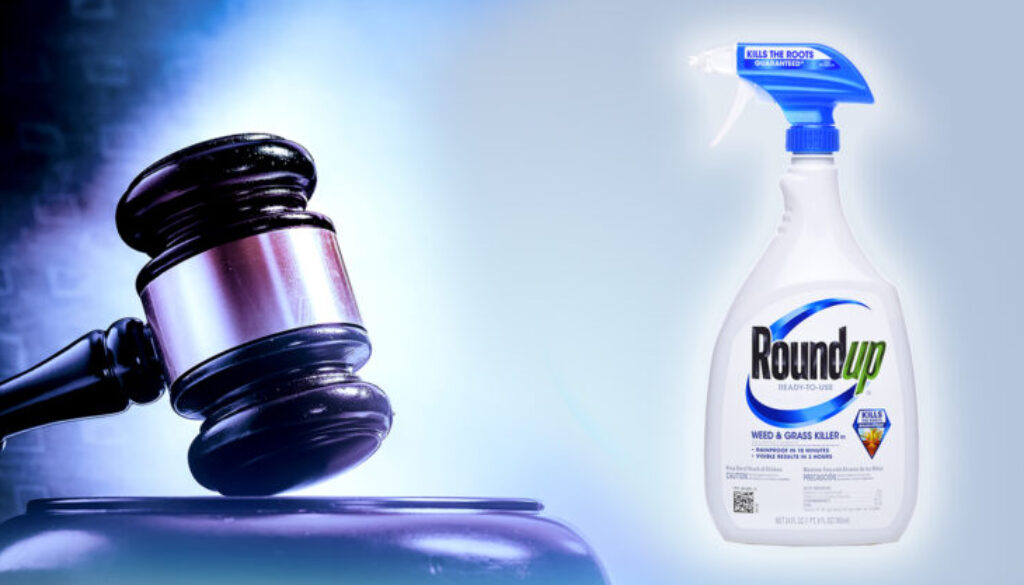
Trump administration sides with Bayer in seeking Supreme Court ruling on Roundup fight
Listen to the audio version of this article (generated by AI).
Bayer, the beleaguered maker of Roundup herbicide, has garnered the support of the US Department of Justice in its court battle to turn back a tide of litigation brought by people claiming the company failed to warn them of cancer risks associated with the weed killers.
In a Dec. 1 filing with the US Supreme Court, Solicitor General D. John Sauer, appointed by the Trump administration in April, told the court that it should take up an appeal from Bayer that the company hopes could help it quash ongoing lawsuits inherited when it bought Monsanto in 2018.
Bayer, which maintains its glyphosate herbicides do not cause cancer, argues that the Federal Insecticide, Fungicide, and Rodenticide Act (FIFRA), which governs the registration, distribution, sale, and use of pesticides in the United States, preempts “failure-to-warn” claims against the company. Because the Environmental Protection Agency (EPA) has approved labels with no cancer warning, failure-to-warn claims should be barred, the company maintains.
Multiple courts have rejected Bayer’s argument, including two appellate courts, ruling that FIFRA does not preempt failure-to-warn claims, though one appellate court – the Third Circuit Court of Appeals- has sided with Bayer.
A similar effort by Bayer to get the high court to weigh in on the preemption issue was rejected in 2022 after the Biden administration’s Solicitor General asked the high court not to hear Bayer’s appeal on the same issue, saying that “FIFRA does not preempt” such claims.
“Although some aspects of EPA-approved labeling may preempt particular state-law requirements, EPA’s approval of labeling that does not warn about particular chronic risks does not by itself preempt a state-law requirement to provide such warnings,” then-Solicitor General Elizabeth Prelogar wrote in the 2022 brief to the Supreme Court. The agricultural industry reacted with outrage at the time, saying Prelogar’s position posed “great risks” to the regulatory system and global food systems.
In contrast, Sauer’s brief to the court this week was closely aligned with Bayer’s arguments, saying the Third Circuit ruling favoring Bayer’s position on preemption “correctly allows EPA to determine on a nationwide basis what warnings must appear on a particular pesticide’s label to avoid an unreasonable risk to human health.” He said given conflicting court rulings on the issue, review by the Supreme Court “is now warranted…”
Sauer also echoed Bayer’s language on Roundup safety: “After careful scientific review and an assessment of hundreds of thousands of public comments, EPA has repeatedly determined that glyphosate is not likely to be carcinogenic in humans, and the agency has repeatedly approved Roundup labels that did not contain cancer warnings,” the Solicitor General wrote in his brief.
Bayer has paid out more than $11 billion in jury verdicts and settlements but continues to face tens of thousands of lawsuits from people alleging they developed non-Hodgkin lymphoma from use of Roundup and other glyphosate-based herbicides sold by the company. It has told investors for the last few years that getting the Supreme Court to rule in its favor on the preemption issue is a key goal.
Bayer celebrated the support from the administration, issuing a statement on Tuesday saying a positive ruling from the Supreme Court “could help bring the company closer to closure” in the Roundup litigation.
“The support of the US Government is an important step and good news for US farmers, who need regulatory clarity,” Bayer CEO Bill Anderson said in a statement. “The stakes could not be higher as the misapplication of federal law jeopardizes the availability of innovative tools for farmers and investments in the broader US economy.”
Bayer said a ruling from the Supreme Court on the preemption issue could impact other industries as well.
“It is time for the US legal system to establish that companies cannot be punished under state laws for complying with federal label requirements,” Bayer said.
Kelly Ryerson, co-executive director of American Regeneration and a leading lobbyist in the Make America Healthy Again (MAHA) movement that the Trump administration says it supports, was furious at the Justice Department move.
“MAHA voters chose this administration because they were tired of watching captured regulators sign off on chemicals that are poisoning their families, not because they wanted Washington to hand pesticide giants a liability shield,” Ryerson said.
“President Trump specifically promised to address the harms from pesticides. This move to support the Supreme Court in hearing Bayer’s case for federal preemption of state laws that protect our safety could not stray further from that promise he made to American citizens,” she added.
The Roundup litigation began in 2015 after the International Agency for Research on Cancer, an arm of the World Health Organization, reviewed years of independent research on glyphosate and Roundup, and found the weed killer to be a “probable human carcinogen.”
Alongside its path through the courts, Bayer has also been pushing for new state and federal legislation that would effectively preempt lawsuits based on failure-to-warn claims.

December 16, 2025 @ 3:26 am
🙁 Trump claims to be for us but he’s anti American after all. 🙁 He will lose many of his voters after this, myself included.
December 13, 2025 @ 8:17 am
This is very very disappointing. President Trump still with all the facts about the Covid Vaccine and of course the Roundup poison is letting America down. I have been praying that he would finally come around to the truth and not let greed win. His cabinet are all invested heavily in the worst way. Three family members have all had and one still had Non Hodgkin Lymphoma. We all used Roundup for many years. I am so glad the vaccine never was considered in our family.
December 4, 2025 @ 7:13 pm
Monsanto and Bayer have proffed or taking the risk over profit and have for years the profit out way any liability the investor’s have to be happy and the people suffer I hope and pray 🙏🙏 that the supreme court rules for the people great job carrie
December 4, 2025 @ 12:44 pm
Hi Carey, thanks for this coverage that we’ve seen splashed all around legacy media. The majority of Americans elected this administration AND oppose this type of support for “big ag” which is actually “big pharma”. What is RFK going to do? This seems to be a potential point of contention for MAHA.
December 3, 2025 @ 3:55 pm
I don’t have a great deal of sympathy for people who use herbicides and pesticides known to be HIGHLY TOXIC with no protective gear and then get sick. Of course you got sick, that stuff is POISONOUS. Duh. I rarely use any of it at all and on the increasingly rare occasions that I do, only with protective clothing and respirator. If you choose to spray that POISON around in shorts and a tee shirt don’t be surprised when weeds or pests aren’t all it kills.